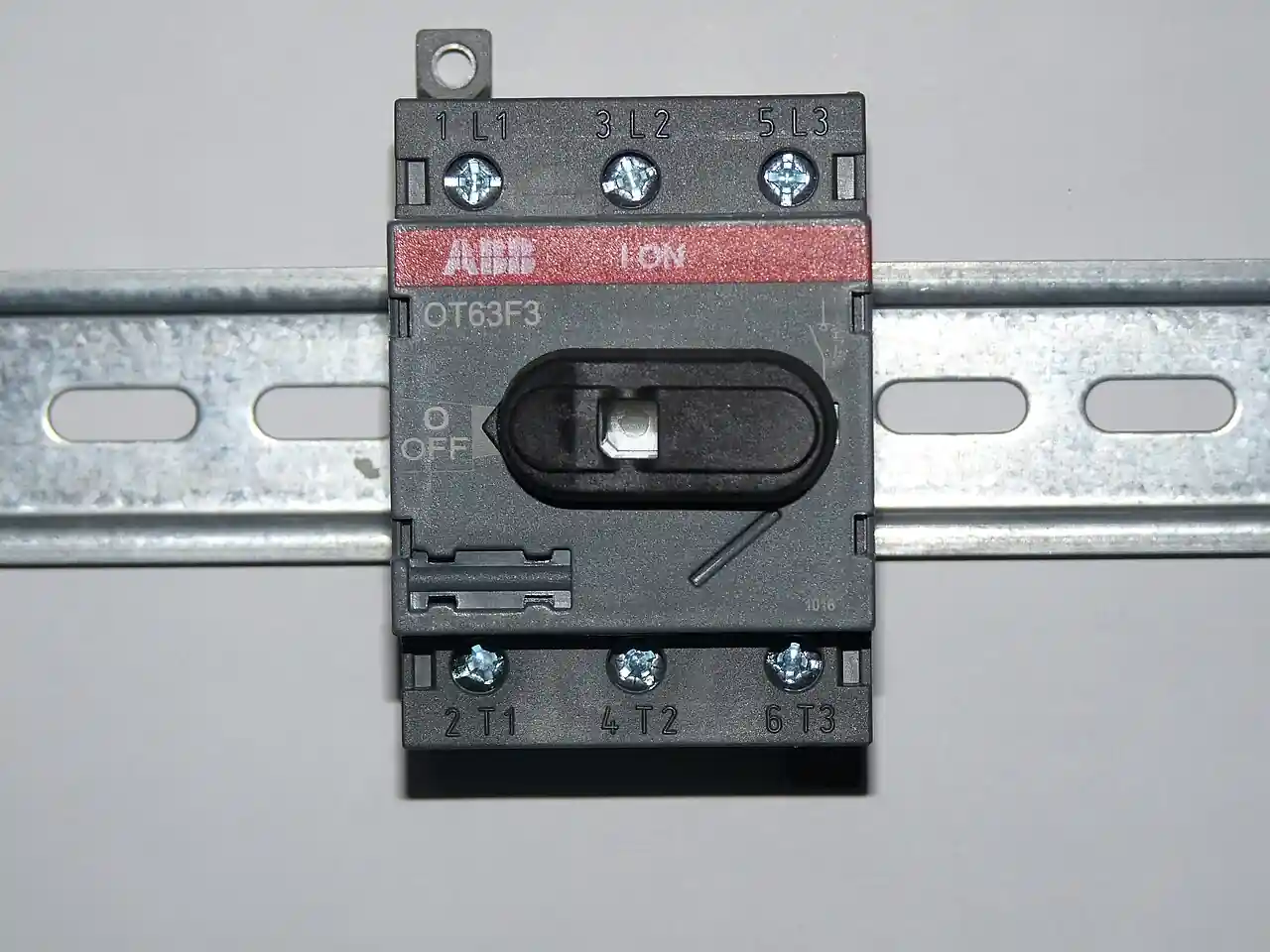
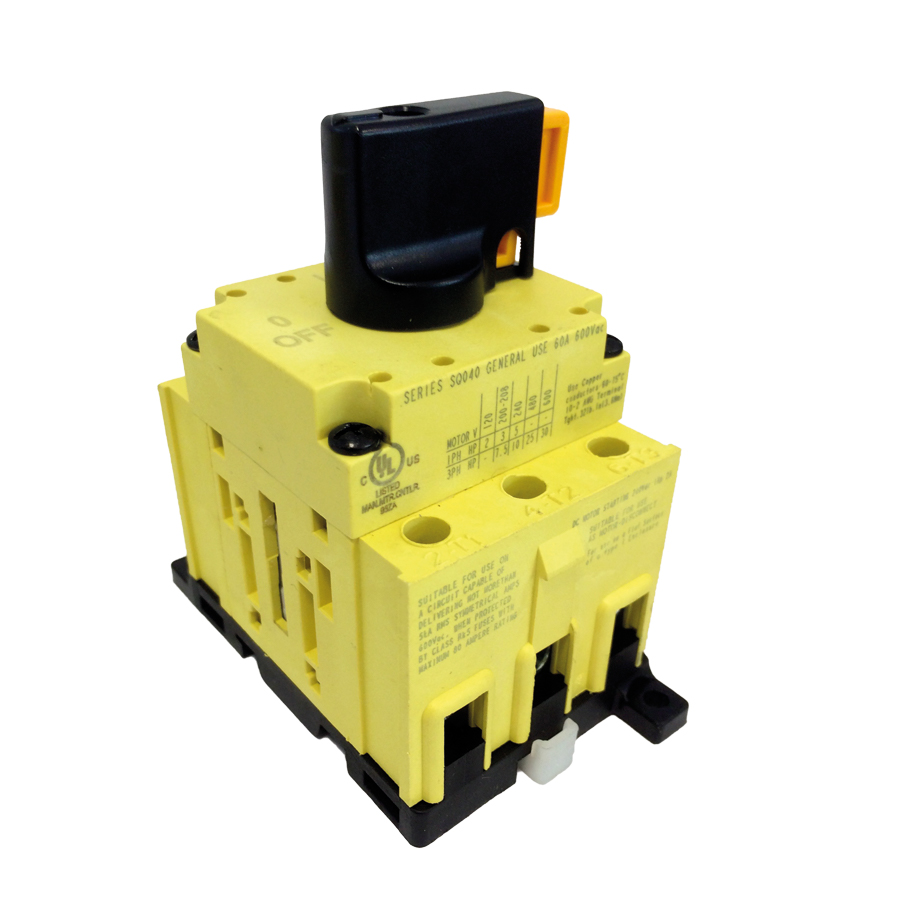
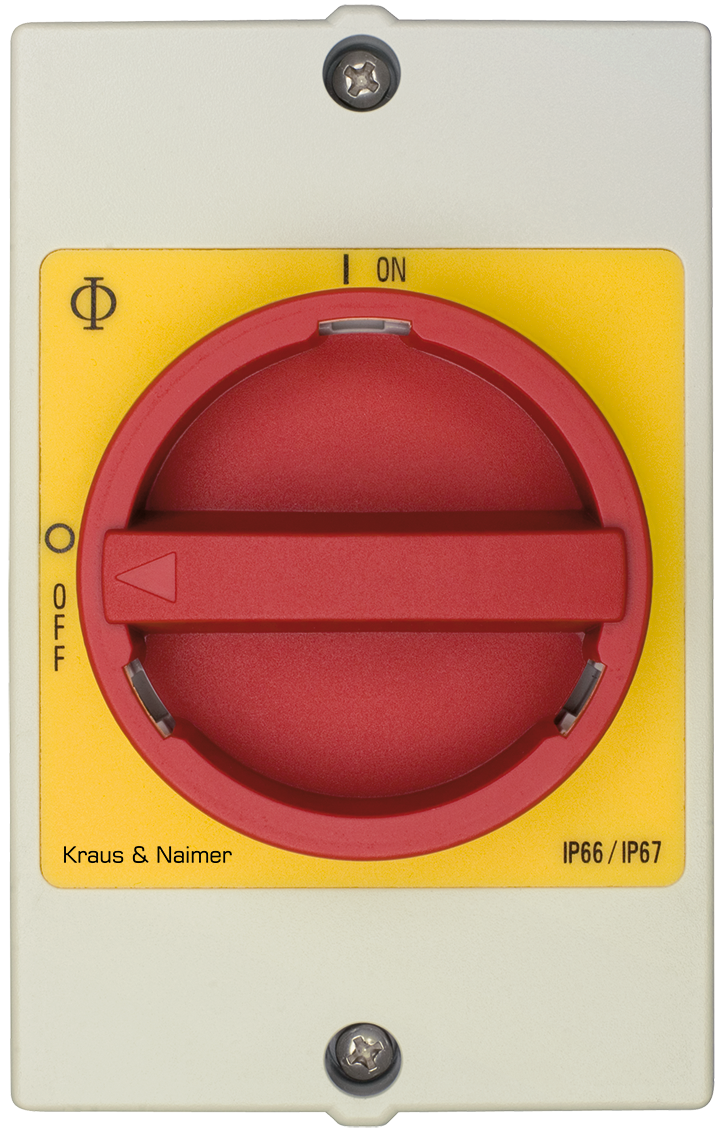
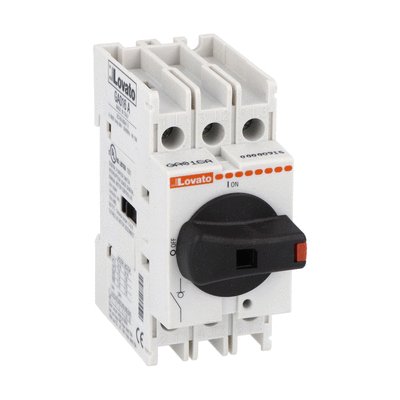
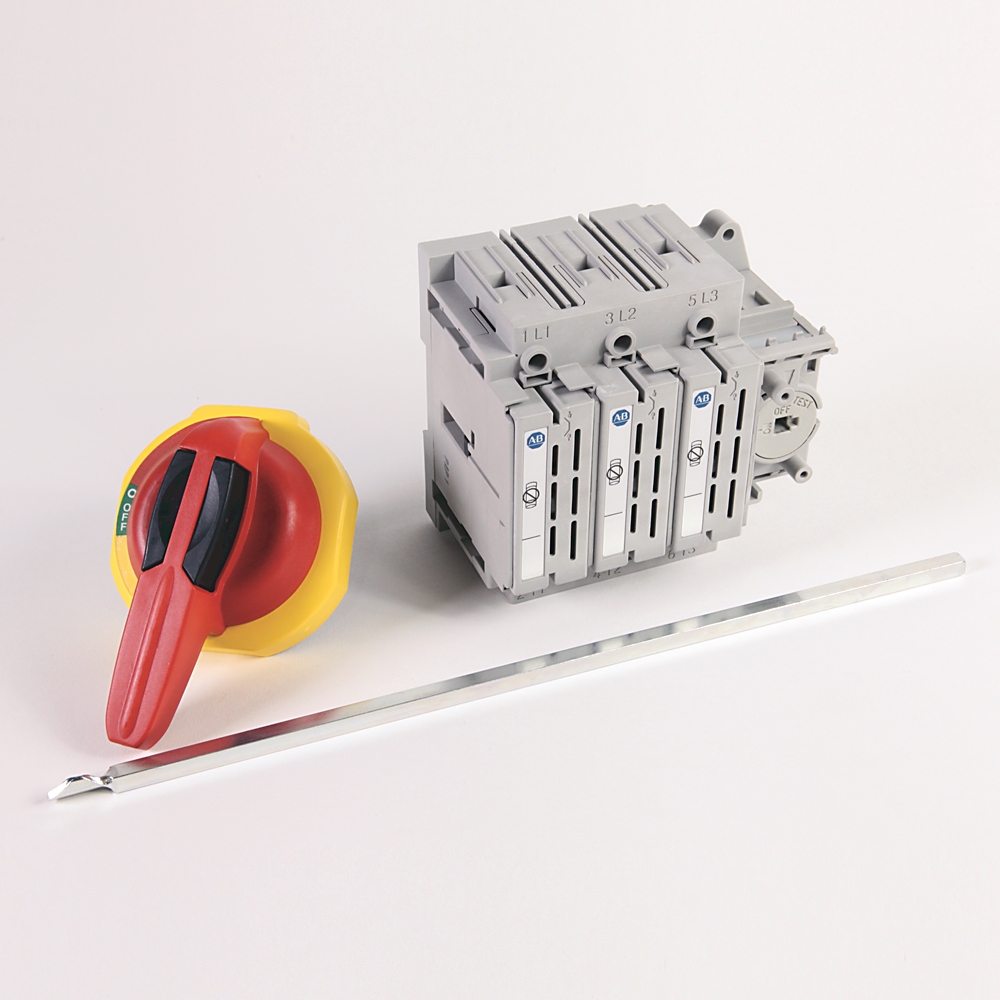
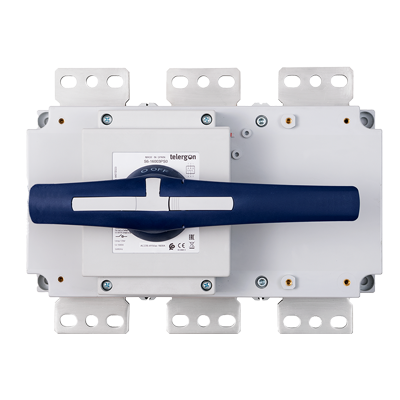
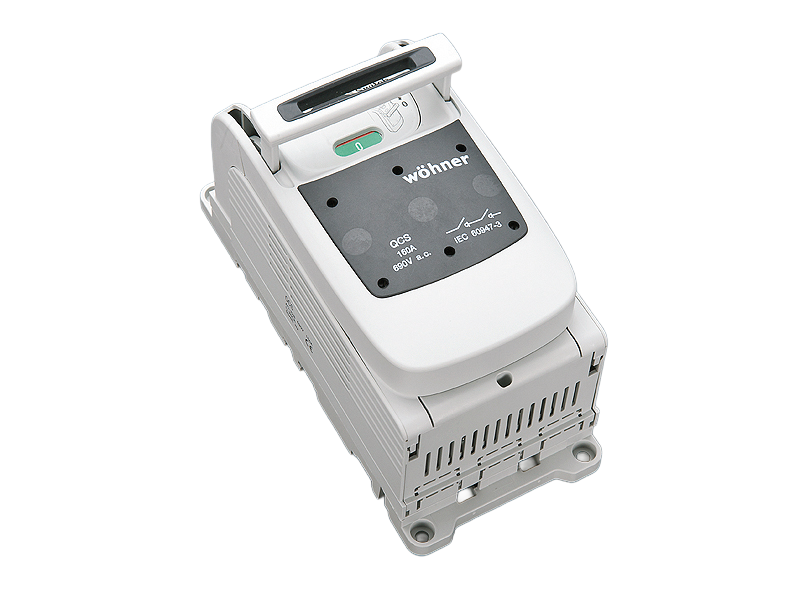
A switch-disconnector is a low-voltage mechanical switching device that does two jobs in one body: it makes, carries, and breaks load current under normal and specified overload conditions like a switch, and it provides a certified isolating gap for safe maintenance like a disconnector. It is governed by IEC 60947-3, the standard that defines disconnectors, switches, switch-disconnectors, and the fuse-combination units built from them.
Because it combines on-load switching with the isolation function, the switch-disconnector is the workhorse main switch and feeder isolator in industrial panels, motor control centres, distribution boards, and renewable plant. It is distinct from a circuit breaker: the switch-disconnector has no overcurrent trip of its own and relies on an upstream fuse or breaker for short-circuit protection.
This guide is written for industrial purchasing and design engineers. Across 6 chapters it covers what a switch-disconnector is, the device family it belongs to, fused versus non-fused construction, the rating parameters that drive selection, and a practical decision sequence, with 7 selection FAQs and a manufacturer overview. All performance terms reference the public standards IEC 60947-1, IEC 60947-3, IEC 60269, DIN 43620, UL 98, and UL 508.
Chapter 1 / 06
What is a Switch-Disconnector
A switch-disconnector is a manually or motor operated low-voltage device that performs two functions the wider switchgear family normally splits between separate components. As a switch, it can make, carry, and break load current under normal circuit conditions and under the specified operating overload conditions of its utilization category. As a disconnector, it establishes an isolating distance with verifiable open contacts, so a worker downstream can rely on it to render a circuit dead and safe for maintenance. IEC 60947-3, the international standard for low-voltage switches, disconnectors, switch-disconnectors, and fuse-combination units, is the document every datasheet in this category cites.
The single most important idea for a buyer is that these are different devices with different ratings. A plain disconnector (often called an isolator) is an off-load device: it is rated only to make or break negligible current, so the circuit must already be dead before the handle moves. A plain switch can interrupt load current but is not, on its own, certified to provide the isolation function. The switch-disconnector merges the two: full on-load switching plus a contact gap marked suitable for isolation. That combination is why it appears as the main incoming switch on the majority of industrial distribution boards.
Mechanically, a typical switch-disconnector consists of a moving contact carriage driven by an over-centre spring mechanism, fixed contacts, an arc-quenching chamber that lengthens and cools the arc so it extinguishes at the natural current zero, and a handle linked through positive-break coupling so that contact position is faithfully indicated. The spring mechanism gives a quick-make, quick-break action whose speed is independent of how slowly the operator turns the handle, which is essential for repeatable arc interruption. For three-phase service the device is normally three-pole or four-pole, with the fourth pole switching the neutral.
The function has a long lineage. Knife switches and open isolators date back to the earliest power distribution of the late 19th century. The modern enclosed, quick-break switch-disconnector matured alongside the first international low-voltage switchgear standards in the mid-20th century, and the rating language used today was consolidated in IEC 60947-3, which sits under the general rules of IEC 60947-1. The North American tradition developed in parallel under UL 98 for enclosed and dead-front switches and UL 508 for industrial control, which is why a global product often carries IEC 60947-3, UL 98, UL 508, and CSA C22.2 No.4 marks side by side.
In scale terms the category spans an enormous range. The smallest DIN-rail load-break switches handle a few amperes for a single feeder, while open or enclosed power switch-disconnectors reach 3150 A and beyond for main bus duty. Operational voltage runs from ordinary 230/400 V building distribution up to 690 V industrial and, in dedicated DC versions for photovoltaic and battery storage, up to 1000, 1500, and even 2000 V DC. No single frame covers that whole range, so selection is the act of matching a specific duty to a specific frame, category, and standard.
Chapter 2 / 06
Device Family and Types
Switch-disconnectors do not exist in isolation; they are one member of a small family of switching devices defined by IEC 60947-3, and choosing the wrong family member is the most common and most dangerous selection error. The table below sets out the four core devices, what each can and cannot do, and the utilization categories that apply, so the boundaries are explicit before any rating numbers are discussed.
Device
On-load switching
Isolation function
Short-circuit interruption
Typical categories
Disconnector (isolator)
No (negligible current only)
Yes
No
AC-20
Switch
Yes
Not guaranteed
No
AC-21 to AC-23
Switch-disconnector
Yes
Yes
No
AC-21 to AC-23
Fuse switch-disconnector
Yes
Yes
Yes (via fuse)
AC-22, AC-23
Disconnector, also called an isolator, is strictly an off-load device. Its job is personnel safety: it creates a visible or positively indicated isolating gap so a downstream circuit can be worked on. Because it carries only category AC-20, it must never be opened or closed against meaningful load, and procedures must ensure the load is removed first. Many compact rotary handles sold loosely as isolators are in fact switch-disconnectors, but the plain disconnector still exists where on-load switching is neither needed nor wanted.
Switch can interrupt load current to its rated category but does not by itself carry the disconnector marking, so it is not, in standards terms, a guaranteed isolation point. In practice most general-purpose load-break switches sold for distribution are built to also meet the isolation requirements and are therefore branded switch-disconnectors; a pure switch without isolation is more typical inside equipment where a separate main isolator already exists.
Switch-disconnector is the combined device this page is about: full on-load switching plus a contact gap marked suitable for isolation, padlockable in the open position. It is the default main switch and feeder isolator. Fuse switch-disconnector, also called a fuse-combination unit, integrates fuse links into the moving contacts so that opening the switch also withdraws and isolates the fuses, adding short-circuit protection to the switching and isolation already provided. A related construction, the switch-fuse, places a separate switch in series with fixed fuses rather than carrying the fuses on the blade.
By construction and format the category divides further. DIN-rail modular load-break switches serve single feeders up to a few hundred amperes in panel boards. Compact rotary switch-disconnectors with a front or door-mounted handle are the staple main switch of control panels. Open and enclosed power switch-disconnectors handle the highest currents on main bus and incomer duty. NH fuse-bases and vertical fuse strips are the dominant fused format in European distribution. Finally, dedicated DC switch-disconnectors for photovoltaic and energy-storage systems use elongated arc paths and series poles because a direct current has no natural zero to help extinguish the arc.
Chapter 3 / 06
Utilization Categories Decoded
The single rating that most often separates a correct selection from a failed one is the utilization category. IEC 60947-3 defines categories that describe the severity of the duty the device has been type-tested to perform, expressed as a making current and a breaking current measured as multiples of the rated operational current, at a defined power factor. The table below summarises the AC categories for switches and switch-disconnectors. The making and breaking multiples are the conventional type-test values associated with each category.
Category
Load type
Make (x Ie)
Break (x Ie)
Power factor
AC-20
No-load isolation only
—
—
—
AC-21
Resistive, moderate overload
1.5
1.5
0.95
AC-22
Mixed resistive and inductive
3
3
0.65
AC-23
Motor and highly inductive
10
8
0.35
AC-20 is connection and disconnection under no load. It is the isolation-only category for a plain disconnector. There is no making or breaking current test because the circuit is required to be dead when the device is operated. Treat an AC-20 device as a safety gap, never as a switch.
AC-21 covers resistive loads including moderate overloads, such as resistive heating banks and lighting feeders with little inrush. The conventional type-test value is making and breaking around 1.5 times rated current at power factor 0.95, reflecting a load that is nearly in phase with the voltage so the arc clears easily at current zero. AC-21 is the lightest switching category and the cheapest, but it is wrong for any significant inductive or motor load.
AC-22 covers mixed resistive and inductive loads including moderate overloads, the typical character of a general distribution feeder supplying a blend of equipment. The conventional value is making and breaking around 3 times rated current at power factor 0.65. This is the everyday category for distribution board incomers and sub-distribution where no single large motor dominates.
AC-23 is the demanding one: motor loads and other highly inductive loads. A switch must make 10 times its rated operational current, because a motor draws six to ten times full-load current as locked-rotor inrush, and break 8 times rated current at a power factor of 0.35 to 0.45 lagging, the worst case where the device may have to interrupt a stalled motor. The poor power factor means the current and voltage are far out of phase, so the arc is long and energetic and the arc chamber must be substantial. Always specify AC-23 for any motor isolator or motor-feeder switch, and never substitute an AC-21 device.
The A or B suffix qualifies operating frequency, not switching capability. An A category, such as AC-23A, is for frequent operation and is verified against a higher endurance count of make-break cycles. A B category, such as AC-23B, is for infrequent operation and faces a lighter endurance schedule, appropriate where the switch normally sits closed and is opened only for maintenance. The making and breaking multiples are identical within a category number; only the number of operations the device must survive changes. DC duty is handled by the parallel DC-20 to DC-23 categories, which add a circuit time-constant to the test because direct current lacks the natural zero crossing that helps an AC arc self-extinguish, making DC interruption inherently harder.
Chapter 4 / 06
Fusing, Standards, and Isolation
Once the device family and category are settled, three practical questions decide the rest of the specification: does the unit carry its own fuses, which regional standard applies, and what exactly does the isolation function require. These three threads run through every datasheet and every approval stamp.
Fused versus non-fused. A non-fused switch-disconnector gives switching and isolation but no overcurrent protection, so a separate upstream fuse or circuit breaker must clear short circuits, and the device is published with a rated conditional short-circuit current that is valid only behind that named protective device. A fuse switch-disconnector, or fuse-combination unit, builds the fuse links into the moving blades so a single assembly delivers switching, isolation, and short-circuit protection, and withdraws the fuses to a safe isolated position when opened. In European practice the fused format overwhelmingly uses NH (knife-blade) fuse links standardised by DIN 43620 and IEC 60269-2 in sizes 000, 00, 1, 2, 3, and 4, covering roughly 16 A through 1250 A or more depending on size.
Fuse classes. The fuse link itself is chosen by IEC 60269 class. Class gG is a general-purpose, full-range link that protects cables and general loads against both overload and short circuit. Class aM is a partial-range, back-up link tuned for motor circuits: it ignores starting inrush and interrupts only short circuits, leaving overload protection to a separate thermal relay. The table below maps the standard NH sizes to typical maximum ratings so a fused selection can be checked at a glance; always confirm the exact link rating against the specific fuse-base used.
NH size (DIN 43620)
Typical max rating
Typical use
Size 000 / 00
up to 160 A
Sub-feeders, small motor groups
Size 1
up to 250 A
Distribution feeders, MCC supplies
Size 2
up to 400 A
Large feeders, sub-distribution
Size 3
up to 630 A
Main feeders, large motor loads
Size 4 / 4a
up to 1250 A
Incomers, heavy power distribution
Standards by region. The global reference is IEC 60947-3 for the device, sitting under the general rules of IEC 60947-1, with the harmonised European version published as EN 60947-3. North American projects work to UL 98 for enclosed and dead-front switches, UL 508 for industrial control assemblies, and CSA C22.2 No.4 in Canada; many world-market products carry all of these marks together. Where a device is destined for both regions, confirm that the same catalogue number is genuinely listed to the IEC and UL files, because UL and IEC short-circuit rating methods differ (UL uses a Short-Circuit Current Rating, SCCR, while IEC publishes Icw and conditional ratings).
The isolation function. Being marked suitable for isolation is not automatic; IEC 60947-3 imposes specific requirements. The open contacts must provide a defined isolating distance with adequate clearance and creepage so leakage is negligible and the gap withstands a specified impulse voltage. The device must give reliable positive contact indication: the handle or position indicator may show OFF only when the main contacts are genuinely open, so a welded or stuck contact must physically prevent the handle from reaching the OFF position. The open position must accept a padlock for lockout-tagout. These three features, isolating distance, true position indication, and lockability, are what justify trusting a switch-disconnector as the point of isolation for live maintenance.
Chapter 5 / 06
Key Specification Parameters
A switch-disconnector datasheet typically lists a dozen or more parameters, but a manageable set governs selection. The table below collects the core electrical ratings and what each one controls; the prose that follows decodes the ones most often misread.
Parameter
Symbol
Typical range
What it governs
Rated operational current
Ie
16 A to 3150 A
Continuous load it can carry and switch in its category
Rated operational voltage
Ue
up to 690 V AC; 1000–1500 V DC
Maximum system voltage; sets category derating
Rated insulation voltage
Ui
690 V to 1000 V
Dielectric design and clearances
Rated impulse withstand
Uimp
6 kV to 8 kV
Surge and transient withstand of the gap
Short-time withstand current
Icw
up to ~50 kA / 1 s
Fault current the closed device survives
Short-circuit making capacity
Icm
peak of Icw
Closing onto an existing fault
Rated operational current Ie is not a single number but a value tied to a utilization category and an operational voltage. The same physical frame may be published as, for example, a higher Ie under AC-21 and a lower Ie under AC-23, and lower again as Ue rises toward 690 V. The headline ampere figure on a catalogue page is meaningless without its category and voltage, so always read Ie from the AC-23 column if the duty is a motor, not from the thermal or AC-21 column.
Rated operational voltage Ue and insulation voltage Ui are different. Ue is the working voltage the switching ratings are quoted at; Ui is the higher voltage to which the insulation and clearances are designed and the basis for dielectric tests. A device with Ui of 1000 V and Ue of 690 V is normal. The rated impulse withstand voltage Uimp, often 6 kV or 8 kV, defines how the open gap survives switching and lightning transients, which matters where the switch is also the isolation point.
Rated short-time withstand current Icw is the prospective fault current the closed device can carry for a stated time, commonly 1 second, without welding or mechanical failure. It answers whether the switch will survive a downstream short circuit during the brief interval before an upstream breaker clears it. Rated short-circuit making capacity Icm is the peak current the device can close onto when a fault already exists; it is the peak associated with Icw and matters when a switch may be closed onto a faulted circuit. Neither rating means the switch-disconnector can interrupt a short circuit, because it has no short-circuit breaking capacity of its own.
Because of that limit, the most important system-level figure for a non-fused unit is the rated conditional short-circuit current: the fault current the device withstands when protected by a specifically named upstream fuse or circuit breaker that limits the let-through energy. This rating is only valid with that exact protective device, so a panel designer must coordinate the switch-disconnector with the upstream protection rather than reading the conditional figure in isolation. Mechanical parameters round out the set: electrical and mechanical endurance (the make-break cycle count, set by the A or B suffix), the IP enclosure rating where relevant, pole count (three-pole or four-pole, with switched or unswitched neutral), and ambient temperature derating, which typically begins between 40 and 60 degrees Celsius.
Chapter 6 / 06
Selection Decision Factors
To turn the preceding chapters into a model number, follow the ordered decision sequence below. Most selection errors come not from a single wrong value but from deciding a downstream detail before an upstream one. These eight steps can serve as a fixed RFQ template for switch-disconnector enquiries.
Confirm the device family: decide whether you need pure isolation (disconnector, AC-20), on-load switching with isolation (switch-disconnector), or switching plus short-circuit protection (fuse switch-disconnector). Get this right first; everything else depends on it.
Pick the utilization category: AC-21 for resistive and lighting, AC-22 for mixed distribution feeders, AC-23 for any motor or highly inductive load. Add the A suffix for frequent operation, B for occasional isolation. The category, not the thermal current, sizes the device for motor duty.
Read Ie at the right voltage: take the rated operational current from the chosen category column at your actual Ue, allowing for derating as voltage rises toward 690 V and for ambient temperature above 40 to 60 degrees Celsius.
Decide fused or non-fused, and the fuse class: if integrating protection, choose NH size (000 to 4) and class gG for general loads or aM for motor back-up. If non-fused, identify the upstream fuse or breaker now, because it sets the conditional short-circuit rating.
Verify short-circuit coordination: confirm Icw and Icm against the prospective fault current, and validate the rated conditional short-circuit current with the exact upstream protective device you will install, not a generic value.
Set poles, neutral, and isolation marking: three-pole or four-pole, switched or solid neutral; confirm the unit is marked suitable for isolation with positive contact indication and padlock provision if it is a maintenance isolation point.
Fix the standard and mounting: IEC 60947-3 / EN 60947-3 for global and European projects, or UL 98, UL 508, and CSA C22.2 No.4 for North America; choose DIN-rail, base, door, or open-frame mounting and the required IP enclosure rating.
Specify operation and accessories: handle type (direct, door-coupled, extended shaft), motor operator for remote or automatic transfer duty, auxiliary and signalling contacts, and DC rating (1000 V, 1500 V, up to 2000 V DC) if the application is photovoltaic or battery storage.
One dimension that is easy to overlook is serviceability and supply over the asset life: availability of spare fuse links and contact kits, the manufacturer's regional approvals and stock, and the breadth of the series so the same handle and door interface can be reused across ratings. Mainstream IEC ranges that engineers standardise on include ABB (OT, OETL, and OTM up to 3150 A, plus OTDC for DC photovoltaic and storage duty up to 1500 V and higher), Socomec (SIRCO and SIRCO M load-break switches), Schneider Electric (Interpact INS and INV, plus TeSys VARIO), Siemens (SENTRON 3KD), and Eaton rotary disconnects, with Mersen, Telergon, and Katko strong in fused versions. Choosing within a single established series keeps spares, accessories, and panel cut-outs consistent across a plant for the device's full service life.
FAQ
What is the difference between a disconnector, a switch, and a switch-disconnector?
Under IEC 60947-3 these are three distinct devices. A disconnector (isolator) is an off-load device: it establishes a certified isolating distance for safe maintenance but is only rated to make or break negligible current, so the circuit must be dead before it is operated. A switch (mechanical switching device) can make, carry, and break load current under normal and specified overload conditions but does not by itself guarantee the isolation function. A switch-disconnector combines both: it breaks load current like a switch and satisfies the isolation requirements of a disconnector, giving on-load switching plus a safe, verifiable open gap in one unit.
What do the IEC 60947-3 utilization categories AC-20, AC-21, AC-22, and AC-23 mean?
They classify the duty the device is type-tested for. AC-20 is connecting and disconnecting under no load (isolation only). AC-21 covers resistive loads including moderate overloads, tested around 1.5 times rated current at power factor 0.95. AC-22 covers mixed resistive and inductive loads with moderate overloads, around 3 times rated current at power factor 0.65. AC-23 covers motor loads and other highly inductive loads, where a switch must make 10 times and break 8 times rated current at power factor 0.35 to 0.45 lagging. A device sized for AC-21 will fail prematurely on AC-23 motor duty.
What is the difference between a fused and a non-fused switch-disconnector?
A non-fused switch-disconnector provides on-load switching and isolation but no overcurrent protection: short-circuit protection must come from an upstream fuse or circuit breaker, and the device carries a rated conditional short-circuit current valid only behind that specified protective device. A fuse-combination unit, or fuse switch-disconnector, integrates NH or cylindrical fuse links into the moving contacts, so one assembly gives switching, isolation, and short-circuit protection together. Fused versions accept DIN 43620 NH sizes 000 to 4 and use gG or aM links to IEC 60269.
Can a switch-disconnector be used as a main isolator for safe maintenance?
Yes, provided it is marked suitable for isolation per IEC 60947-3, which most modern switch-disconnectors are. The isolation function requires a verified contact gap with defined clearance and leakage distance, reliable positive contact indication so the handle position truly reflects the contacts (a welded contact must not let the handle reach OFF), and provision for padlocking in the open position for lockout-tagout. These features make it acceptable as a main switch or maintenance isolator. A plain switch without the disconnector marking must not be relied on for personnel isolation.
How do I size a switch-disconnector for a motor load?
Select utilization category AC-23 (AC-23A for frequent switching) and confirm the AC-23 rated operational current Ie at your operational voltage Ue, since the same frame is derated as voltage rises toward 690 V. The AC-23 rating already accounts for making 10 times and breaking 8 times the motor full-load current during locked-rotor and stall events, so size on the motor running current and let the category cover inrush. Then verify the rated conditional short-circuit current with the upstream fuse or breaker you will actually use, and check ambient temperature derating above 40 to 60 degrees Celsius.
What is the difference between rated short-time withstand current and conditional short-circuit current?
Rated short-time withstand current Icw is the prospective fault current the closed device can carry for a stated time, typically 1 second, without damage; it tells you whether the switch survives a downstream fault while a backup breaker clears it. Rated conditional short-circuit current is the prospective fault current the device can withstand when protected by a specific named fuse or breaker that limits the let-through energy. A non-fused switch-disconnector has no short-circuit breaking capacity of its own, so the conditional rating is only valid with the exact upstream protective device the manufacturer tested.
Which manufacturers and series cover switch-disconnectors, and how do I choose?
Mainstream IEC ranges include ABB OT, OETL, and OTM (16 A to 3150 A) plus OTDC for DC photovoltaic and storage duty, Socomec SIRCO and SIRCO M load-break switches, Schneider Interpact INS and INV plus TeSys VARIO, Siemens SENTRON 3KD, and Eaton rotary disconnects, with Mersen, Telergon, and Katko strong in fused versions. Choose by required utilization category and current, fused versus non-fused, pole count and isolation marking, plus the regional standard you must meet: IEC 60947-3 for global projects, or UL 98, UL 508, and CSA C22.2 No.4 for North America. Confirm Icw and the conditional short-circuit rating with your upstream protection.
Switch-Disconnector Manufacturers
Source-backed product routes. Open a company dossier for procurement scope and cited evidence.