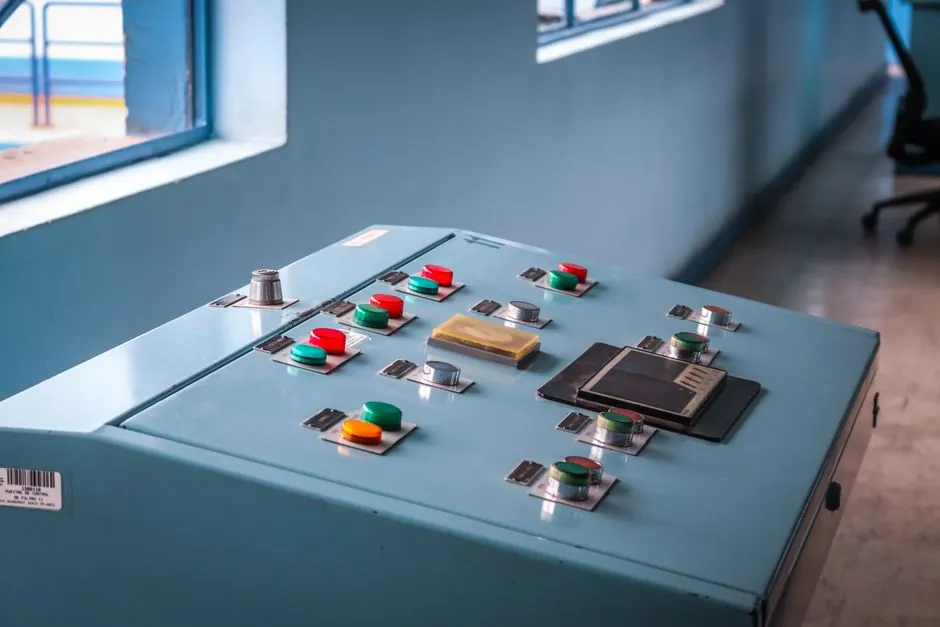
A fieldbus gateway can communicate with multiple device types and reduce the need for individual device-to-controller connections [S2][S4].
Its strongest case is a plant with legacy field devices, mixed vendor equipment, or distributed sensors and actuators that need centralized diagnostics and upstream data exchange [S2][S3].
What a Fieldbus Gateway Actually Does
A fieldbus is a family of industrial computer networks used for real-time distributed control between control stations, operating terminals, and field devices [S2].
Fieldbus communication permits two-way exchange of digital status, analog values, setpoints, and alarms without connecting every sensor, switch, valve, drive, or indicator lamp directly to a PLC or industrial PC [S2].
A fieldbus gateway extends that role by connecting incompatible field networks or by translating data for PLCs, supervisory systems, and industrial Internet applications [S3][S4].
Advantages: Cabling, Diagnostics, and Change Flexibility
Reduced cabling is the primary fieldbus advantage because multiple field devices communicate through a shared network rather than requiring a separate controller connection for each point [S2].
Fieldbus simplifies start-up and parameterization, and its communication functions allow diagnostic data provided by up-to-date field devices to be evaluated [S2].
Diagnostic data provided by field devices can be evaluated, and additional performance features can improve operating reliability, especially in complex systems with a large number of input and output signals [S2].
Flexibility supports future expansion and modification, which makes fieldbus suitable for new plants and for existing plants that must be extended [S2].
Drawbacks: Complexity, Faults, and Skills

Protocol selection creates another engineering burden because each fieldbus protocol has distinct advantages, disadvantages, and equipment compatibility requirements [S3].
Comparing the Main Gateway Approaches
Protocol-conversion gateways score well when the priority is mixed-device integration, but they require compatible protocol support and careful mapping of data and diagnostics [S3][S4].
A practical comparison therefore weighs four criteria: protocol coverage, installation distance, diagnostic capability, and personnel requirements. Mixed factories usually rank protocol coverage first, while a single-protocol extension usually prioritizes distance and electrical compatibility.
Topology and Wiring Decisions
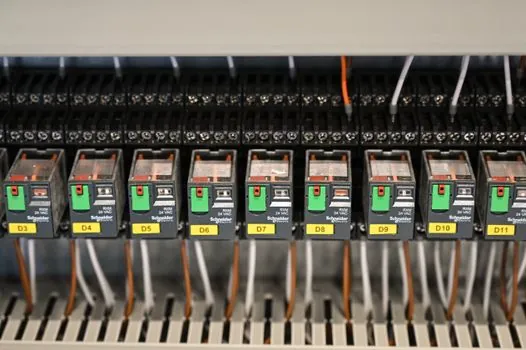
Fieldbus networks can use ring, branch, star, or daisy-chain arrangements, so physical layout must be selected around plant geography and failure behavior [S2].
These physical-layer choices affect range, interference immunity, installation effort, and gateway port requirements, so they must be reviewed before selecting the gateway hardware.
Where the Gateway Fits, and Where It Does Not
A fieldbus gateway supports fieldbus expansion and shared diagnostic communication, while protocol selection depends on the specific requirements and equipment used [S2][S3].
It does not fit applications where a point-to-point sensor has no need for diagnostics, remote parameterization, or network-level access. Adding a gateway in that case adds cost and configuration work without a corresponding operational benefit.
For higher-bandwidth motion or cyclic control, engineers should evaluate the gateway alongside the underlying fieldbus rather than treating gateway capability as proof that the attached network can carry the required data rate.
Selection Criteria for Reliable Deployment

Select a protocol gateway only after listing every field protocol, physical medium, data rate, and diagnostic object that must cross the gateway boundary [S3][S4].
Confirm port counts and interface types, including RS485, CAN, Ethernet, and fiber-optic options where relevant to the installation [S2].
Validate topology against the plant layout, available cable distance, and acceptable single-point failure behavior; star, ring, branch, and daisy-chain arrangements have different fault characteristics [S2].
For wireless or long-range links beyond a copper segment, evaluate an industrial router or fiber converter as a separate engineering choice rather than assuming the fieldbus gateway solves the physical link.
The commissioning record should include device addressing, parameter mappings, diagnostic tests, cable checks, and recovery behavior. The fieldbus gateway installation guide provides a focused checklist for that phase.
Fieldbus gateways support protocol integration, reduce the need for point-to-point cabling, and enable data exchange [S2][S4].