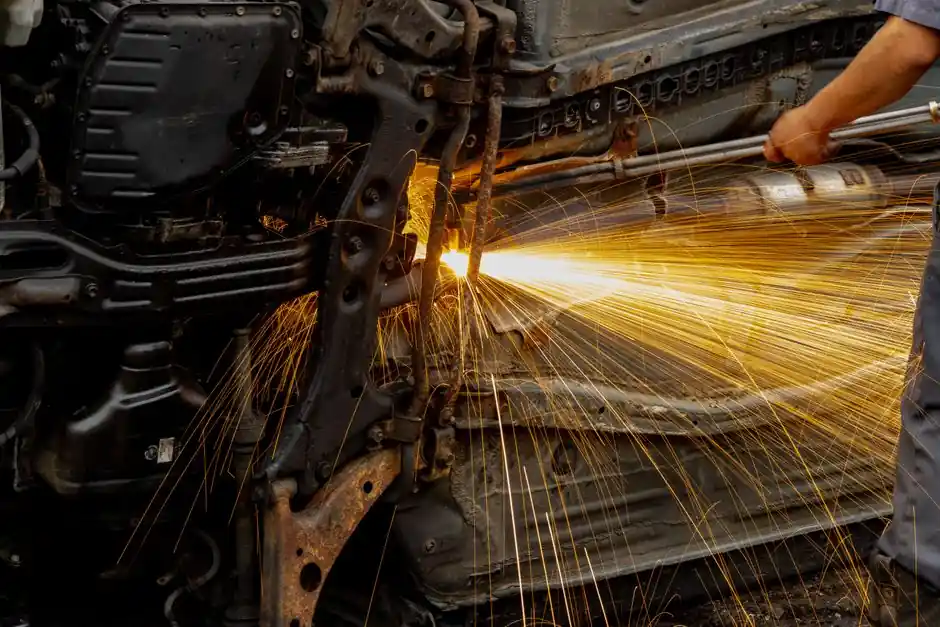
HVAC installation welds a mix of thin galvanized sheet-steel ductwork, mild-steel support angles, and occasional stainless or aluminum components, which pushes the spec toward a portable 120V/240V multi-process machine in the 200-265A class with a credible duty cycle at the current you actually use [S1][S3].
Field power on HVAC jobsites is rarely guaranteed: a rooftop mechanical room may have only a 120V/20A convenience outlet, while a basement mechanical room often has 240V single-phase. Dual-voltage input, the correct NEMA plug, and a documented branch-circuit/breaker requirement are non-negotiable spec gates before any arc performance discussion [S3].
Match process to the HVAC joint, not to the brochure
Stick (SMAW) handles dirty or painted structural steel at support frames, rooftop curbs, and vibration mounts where cleanliness is poor and the operator is often working overhead with a stinger [S3].
Flux-cored arc welding (FCAW) and gas metal arc welding (GMAW/MIG) cover the bulk of light-gauge sheet-metal duct seams, hanger straps, and split-clamp brackets; flux-core trades slag and spatter for outdoor tolerance, while gas MIG gives cleaner seams on exposed round spiral duct [S3].
Gas tungsten arc welding (GTAW/TIG) only earns its place where the spec demands it: stainless condensate pans, food-grade duct, or aluminum equipment rails. For those joints, true AC output with adjustable AC balance and frequency is required, because DC-only TIG cannot supply the oxide-cleaning action that aluminum TIG depends on [S3].
A multi-process arc welder in the 200-265A bracket typically covers Stick, MIG, flux-core, and (on AC/DC variants) TIG in one box, which is why HVAC service fleets standardize on it instead of carrying four separate machines [S1].
Duty cycle, amperage, and the 120V/240V trade-off
Rated output alone does not tell you whether the machine will hold up on a full day of duct welding; compare duty cycle at the amperage you actually strike, not the headline number at a low current [S3].
A typical HVAC shift runs 150-200A on 1.5-3.0 mm sheet steel for most of the day, with intermittent 200-250A beads at heavier brackets. A machine rated 30% duty cycle at 200A on 240V input is workable; 20% at 200A on 120V will thermal-cycle and stall production [S3].
120V operation caps useful output well below the 240V rating, and maximum weldable thickness drops with it, so verify the spec sheet for both voltages, not just the marketing number on the front panel [S3].
Input plug type, conductor size, breaker rating, and extension-cord limits are part of the welding spec, because a plug adapter does not increase available current or make an undersized circuit safe [S3].
Multi-process units that fit a HVAC service truck

The Miller Multimatic 220 AC/DC ships MIG, flux-cored, Stick, and AC/DC TIG on 120V or 240V in one portable case, which is the pattern HVAC shops gravitate to when they want one machine instead of four [S1].
For shops that rarely TIG aluminum, the Lincoln Power MIG 215 MPi covers MIG, flux-core, TIG, and Stick from common residential 120V and 240V outlets, with ArcFX feedback and memory recall for repeat settings on bracket and hanger jobs [S1].
Field crews that need engine-driven autonomy, such as remote rooftop or parking-deck mechanical yards, step up to a 265A engine-driven unit like the Miller Bobcat 265 with remote start/stop, which delivers full auxiliary power for grinders and lights alongside weld output [S1].
Budget-focused duct fabrication often sits on a MIG-only platform such as the Miller Millermatic 211, which uses 120V/240V dual voltage and Auto-Set to reduce parameter guesswork on galvanized sheet, but it cannot Stick or TIG and that limits its use on structural and stainless work [S1].
Shielding gas, consumables, and fume control on galvanized duct
Galvanized sheet-steel ductwork releases zinc fumes during welding; a local exhaust ventilation (LEV) extraction arm at the weld point plus a properly fitted respirator for the welder are part of the consumables budget, not optional PPE [S3].
For gas MIG on mild steel, C25 (75% Ar / 25% CO2) is the standard shielding mix and gives a cleaner bead on galvanized than straight CO2, which drives more spatter and post-cleanup on duct seams [S3].
Flux-cored wire eliminates the gas cylinder on outdoor rooftop work, at the cost of slag removal and higher fume volume, so outdoor rooftop duct brackets are a common application where FCAW wins on logistics and loses on cleanup [S3].
Match filler wire classification (ER70S-6 for mild steel, ER308L for stainless, ER4043/ER5356 for aluminum) to the base metal and any applicable WPS, and verify drive-roll size, contact tips, and liner diameter for the wire you actually run [S3].
When NOT to use a general multi-process welder
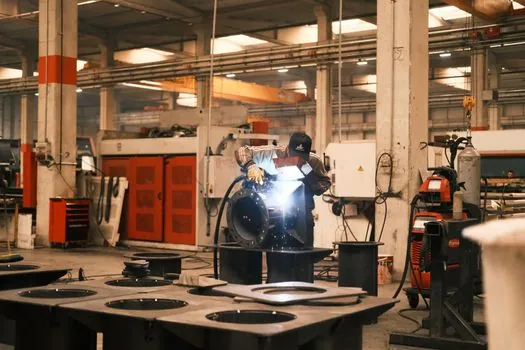
Pressure vessels, refrigerant piping, and any ASME-coded weld are out of scope for a field multi-process box: those require a qualified WPS, a qualified welder, and often a coded power source with documented procedure qualification records [S3].
Unknown containers, plated or coated steels, and legacy painted duct should not be welded without identification, mechanical cleaning, and authorization, because fume hazards (zinc, cadmium, lead) and unknown base-metal composition both sit in the failure path [S3].
Aluminum TIG on a DC-only machine is a false economy, and MIG aluminum without a verified spool-gun path (correct drive-roll kit, included or available spool gun, appropriate wire diameter) produces bird-nests and wasted wire, so confirm the spec before committing, not after the first coil is loaded [S3].
Decision criteria at a glance
Selection matrix for typical HVAC installation welds, scored qualitatively against the criteria that matter on site: [S3]
Process coverage: a 200-265A AC/DC multi-process unit (Stick + MIG + flux-core + AC/DC TIG) covers structural, duct, stainless pan, and aluminum rail in one box, while a MIG-only unit fails any Stick or AC TIG requirement, and a DC-only TIG unit fails aluminum [S1][S3].
Power input: dual-voltage 120V/240V with the correct plug and a documented 20A-50A branch circuit fits almost every jobsite panel, while 240V-only units limit you to mechanical rooms and engine-driven units add fuel and noise overhead [S1][S3].
Duty cycle at working current: machines rated 25-30% at 200A on 240V hold up across a full HVAC shift on 1.5-3.0 mm sheet, while 20% ratings at the same current force thermal cool-downs and idle welders [S3].
Portability and truck fit: a 38-50 lb dual-voltage MIG/Multimatic unit suits a one-person service van, while a 265A engine-driven platform in the 200+ kg class suits a dedicated weld truck or field repair trailer, not a daily driver [S1].
Acceptance check before purchase: confirm (1) the actual NEMA plug and required breaker size for both 120V and 240V operation, (2) duty cycle at the amperage you will weld 80% of the day, not at the headline number, (3) included or optional spool gun and AC balance/frequency controls if any aluminum is in scope, and (4) warranty terms and local service access for the brand carried by your nearest distributor [S1][S3].
Trackable signals for the next buying cycle: (1) manufacturer releases of higher-duty-cycle 120V/240V dual-voltage inverters in the 200-250A bracket, and (2) HVAC shop standardization onto one multi-process platform to reduce fleet SKU count and consumables inventory; see how demolition crews weigh a similar spec path in Arc welder picks for demolition: spec gates for field cutting and repair, and how concrete-rebar crews compare duty-cycle and power-input gates in arc welding machine selection for concrete work: 2026 spec gates.
Component reference pages worth checking: marine hvac, and welding cutting tool.