A pedestal fettling grinder sized for a hardware foundry cell typically lands at 3.7-11 kW (5-15 HP) with a 300-500 mm resinoid-bonded wheel running 1600-2700 rpm, per the Ganesh PG/SG pedestal and swing-frame data sheet [S1].
For hardware manufacturing, the decision is not the grinder brand, it is the format (pedestal snagging versus swing-frame), the motor power band matched to gate mass, and the abrasive grain chosen for the dominant casting alloy in the cell [S4][S5].
Two Formats, Two Job-to-Machine Maps
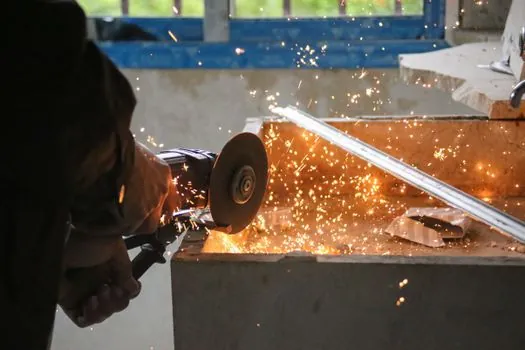
Pedestal snagging grinders (3-10 HP, 12-24 in wheels) are the workhorse for small-to-medium castings where the workpiece moves to the wheel, while swing-frame grinders (5-15 HP, 12-24 in wheels) take the heavy castings where the wheel has to reach across the part [S4]. The Ganesh PG-12 to PG-20 pedestal line spans 3.7 kW at 2700 rpm up to 11 kW (15 kW optional) at 1600 rpm, with wheel diameters from 300 mm to 500 mm and centre height fixed at 860 mm above finished floor level [S1]. The matching swing-frame line, SG-12 to SG-20, holds the same spindle speeds and motor bands but adds 2000-2300 mm overall length and 180-220 kg net weight to absorb the pivoting load [S1].
Selection by casting mass: under roughly 25 kg per part, a 3.7-5.5 kW pedestal snagger is enough; from 25 kg up to several hundred kilograms, the swing-frame with its dynamically balanced spindle and external belt-tensioning provision is the only format that keeps wheel deflection under control at the rated 1600-2100 rpm [S4][S1]. Foundries that try to run a 7-inch handheld angle grinder on heavy gates burn through wheels and lose the rigid-guard containment that the pedestal and swing-frame designs are built around [S4].
Spec Gates That Decide the Purchase Order
The four spec gates that actually change the quote are: wheel diameter versus motor power, spindle RPM versus wheel rated RPM, dust port diameter matched to foundry extraction, and ATEX/IECEx zone rating [S3][S4]. A bench or stand-mounted fettling grinder installation succeeds when the rated wheel speed printed on every blotter matches the spindle RPM stamped on the machine nameplate, with the declared bore matching the arbor, because a mismatch on any one of those three is the single most common cause of wheel burst on first spin-up [S7].
For a hardware cell running ferrous castings, the spec band is 12-24 in wheels, 3-15 HP, with brown or zirconia alumina as the workhorse grain for ductile and grey cast iron and for carbon and alloy steel; silicon carbide is reserved for low tensile strength or sand-burnt surfaces including grey iron with adhered burnt sand, aluminium, copper, brass, and bronze because it is hard and friable; white aluminium oxide suits heat-sensitive steel where burn must be minimized [S5]. Bench snagging wheels run resinoid-bonded at 2700-1600 rpm across the 300-500 mm diameter range, and the same spec sheet confirms grinding wheels and the dust collecting unit are extra-cost items, not bundled with the machine [S1].
Power Class Comparison: Electric, Pneumatic, Hydraulic
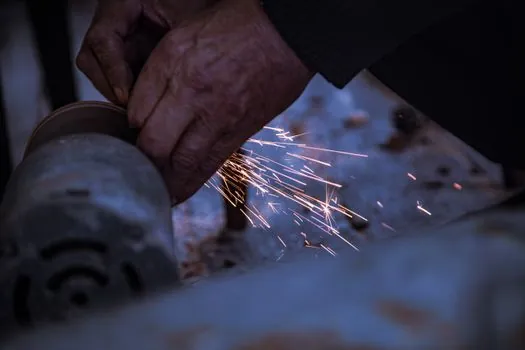
Three power classes compete for the fettling slot, and the 5-year TCO ranking flips depending on duty cycle and available utilities: 5-9 kW direct-drive electric, 3-7 kW vane-motor pneumatic, and 4-7 kW hydraulic-driven via an existing rig [S3]. Electric models score on energy cost, since 1 kWh equals roughly 5-7 m³ of compressed air at 7 bar so pneumatic is roughly 70-80% less efficient wall-to-wheel, but pneumatic still wins on intrinsic safety in Zone 1/21 where Ex-rated electrics add 25-40% to capital cost [S3].
For hardware cells handling aluminium or magnesium castings, Zone 21 dust certification is the non-negotiable gate, and that is the same gate that pushes the choice back to pneumatic unless the foundry can absorb the 25-40% Ex-rated electric premium [S3]. Pneumatic power also pairs naturally with the foundry incumbent toolchains from Chicago Pneumatic, whose fettling line covers vertical and angle grinders, angle sanders, belt sanders, and die grinders for degating, cleaning, and finishing [S2].
Where the 5-Year Cost Actually Lands
A 5-9 kW fettling grinder running two shifts a day in a foundry cleaning line will accumulate 5-year cost equal to roughly 3-5x its purchase price once wheel consumption, labor, dust extraction, and downtime are tallied [S3]. The cost stack breaks into four blocks: machine (15-25%), abrasive consumables (30-40%), labor and operator burden (20-30%), and energy plus dust extraction (10-20%) [S3].
On a single-shift foundry cell with a 7.5 kW unit, abrasive wheels and respirator-grade dust filters alone can run 1.2-1.8x the machine purchase price over five years because the wheel wears against hot, often 200-500 °C post-pour, castings and must be replaced at 8-40 hour intervals depending on grit and bond [S3]. Labor and operator cost dominates the non-consumable line at 60-80% of loaded labor, and dust extraction downtime plus respirator-cartridge changeovers eat 8-15% of paid hours on poorly engineered cells [S3].
Who the Fettling Grinder Is For, and Who It Is Not
A fettling grinder is for ferrous and non-ferrous foundries, forging shops, weld fabrication cells, and investment casting cleaning bays that need to remove 1-15 mm of stock at sustained 2-shift rates with documented ergonomic risk controls [S3]. It is NOT for precision deburring of machined parts below 0.2 mm stock, where a stationary angle grinder with a fine-grit wheel or a robotic disc finisher delivers better tolerance control, and it is wrong for floor-prep work where a dedicated floor grinder with a dust shroud is the correct tool [S3].
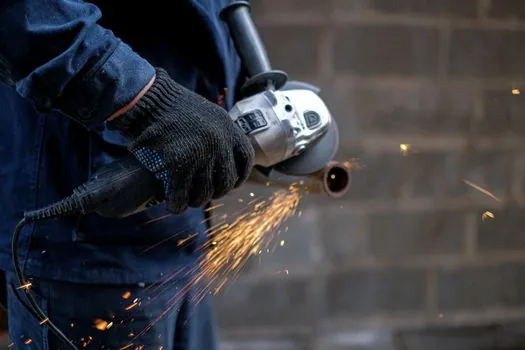
For hardware manufacturing specifically, the grinder earns its slot when the cell produces cast or forged parts with gates, risers, parting-line flash, or weld spatter above roughly 0.5 kg of stock per part; below that threshold, a 7-inch handheld angle grinder with a 1.5-3.0 kW motor and a Type 27 depressed-centre wheel is usually the better tool and is covered in a separate architectural hardware spec pathway for lighter fabrication cells [S3].
Safety, Noise, Vibration: The Non-Negotiable Stack
The trade-off stack is dominated by operator-safety exposure: a 24-inch wheel bursting at 1800-3600 rpm stores enough kinetic energy to cause fatal injury, which is why both pedestal and swing-frame formats require rigid two-side guards, and the swing-frame design must keep the guard concentric with the wheel under all pivot angles [S4]. Wheel RPM, abrasive-grade selection, and ring-test inspection are operator-controlled variables that rigid machine design cannot fully compensate for, and the relevant governing standards are ANSI B7.1, OSHA 29 CFR 1910.215, ISO 525, ISO 603 (parts 8, 12, and 14), and EN 12413 [S5].
Secondary exposure points: noise above the 85 dB(A) action threshold typical of unshielded 5-15 HP grinders, airborne dust loading from the abrasive and casting sand, and hand-arm vibration for operators on the swing-frame line, mitigated but not eliminated by the dynamically balanced spindle [S4]. The capital cost itself scales steeply with HP, so a 15 HP swing-frame runs roughly 3x the cost of a 3 HP snagging bench, which is the spec-driven reason procurement engineers push the smaller cell to a pedestal snagger before stepping up to swing-frame format [S4].
Sourcing and Standards Reference
Standards governing fettling grinder selection: ANSI B7.1 for abrasive wheel safety, OSHA 29 CFR 1910.215 for wheel guarding, ISO 525 and ISO 603 (parts 8, 12, 14) for bonded abrasive specifications, and EN 12413 for safety requirements [S5]. Noise and vibration are evaluated under EN ISO 11203 and ISO 5349, while the dust-side standards are the same ATEX/IECEx zone framework that governs any powder-handling cell, with Zone 21 the floor for aluminium and magnesium cleaning [S3].
For hardware manufacturing procurement, the verifiable next step is to lock the format (pedestal or swing-frame) on the heaviest casting that will run through the cell, then match motor power to wheel diameter using the Ganesh PG/SG ladder, and finally pin the abrasive grain to the dominant alloy, brown or zirconia alumina for ferrous, silicon carbide for non-ferrous, white aluminium oxide for heat-sensitive steel, before opening the quote against ATEX/IECEx zone and dust-port requirements. Track the 5-year cost stack at 3-5x purchase and the consumable line at 30-40% of that total as the two signals that catch a mis-spec on the next budget review [S3][S1].
Background reading: Rail Lubricant Selection: Four-Zone Spec Map for 2026.