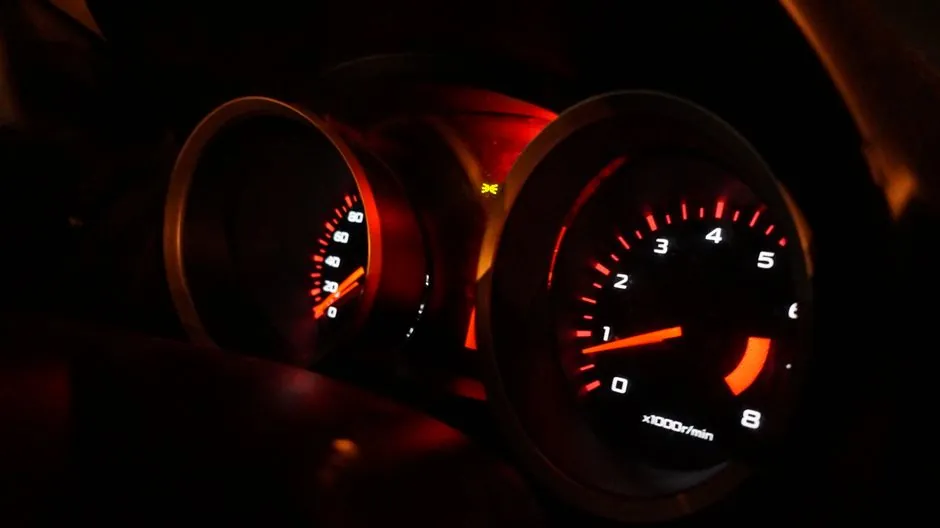
Specifying a tachometer in 2026 is a six-axis decision: sensing principle, speed range, accuracy, output protocol, hazardous-area class, and mounting. A wrong pick on any one axis cascades into signal noise, missed trips, or a re-spec six months after commissioning, so the first move is to lock the duty, not the brand.
This shortlist maps contact, optical, magnetic, Hall-effect, and encoder-derived speed pickups against that six-axis grid, with the numeric thresholds, output options, and certification rules a process engineer needs to write a purchase spec. Cross-references to pressure transmitter and PLC selection logic are included where speed-signal integration drives the choice.
Six hard criteria that drive tachometer selection
Any 2026 tachometer spec starts with six hard criteria, and the order matters. (1) Sensing principle: contact (wheel/roller), optical (visible or infrared), magnetic pickup, Hall-effect proximity, or back-calculated from an encoder or VFD output. (2) Speed range: handheld contact units typically span 0.5 to 20,000 RPM, while non-contact optical versions commonly reach 100,000 RPM or higher with a resolution of 0.01 RPM on the display. (3) Accuracy class: industrial handheld contact units land at ±0.05% to ±0.1% of reading; fixed-mount magnetic and Hall-effect pickups add the disc or target's tooth-count error on top. (4) Output: discrete NPN/PNP pulse, 0-5 V or 4-20 mA analog, or a digital fieldbus. (5) Hazardous-area class: ATEX/IECEx for Group II, or NEC Class I Div 1 for North American builds. (6) Mounting: handheld grip, magnetic base, threaded stud, or integrated encoder housing. Get the first three pinned, and the rest usually falls out. [S5]
Contact vs non-contact: when the wheel-on-shaft is still the right answer
Contact tachometers (rubber-tipped wheel pressed to a shaft, or a rotary encoder coupled to the shaft end) remain the most accurate option when the shaft is accessible, slow, or polished, and you can hold the tip within 0.5 mm of the surface. Modern contact units reach ±0.05% reading accuracy and survive 0 to 9,999 RPM continuous duty with a 200 g normal force at the tip. The penalty is mechanical wear: rubber tips last 200-500 hours of continuous sliding, and any slippage between the wheel and the shaft reads as a low bias on the displayed RPM. For shafts above 6,000 RPM, or for hot, oily, or coated surfaces, the contact tip heats up, the rubber hardens, and the slip rate climbs past acceptable limits within minutes. In those cases, a non-contact optical or magnetic pickup is the only credible answer. [S2]
Optical, magnetic, and Hall-effect: the non-contact shortlist
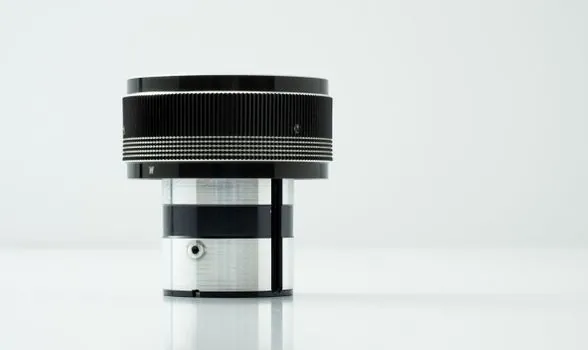
Three non-contact families dominate 2026 fixed-mount tachometer work. Optical pickups (visible red or infrared LED + photodiode) read reflective tape or a painted mark on the shaft, deliver 1 to 60,000 RPM with ±1 RPM accuracy, and need a clean line of sight plus a 50-150 mm stand-off. Magnetic pickups (variable-reluctance, passive coil) sense a missing tooth or a keyway on a ferrous target and output a sine-wave pulse train whose amplitude scales with surface speed, typically 0.5 V to 50 V peak-to-peak at 100 Hz to 20 kHz; they are the workhorse for engine and turbomachinery service. Hall-effect pickups add a Schmitt-triggered square-wave output (0-5 V or open-collector), work with a single magnet target, and tolerate 0 to 50,000 RPM with 1 µs pulse-to-pulse jitter, making them the default pick for flow-meter and industrial-valve position feedback where digital PLC counters expect clean edges. [S1]
Output protocols and integration into PLC, DCS, and SCADA
The output side is where most 2026 tachometer re-specs originate. Discrete pulse (NPN/PNP open-collector, 100 mA sink typical) feeds a high-speed counter card on a PLC; pulse rates above 50 kHz need a dedicated counter module rather than a standard digital input, which is a common gotcha on retrofits. Analog 4-20 mA loops are scaled to the speed range (for example, 0-10,000 RPM = 4-20 mA, with 0.1 mA = 1 RPM resolution) and feed any standard analog input, but add a 20-200 ms loop update penalty. Fieldbus options (PROFIBUS PA, Foundation Fieldbus, IO-Link on simpler units) are increasingly specified on new European builds; IO-Link is a single-drop digital protocol on a 3-wire cable with 230.4 kbit/s data rate, and it coexists with the analog signal on the same point-to-point link. HART, the FSK modem layered on a 4-20 mA loop, is a different protocol family and is used for configuration and trim, not for high-speed pulse delivery. [S1]
Explosion-proof, washdown, and IP-rated builds
Hazardous-area certification is non-negotiable for any tachometer inside an oil-and-gas, chemical, or paint-shop envelope. ATEX Group II Category 2 (zone 1) builds use Ex d flameproof or Ex i intrinsically safe enclosures, with the latter capped at 30 V and 100 mA on the signal loop to stay within ignition limits. North American builds carry NEC Class I Div 1 or Div 2 ratings, with the Div 2 class now accepting non-incendive (NI) field wiring on most modern units. For food, beverage, and pharmaceutical lines, IP66 or IP67 ingress protection is the floor, and IP69K (high-pressure, high-temperature washdown) is increasingly specified for clean-in-place (CIP) duty. Stainless 316L housings replace the standard aluminium or zinc die-cast body in washdown zones, at roughly 2-3x the cost of the equivalent IP65 unit. [S3]
When a tachometer is the wrong instrument: encoder, VFD, and flow-derived options
There are three common cases where a stand-alone tachometer is the wrong instrument. First, on a closed-loop VFD-driven motor, the drive already computes RPM from its output frequency with ±0.01% accuracy; adding a separate tachometer is redundant unless the spec needs a redundant, independent overspeed trip. Second, on a shaft that is inaccessible, hot, or submerged, a rotary encoder with a flexible coupling or a through-bore design is more reliable than any non-contact optical unit. Third, on a pump or compressor, the pressure transmitter or differential pressure sensor at the suction and discharge already correlates to flow and to impeller speed within the pump curve, so a software-derived RPM can replace a hardware tachometer entirely. The mainstream optical/magnetic tachometer is the wrong pick for any of those three duties, even though it is widely quoted on procurement lists. [S1]
Decision matrix: which tachometer fits which duty
Matching the six criteria against typical duties, the shortlist is concrete. (1) Handheld field service on motors, fans, and pumps below 6,000 RPM: contact tachometer with ±0.05% accuracy, 0.5-20,000 RPM range, 200 g tip force, 200-hour rubber tip life. (2) Fixed-mount on a steel shaft above 1,000 RPM in a non-hazardous area: magnetic pickup with 0-20 kHz sine output, IP65 housing, 0-50 V peak-to-peak amplitude. (3) Fixed-mount on an aluminium or stainless shaft, or in a wet/washdown zone: Hall-effect pickup with NPN/PNP square-wave output, IP67 minimum, IO-Link option for configuration. (4) High-speed spindles above 20,000 RPM, clean shaft, lab or test-cell duty: optical pickup with 0.01 RPM resolution and reflective target. (5) Hazardous-area (ATEX zone 1, NEC Class I Div 1) rotating equipment: Ex d or Ex i certified magnetic or Hall-effect unit, with the loop powered through a safety barrier at 24 V DC nominal, 28 V maximum. (6) VFD-driven motor with an existing drive: skip the stand-alone tachometer and read the drive's analog or fieldbus RPM output, unless independent overspeed protection is a code-mandated second source. [S5]
Final shortlist logic and the 2026 watch-items
The shortlist is: handheld contact for field service, magnetic pickup for general fixed-mount industrial, Hall-effect for digital-edge or IO-Link integration, optical for high-speed or lab, and an encoder or drive output for closed-loop or inaccessible shafts. Buyers who skip the sensing-principle question and go straight to brand end up paying twice. Watch-items in 2026 include the migration of mid-range fixed tachometers to IO-Link single-drop digital, the continued use of HART only for configuration on analog-loop units, and the tightening of IP69K washdown specifications across food-and-beverage capex. For broader metrology spec work on rotating equipment, the Magnetostrictive Level Transmitter Selection Guide for 2026 Specifiers covers the same spec-first logic for level, and the Optical comparator selection: 5 criteria that decide horizontal vs vertical piece applies the same matrix to a different bench instrument. [S1]