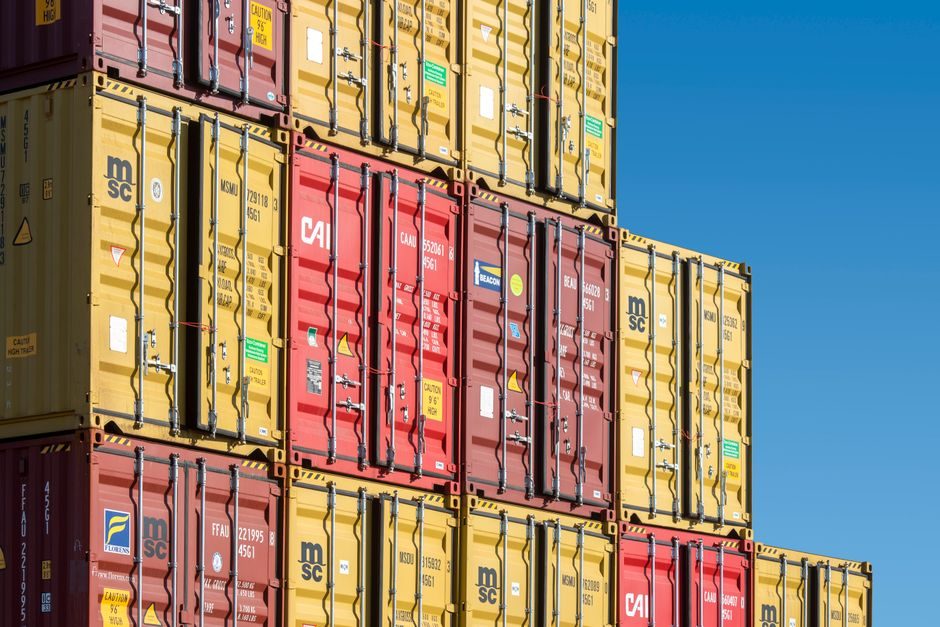
A 20ft ISO tank container remains the workhorse of bulk-liquid logistics in 2026, with published effective volumes between 21,000 L and 26,000 L and a typical tare of roughly 3,500–5,250 kg against a 25,000–30,000 kg payload [S9]. Buying decisions now hinge on four binding gates: the IMDG/ADR hazard class, the product's corrosion profile, the required heating/cooling, and the destination approval stack (CSC plate, ISO 1496-3 frame, classification survey) [S1][S9].
FOB-China list prices on 2026-05-06 show a 20ft reefer tank at US$13,000–17,000, a standard 20ft ISO at US$9,000–32,000 for higher-spec builds, and 550-gal (≈2,080 L) IBC-style tank containers at US$2,600–3,500, with MOQs commonly set at 1 piece [S6][S8]. A buy-vs-rent call should be benchmarked against Tankcon's published lease-or-purchase model, where short-, long-term and lease-purchase options coexist for the same frame [S2].
Frame, Code and Capacity: What the Plate Must Show
Every road/sea-going tank container is built to ISO 1496-3 dimensions — 20 ft (6,058 mm) × 8 ft (2,438 mm) × 8 ft 6 in, with a 32.5 m³ nominal shell — and a valid CSC plate is non-negotiable for international moves [S9]. Effective capacity drops to 25.23 t loading / 21,000–26,000 L for a 20ft chemical service frame, and usable payload tracks 1.6–1.9 kg/L depending on the product's density (acid at 1.5 kg/L vs vegetable oil at 0.92 kg/L) [S9].
For hazardous liquids (Class 3 flammable), the data plate on Chinese-built units flags 5.25 t tare / 25.23 t load / 32.5 m³ effective, a 21 bar MAWP shell with relief set typically 1.1× design pressure, and T-Code ratings driven by product auto-ignition [S9]. Reefer (heated/cooled) variants carry an additional 20FT frame size, 25-year life-span rating, and dual-society certification (CSC, CCS, BV, LR, DNV, RMRS) to clear bank/finance redlines [S6][S8].
Lining, Material and Product Compatibility
Stainless 316L is the default shell for food-grade, pharma and aggressive chemical service because of its Mo-content resistance to pitting chlorides; 304 stainless is acceptable for milder acids, surfactants and many food oils but is NOT a substitute where chloride excursion or strong oxidisers are present. Carbon-steel shells with rubber-lined or PTFE-lined interiors are the lower-cost path for non-corrosive oils and fuels, but a missing lining on a T11/T14 chemical tanker voids almost every insurer's approval [S9].
The biggest hidden cost in 2026 procurement is the lining-vs-product cross-check. A 20FT ISO mixing tank from Guangdong suppliers lists US$13,000–17,000 FOB with material declared as steel structure and frame size 20FT, with production capacity stated at 1,000 pieces/year and lead times governed by 1-piece MOQ terms [S6][S8]. For LPG filling-station and mobile-fuel applications, Shandong Tengxing and Taian Shengding list US$7,000–11,000 and US$2,000–10,000 respectively, both carbon-steel and ISO9001:2015 stamped [S4].
Selection Criteria: Buy vs Rent, New vs Used
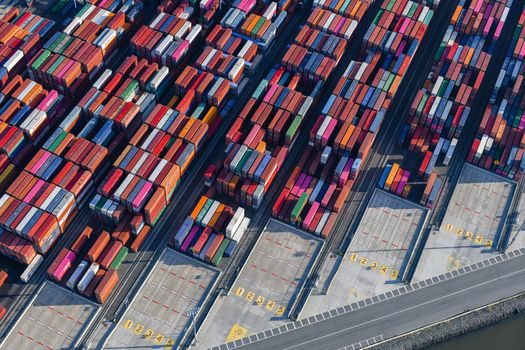
Tankcon's published 20-year track record positions tank containers as a hybrid asset: short-term rental covers seasonal or single-project surges, long-term lease smooths capex, and purchase is favoured when utilisation stays above ~70% for 36+ months [S2]. For chemicals on the IMDG list, leasing a CSC-stamped, society-classed unit avoids the owner paying for the next 2.5-year periodic inspection out-of-pocket.
For new procurement, the practical gates are: (1) hazardous-class match (T-code, UN number), (2) product-to-lining compatibility matrix signed by the maker, (3) heating coil or reefer compressor sizing for viscous or melt-point products, (4) approval stack — CSC plate + ISO9001 + at least one IACS society (BV/LR/DNV/RMRS/CCS) [S6][S8][S9]. Skip the 550-gal/2,080 L IBC tank at US$2,600–3,500 for anything that needs ISO 1496-3 multimodal movement — it is a stationary / one-trip format, not an intermodal unit [S8].
Comparison Table: Tank Container Types vs Decision Criteria
Lining the main options against four decision criteria, drawn from the supplier data above: [S1]
• 20FT ISO stainless 316L (chemical service): capacity 25.23 t / 21,000–26,000 L, price band US$13,000–17,000 reefer / up to US$32,000 chemical-spec, certifications CSC+ISO9001+BV/LR/DNV/CCS/RMRS, best for aggressive acids, pharma, food [S6][S8][S9].
• 20FT ISO carbon steel (oil/fuel service): capacity similar shell, price band US$2,000–10,000 LPG/mobile fuel / US$7,000–11,000 LPG station, certifications ISO9001:2015 typical, best for non-corrosive oils, diesel, LPG [S4].
• 550-gal IBC tank (≈2,080 L): capacity ~2,000 L, price band US$2,600–3,500, certifications CSC+ISO9001+BV/LR/DNV, best for stationary storage, not intermodal [S8].
• Reefer/heated 20FT ISO: capacity similar shell, price band US$13,000–17,000, certifications as above + reefer type declaration, best for viscous, melt-point or temperature-controlled product [S6][S8].
Who This Asset Is For — And Who It Is Not For
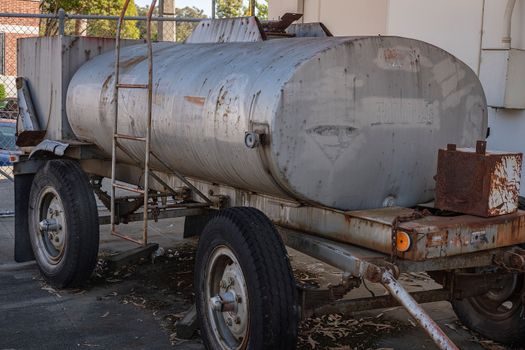
Buy or long-lease a 20ft ISO tank container if you move ≥ 5,000 t/yr of a single product class, need multi-port intermodal reach (road + rail + sea), and your product sits in one of these bands: food oils (Class 3 — high flash), acids (Class 8), pharma excipients, or polymer/resin hot-fill [S2][S9]. A stainless 316L reefer is the default for vitamin, syrup and hot-melt adhesive shippers [S6].
Do NOT specify a 20ft ISO tank for: (a) sub-1,000 L batch trial runs — an IBC tote or drum is faster and cheaper; (b) gases at > 4 bar MAWP on a non-T-coded frame; (c) Class 1 explosives or self-reactive substances that need dedicated UN-package approvals outside ISO 1496-3. For those, the tank container spec page is the right first read; for intermediate bulk format details, see the ibc-tank entry before you sign the PO.
Use Cases and Failure Modes in the Field
Field failures in 2025–2026 cluster around three points. First, lining blistering on rubber-lined carbon-steel shells used for ethanol/gasoline — usually traced to a missed pre-heating protocol during loading. Second, reefer compressor undersizing for hot-fill product (> 60 °C melt) — a 20FT reefer tank needs the supplier's stated "life span <25 years" curve honoured, with annual re-certification of the thermal circuit. Third, classification society lapse — a unit past the 2.5-year CSC survey window is unsellable cross-border and forfeits insurance cover [S2][S6][S9].
Cleaning is the second-order cost most buyers under-price. Spec the unit to a CIP (clean-in-place) ball-spray or rotary jet compatible with your tank-cleaning-machine fleet — residue-driven product changeover is the single biggest source of off-spec batch claims in chemical leasing pools [S2].
Standards, Sourcing Levers and a Trackable Signal
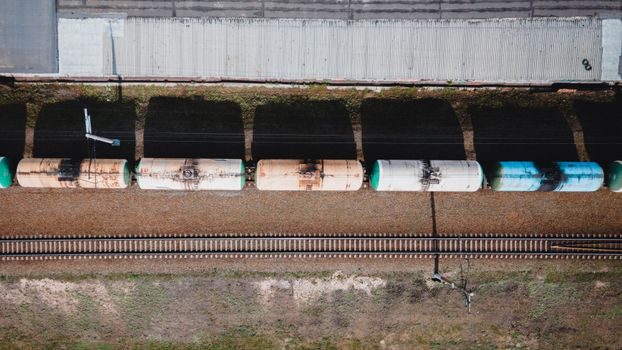
The mandatory code stack in 2026 is: ISO 1496-3 (frame dimensions and corner fittings), IMDG Code / ADR (hazardous transport), CSC (container safety convention plate, 2.5-year survey), and at least one IACS society mark for financed units (BV, LR, DNV, CCS, RMRS) [S6][S8][S9]. Chinese makers publish ISO9001:2015 plus the relevant society mark on every data sheet — read the plate photo, not the marketing text, before releasing the deposit.
Sourcing lever: a 1-piece MOQ is standard across Guangdong and Shandong 20ft-ISO makers, but production capacity is the real lead-time gate — the Guangdong reefer maker publishes 1,000 pieces/year and still quotes 30–45 day build slots for custom linings [S6]. Trackable signal to watch next: ITCO's quarterly fleet-utilisation and tank-container-stock numbers, published via [S1], are the cleanest read on whether leasing rates will soften or harden through Q3 2026.
For related coverage, see Die Casting Machine Price & Cost Guide 2026: Tonnage, Configuration and Total Outlay.