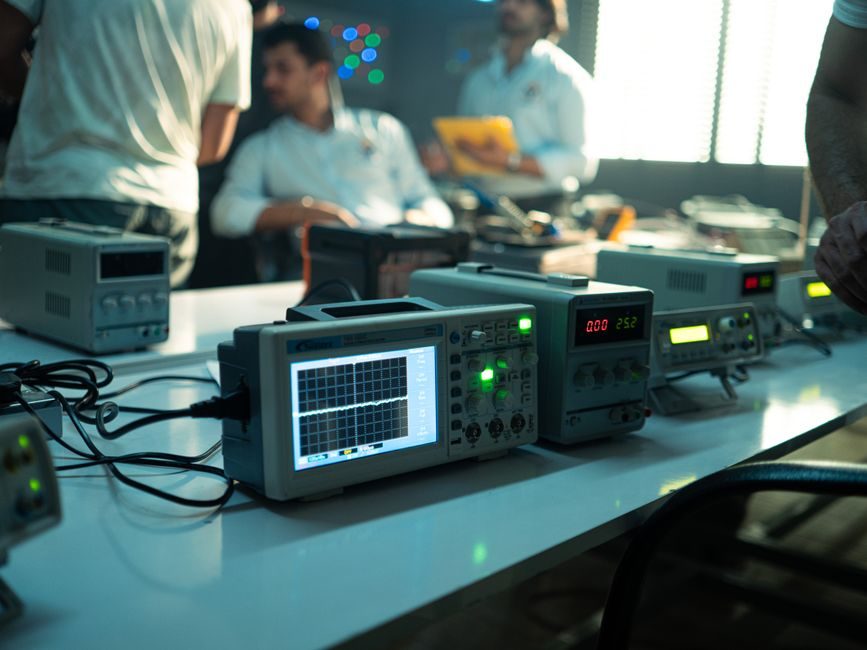
Test leads are rated components, not generic wires: a single pair carries the measurement category, current limit, and insulation system of the digital multimeter (DMM) it is plugged into, and under-rated leads can let lethal voltage reach the operator even when the meter is correctly set [S4].
Distributors such as RS list test leads, probe sets, and connector kits across the full duty spectrum — from low-voltage electronics work to CAT IV 1000 V industrial measurement — with multiple connector types (banana, BNC, mini-hook, alligator) on a single category page [S2]. A Fluke TL940 set, for example, ships as a 1-pair (red, black) lead pair with 4 mm multi-stacking banana plugs on the meter end and mini-hooks on the device end [S3].
Define the Working Voltage Before the Connector
For circuits below 30 V, performance and quality still matter but the safety threshold from shock hazard is materially lower than mains-class work, so general-purpose leads with 4 mm banana plugs are commonly specified [S4].
For mains, distribution, and industrial panels, the binding constraint is measurement category (CAT II, CAT III, CAT IV) stamped on the accessory — not the wire gauge alone — and the lead must carry a category equal to or higher than the meter and the working point [S4]. The shrouded 4 mm banana plug with rigid insulation sleeve is the default industrial interface because it prevents finger contact with the conductor and mates with the safety-style jacks on handheld DMMs, clamp meters, and installation testers. For BNC-front-panel instruments (oscilloscopes, bench DMMs with 50 Ω / 75 Ω inputs), a separate BNC-to-banana or BNC-to-test-clip lead family is required, and mixing these families is a common source of misreading at high frequency.
Tip Geometry by Termination Type
Mini-hook tips on leads such as the Fluke TL940 are designed to clip onto component leads and small terminals where a full alligator clip would be too bulky, with 4 mm multi-stacking banana plugs on the meter end [S3]. RS stocks the same four broad tip families as a default range: standard probe tips, mini-hooks, alligator clips, and grabber/IC clips, each cut for a different termination class [S2].
The decision rule is mechanical, not electrical: where the termination is a through-hole component lead or a 0.5–1.0 mm post, a mini-hook gives a low-slip, low-contact-area connection; where the termination is a binding post, chassis screw, or bus bar, an alligator jaw is the only geometry that gives full metal-to-metal contact; where the point is a single wire in a bundle, a piercing or back-probe tip avoids disturbing insulation. Choosing the wrong family produces either an intermittent reading or a short-circuit when the clip bridges two adjacent posts on a dense terminal block.
Current, Temperature, and Insulation Material
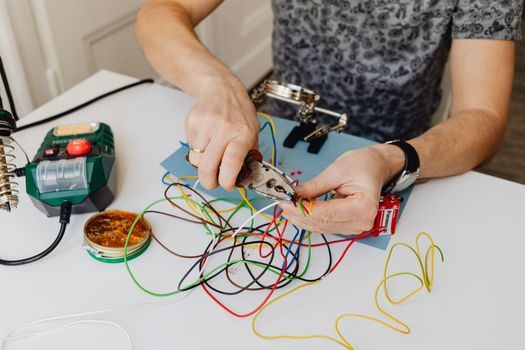
For routine DMM use, current is rarely the limiting factor because the lead is upstream of the meter's internal shunt; the practical floor is roughly 10 A continuous for a 1.0–1.5 m silicone-jacketed lead pair, and the silicone jacket keeps the lead flexible at sub-zero ambient and resistant to solder-iron contact [S2][S3].
PVC-jacketed leads are cheaper and adequate for bench work above 0 °C, but stiffen and crack in unheated plant rooms and are more readily cut by a slipped blade. Silicone-jacketed leads rated to −40 °C to +200 °C are the default for field work because they survive both cold outdoor cabinets and the incidental contact of a hot soldering iron without exposing copper. Where the work involves high-energy three-phase bus bars, silicone also resists the arc-tracking failure mode that ends a PVC lead's service life.
Stackable Banana Plugs and Modular Kits
Multi-stacking 4 mm banana plugs on a lead such as the TL940 let the user daisy-chain a second lead off the first without losing the shrouded safety interface, which is the practical reason modular lead sets dominate the RS catalogue over fixed-tip pairs [S2][S3].
Modular kits typically combine a baseline silicone lead pair with interchangeable tip modules (probe, mini-hook, alligator) and a fuse-protected extender where the application demands in-line current limiting. For process-instrument technicians, the practical implication is that one kit can serve bench DMM work, panel troubleshooting, and field loop checks across 4–20 mA loops feeding a pressure transmitter, provided the tips and the category rating are matched to the loop. The kit format also reduces the "wrong lead in the drawer" failure mode that causes field techs to jury-rig a banana-to-gator with exposed copper.
Test Leads Versus Probes and Clips: A Comparison
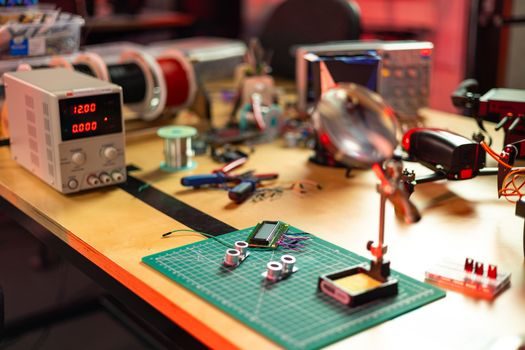
The choice between a bare test lead, a probe-tipped lead, and a clip lead resolves on three criteria: contact method, exposed metal area, and rated category [S2][S4]. A bare test lead with a 4 mm banana on each end is the most flexible but the most exposed — it requires the user to hold the conductor under tension against the test point, which is acceptable on a binding post and unacceptable on a live bus bar. A probe-tipped lead adds a spring-loaded, finger-barriered point and is the default for diagnostic probing of PCB and harness work, with category ratings stamped at the probe handle.
A clip lead (mini-hook, alligator, or grabber) trades operator dexterity for hands-free connection, with a much larger contact area and a tip geometry chosen by termination class [S2][S3]. For bench work with bench instruments including an oscilloscope front end, the BNC-terminated probe is its own family and is not interchangeable with a banana-plug DMM lead — the impedance (50 Ω vs high-Z) and category story differ. As a working shortlist: under 30 V general → bare banana pair; PCB and harness probing → probe tip, category-rated; binding post / chassis → alligator or mini-hook; oscilloscope input → matched-impedance BNC probe.
Who Test Leads Are NOT For
Test leads as covered here are not rated for insertion into powered distribution bus bars or for use as the primary insulation barrier in a CAT IV 1000 V environment unless the lead is explicitly marked to that category — a CAT II lead on a CAT IV measurement point is the single most common industrial mis-spec [S4].
For very high-frequency work above the audio band, ordinary silicone-jacketed banana leads are also wrong: the lead is no longer a low-impedance short at RF, and a proper oscilloscope probe with rated bandwidth and compensation is required. The same applies to current measurement above the meter's direct-input rating, where a current clamp or shunt with its own lead family replaces the standard pair. Buyers should refuse any lead that has nicked insulation, exposed strain-relief at the mould joint, or a category marking that does not match the meter faceplate.
Sourcing, Standards, and Acceptance
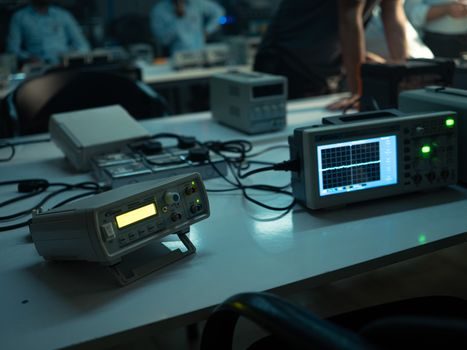
Distributor listings on RS catalogue test leads, probe sets, and connector kits across the full duty range, with the connector stackability and tip geometry stated in the product description [S2]. Fluke documents the test-lead selection and inspection logic, including the warning that a worn or under-rated lead can make a DMM display a de-energized reading on a live conductor [S4]. Specific product references such as the Fluke TL940 mini-hook pair with 4 mm multi-stacking banana plugs give buyers a concrete model against which to compare third-party equivalents [S3].
Trackable signals over the next procurement cycle: any tightening of CAT markings on accessory listings, expansion of modular tip kits in distributor catalogues, and any published revision of the safety standard for measurement accessories. A practical reference for the test-instrument side of this decision sits in the test leads encyclopedia entry, and the same category-of-measurement logic governs instrument selection for adjacent devices such as a flow meter where the loop-side accessory must match the loop category. For a wider view on the TCO math of measurement instruments, the LCR meter price and cost guide covers the same accessory-and-instrument relationship from the bench-instrument side.