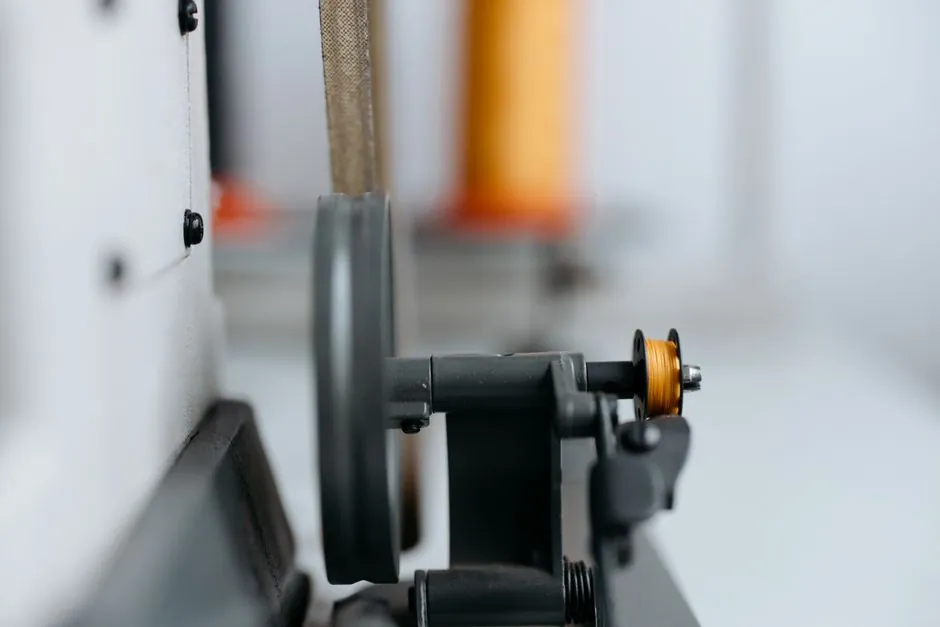
Textile mills run continuous high-RPM trains (carding, drawing, ring spinning, weaving, winding) where coupling choice directly controls yarn quality, motor bearing life, and unplanned downtime [S2].
Across spinning, weaving, and finishing lines, the dominant picks are flexible elastomeric (jaw), gear, Oldham, and fluid couplings, with rigid and sleeve couplings reserved for precisely aligned low-speed auxiliaries [S1][S4].
Why Coupling Choice Hits Yarn Quality and Uptime
A coupling that does not absorb torsional vibration transfers cyclic loads into motor bearings and the driven roll, accelerating seal wear and causing periodic thick-and-thin yarn faults in spinning frames [S2][S3].
In continuous mills running 24/7, the wrong coupling shows up as bearing failures every 6-12 months instead of 3-5 years, plus measurable drops in CV% (coefficient of variation) of yarn count when torsional resonance is excited by the cyclic draw-off tension of the winding unit [S2]. A correctly specified shaft coupling sits below the first lateral critical speed, damps torsional ripple, and accommodates the parallel, angular, and axial misalignment that thermal growth and soft-mount frames introduce in a hot, humid card room [S3][S4].
Main Coupling Types and Where They Fit in a Mill
Jaw couplings (elastomer spider between two metal hubs) are the workhorse on low-to-medium torque spinning and drafting drives, delivering good misalignment capacity and a fail-safe design that lets the operator keep running even when the spider element ages [S1].
Gear couplings (engaged crowned teeth with a sleeve/cover) carry the highest torque density in the textile plant, used on carding motors, draw frames, and large weaving looms where torque can spike 2-3x nominal during pick insertion [S4]. Flexible disc and universal-joint designs serve long spans between motor and gearbox where parallel misalignment dominates [S1]. For short, precisely aligned shaft-to-shaft connections (lab and small auxiliaries), rigid shaft collars and one-piece split sleeve couplings remain the lowest-cost option when the installer can hold angular misalignment under ~0.1° [S4][S5].
Selection Criteria Engineers Should Lock First
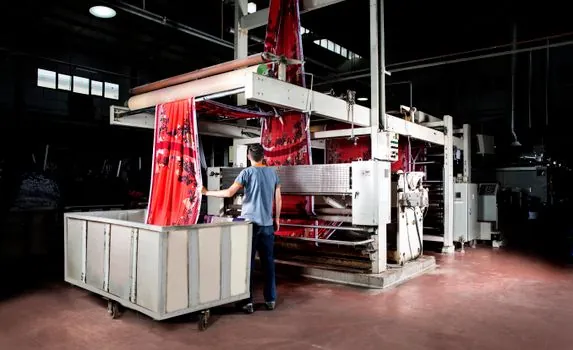
Compute required torque as motor nameplate kW × 9550 / RPM (Nm), then apply a service factor of 1.25-1.5 for uniform loads, 1.5-2.0 for light shock (most spinning frames), and 2.0-3.0 for heavy shock (looms, heavy carding) [S3].
Confirm the coupling's allowable speed (RPM) against the maximum operating speed, with most elastomeric jaw types rated 5,000-8,000 RPM and gear couplings up to 10,000+ RPM when dynamically balanced [S4]. For high-speed drafting rollers (often 8,000-12,000 RPM), verify the coupling's balance grade and check that operating speed sits at least 25% below the first lateral critical frequency to avoid whirling [S3][S4]. Finally, log the actual misalignment: parallel (offset) typically 0.1-0.2 mm, angular 0.5-1.0° for standard elastomeric units, and axial end-float 1-3 mm; the chosen design must meet or exceed the worst-case combination, not just the static factory alignment [S3].
Criteria Comparison: Jaw vs Gear vs Oldham vs Fluid vs Rigid
Across the four decision axes that matter in a textile hall, the coupling families rank very differently [S1][S2][S4][S6]:
Torque density: gear > fluid > jaw > Oldham > rigid sleeve. Misalignment tolerance (combined parallel + angular): Oldham excels at pure parallel misalignment (lateral only) and is unsuitable for angular; jaw handles all three modes moderately; gear handles parallel and angular well with lubrication; rigid handles essentially zero [S4][S6]. Vibration damping: fluid and elastomer-jaw are highest, gear and rigid lowest, which is why gear couplings are paired with elastomeric sleeves on loom line shafts [S2][S4]. Maintenance and environment: rigid and one-piece split couplings are grease-free but unforgiving; elastomer jaw spiders need periodic replacement (typically 12-24 months in continuous mills); gear couplings need relube intervals; fluid couplings need hydraulic fluid checks and are sensitive to leak-tight housings in lint-laden card rooms [S2][S3][S5].
Use-Case Map Across the Mill
Carding machines (high inertia start, dusty/linty environment, frequent doffer cycles): fluid couplings give soft start and overload protection, while gear couplings downstream of the motor absorb residual shock on the cylinder shaft [S2].
Ring spinning and roving frames (medium torque, very high speed, sensitive to vibration): jaw couplings with Shore-A elastomer spiders are the default, because the elastomer filters the small torque pulsations that would otherwise appear as yarn count variation [S1][S2]. Weaving looms (heavy shock loads at pick insertion, 200-250 picks/min): gear couplings or high-torque jaw types are standard, sized with a 2.0-3.0 service factor against pick torque peaks [S2]. Winding and draw-texturing machines (precision tension control, low vibration budget): flexible disc couplings or precision Oldham couplings with low backlash are preferred where lateral misalignment between the motor and the godet roll is the dominant error [S4][S6]. For more on coupling selection in adjacent harsh-environment drivelines, the spec map for disc coupling selection in marine pump and auxiliary drives applies the same torque + critical-speed logic.
Failure Modes, Limits, and Common Mistakes
Elastomer spider failure (jaw couplings) is the single most common textile-mill coupling issue, caused by under-specifying the service factor for shock loads or by chemical attack from sizing agents and oils; expected spider life drops from ~24 months to under 6 months when ambient temperature at the coupling exceeds 80°C, which is common near stenter frames [S2][S3].
Gear couplings fail by tooth wear and seal rupture when lube intervals are skipped; in lint-heavy card rooms, greasing every 4-6 months is typical versus 12 months in a clean machine shop [S4]. Rigid couplings crack or twist shafts when installed over even 0.2 mm of parallel misalignment, which is why a one-piece split rigid design without keyway is only acceptable on small auxiliaries held to machined mounting surfaces [S5]. For shaft-hub attachment, shaft fastening and shaft key choices (set screw vs keyed vs clamp) must match the torque and reversals; a set-screw-only hub on a reversing loom drive is a documented premature-failure pattern [S3][S5].
Sourcing, Standards, and Trackable Signals
Spec sheets from established flexible-coupling lines (jaw, gear, disc) are published with torque, RPM, bore range, misalignment capacity, and service-factor tables, and most major textile-machine OEMs release them with the same metric/inch bore options used on Rieter, Toyota, and Itema drivelines [S1][S3].
Track the following before issuing a purchase order: (1) confirmed service factor for the specific machine (uniform vs shock), (2) bore tolerance and keyway fit per the machine builder's drawing, (3) dynamic balance grade if RPM exceeds 3,000, and (4) elastomer compound rated for the ambient chemical exposure (oils, sizes, dyes) [S2][S3][S5]. Items to watch over the next procurement cycle: extended-temperature elastomer compounds for stenter-adjacent drives, and IE3/IE4 motor retrofits that shift coupling balance requirements as mills replace older textile motors with high-efficiency units [S2][S3].