
Industrial thermocouple probe list prices observed in 2026 cluster from $65.48 for an exposed-junction Type K high-temperature handheld up to $365.57 for a roller-surface Type K/E unit, with specialty lab probes reaching $185.82 for T-handle penetration designs and laboratory PTFE-coated Type T assemblies listed at 1,256.03 RMB on a Chinese scientific distributor in June 2026 [S1][S5][S10][S2].
The price spread is not a function of brand alone; it tracks directly with calibration (Type K vs Type S/R/B noble metal), sheath alloy (304/316/Inconel 600/PTFE), junction construction (exposed, grounded, ungrounded), connector termination, and required accuracy/calibration certificate. Stainless-steel-tip plastic-extruder probes published at $91.09 each at 1-9 quantity fall to $68.32 each at 1,000+ pieces, a 25% volume discount on the same SKU [S4].
What actually moves the price: calibration, sheath, junction, and cert
Type K (Chromel/Alumel) probes with 304 or 316L stainless steel sheaths and fiberglass/PFA lead wire form the price floor for industrial work, with Digi-Sense 93630-22 Type-J hi-temperature probes (0.0625 in. diameter, ungrounded, mini connector) listed at CAD 115.46 on a Canadian distributor in July 2026 [S7]. The 304 SS T-handle penetration probe with 8 in. lead and ANSI color-coded miniature male connector sits at USD 185.82 with four available variations, demonstrating how handle/connector options add to the base [S1].
High-temperature capability and low-drift construction push the next tier: the KHXL-NHXL series rated to 1335°C (2440°F) starts at USD 65.48 for the handheld variant, but the 18-variation roller-surface line for moving/rotating surfaces, with maximum surface temperature of 205°C (400°C) and K/E calibrations, starts at USD 365.57 [S5][S10]. The 25-30% spread between handheld and roller designs is typical: surface-contact mechanics, swivel heads, and molded strain relief each add assembly steps.
Noble-metal calibrations (Type R, S, B with platinum-rhodium elements) and lab-grade PTFE-coated Type T assemblies dominate the high end. A J-KEM Type T PTFE-coated probe, 1/8 in. × 12 in., single-element lab SKU, is listed at 1,256.03 RMB (including VAT) by a Chinese scientific distributor, with NACRES NB.76 classification and a J-Kem trademark declaration [S2]. At the commodity food/BBQ end, Shenzhen manufacturers quote negotiable pricing with a 100-piece minimum order quantity, indicating that consumer-grade Type K probes sit at the bottom of the curve [S6].
Volume discount mechanics on identical SKUs
The pricing is per-piece, all on the same part number, with the discount driven by packaging, fixturing amortization, and reduced per-unit order-processing overhead.
The Digi-Sense catalog shows a different but common pattern: list CAD 129.00, sale CAD 115.46 (a 10.5% promotional discount), with 2-3 week availability on Type-J hi-temperature probes [S7]. For 1-9 unit orders, promotional or contract pricing usually beats published list by 5-15%; at 25+ units, the 5-25% tier discounts stack on top.
Junction and connector options: where the $20-$200 lives
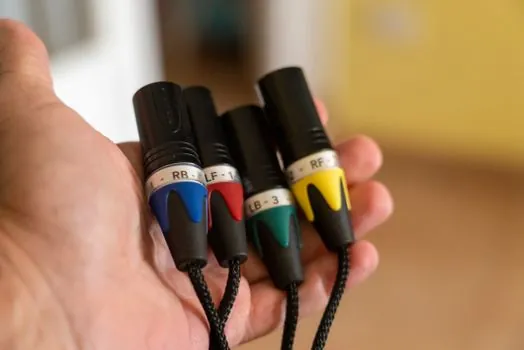
The 88000-roller series offers 18 variations across swivel/non-swivel head designs, K and E calibrations, with maximum surface temperature of 205°C (400°F) and 2 molded strain reliefs standard, starting at USD 365.57 [S10]. The T-handle penetration probe (88313) shows the same dynamic in miniature: 304 SS construction, 8 in. cable expandable to 5 ft, ANSI color code, miniature male connector, four variations from $185.82 [S1].
Junction type choice is one of the largest hidden cost levers. Exposed-junction probes respond fastest and cost the least; grounded-junction probes (welded to the sheath tip) trade response time for mechanical robustness and slightly higher cost; ungrounded (isolated) junctions add electrical isolation at the highest price point and are specified where ground loops would otherwise inject noise into the thermocouple probe reading [S8]. Digi-Sense's Type-J hi-temperature line lists ungrounded-junction versions explicitly in the model code (93630-22), and this is reflected in the CAD 115.46 pricing [S7].
Standards, import duties, and the China export channel
Thermocouple-probe imports into China are tracked under HS code 7326909000 (Other articles of iron or steel, not for technical use) with a General Tariff Rate of 90% and an MFN rate of 8%, VAT 13%, and an export tax rebate of 13% on the same code [S3]. This wide General-vs-MFN spread is the reason free-trade-agreement routing and country-of-origin certificates matter: a US-built probe landed in China under MFN pays 8% duty plus 13% VAT, while non-FTA shipments can face the 90% General rate.
For OEM sourcing, Shenzhen-based manufacturers quote negotiable pricing with 100-piece MOQ on commodity Type K food/BBQ probes, with T/T payment terms and standard export packaging, illustrating the trade-fair/distributor route that bypasses the high General tariff tier [S6].
Total cost of ownership: probes are cheap, instrumentation is not
The probe itself is usually 5-15% of a measurement loop's lifetime cost. The reference instrument (PID controller, data logger, or transmitter) typically costs more than 10x the probe and dominates both capital and failure budgets. A plant running 500 measurement points can replace every probe for less than the cost of one failed pressure transmitter on a safety instrumented function. [S8]
Maintenance cost is dominated by calibration drift and mechanical failure, not by purchase price. Type K probes at 900°F (482°C) in plastic extruder service are routinely replaced every 6-12 months because of oxidation and drift; specifying a noble-metal Type N or Type R upgrade typically extends service life 2-3x but at a 3-5x unit cost premium, often making it a net TCO win on critical loops [S4][S8]. For motion-control environments where probes route near servo drives or VFD cables, the ungrounded junction option eliminates ground-loop noise that would otherwise force a transmitter upgrade, a good example of paying $20-50 more on the probe to avoid a $300-800 proximity probe or shielded-cable retrofit on the receiving end.
Selection criteria and a price-by-use comparison
For high-temperature (above 600°C) or low-drift measurement, Type K/N high-temp series at $65-200 handles service to 1335°C (2440°F) on the high end [S5].
For penetration or surface contact on moving rollers, the roller-handle 88000 series at $365.57+ and the T-handle penetration 88313 at $185.82 represent purpose-built premium pricing [S10][S1]. For laboratory, pharmaceutical, or PTFE-coated chemical-immune work, the J-KEM Type T PTFE-coated 1/8 in. × 12 in. lab SKU at 1,256.03 RMB (roughly $170-175 at mid-2026 exchange) is the reference price point [S2]. For commodity food/pellet-furnace applications, Shenzhen-sourced Type K probes under 100-piece MOQ are the bottom tier, with pricing negotiated and usually well under $10 per piece at scale [S6].
Where the specification is heading in 2026
Second, the lab-grade PTFE-coated Type T segment continues to command 3-5x industrial Type K pricing because of low production volumes and brand-trademarked SKUs, with the J-KEM reference holding at 1,256.03 RMB through June 2026 [S2].
For engineers writing specs in 2026, the practical cost-control levers are: pick Type K unless the process demands noble metal; specify ungrounded junction only where ground loops are proven to be a problem; consolidate connector and lead-wire options across SKUs to clear 100-piece MOQ discounts; and benchmark the HS-code routing when shipping across the China General-tariff (90%) boundary, because MFN (8%) routing can change landed cost by an order of magnitude [S3][S8]. For lab and process-control specifiers weighing probe budgets against instrumentation, the environmental test chamber price article and the multi-gas detector selection guide cover adjacent instrumentation cost drivers that often co-spec with thermocouple loops.