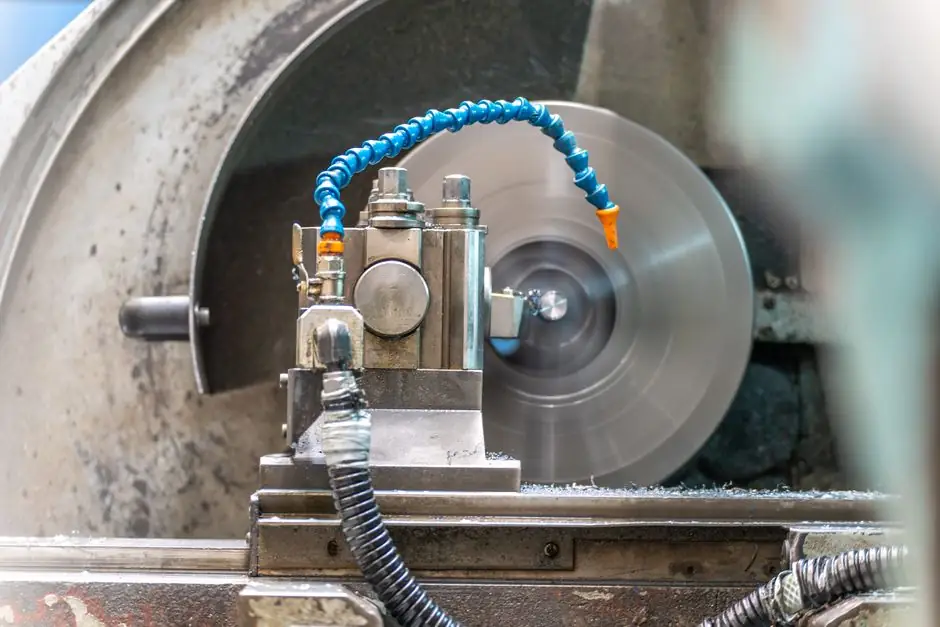
A thin-wall automotive housing cast in aluminum on a cold-chamber high-pressure die casting machine typically runs a 60-180 second total cycle, with the solidification step governing floor time more than injection or ejection [S3][S9].
For housings in the 2-3 mm wall range on 400-600 t clamping force equipment, the process is paced by alloy cooling, die thermal balance, and shot-sleeve dosing rather than by injection speed, which completes in a fraction of a second to a few seconds [S1][S3].
What Drives Cycle Time in a Thin-Wall Housing
The total HPDC cycle is the sum of die close, metal injection, intensification hold, cooling-solidification, die open, ejection, lubrication spray, and die close again; on a 400-600 t machine building a thin-wall housing, the cooling-solidification window is the dominant share of the 60-180 second budget [S3][S6]. Production rates of about 500 parts per hour are achievable with this method, matching a roughly 7-8 second per effective part window once cells are tuned [S4]. Wall thickness scales with required cycle time: thinner walls solidify faster because heat must travel a shorter distance through the section to the water-cooled die steel, which is why thin-wall geometry is the lever process engineers use to compress floor time [S1][S4].
Process Comparison: HPDC vs LPDC vs Gravity for Thin-Wall Housings
Cold-chamber HPDC is the right process for thin-wall aluminum housings because it fills 2-3 mm sections in fractions of a second and supports short cycles; hot-chamber HPDC is not used for aluminum since the melt attacks the gooseneck [S3]. Low pressure die casting (LPDC) produces better metallurgical integrity and weldability through low-turbulence fill, but its productivity is limited by solidification time, leading to cycle times of typically several minutes per part [S7]. Gravity die casting sits at the slowest end with a 4-6 minute typical cycle for most applications, which rules it out for high-volume thin-wall automotive housings [S9]. LPDC and gravity remain the right answer for thicker structural sections and wheels where cycle time is secondary to integrity [S3].
Wall Thickness, Alloy, and Die Temperature Levers
Heated die systems and tight thermal control allow wall thickness as low as 3 mm in aluminum die casting, and process engineers push below that for thin-wall housings using vacuum-assist, hot-die temperature control, and high thermal-conductivity die inserts [S9]. Common automotive alloys in this segment include AlSi9Cu3 (A383) and AlSi10Mg (A360/A361 family), with eutectic or near-eutectic compositions favored for thin-wall fluidity and lower hot-tearing risk; magnesium content and copper content are tuned to balance strength, elongation, and corrosion behavior [S1]. Die temperature is typically held in the 180-250 °C window for aluminum, with internal cooling channels routed near hot spots identified by thermal simulation; lubricant spray, shot speed profile, and intensification pressure are then trimmed in DOE loops to land cycle time without porosity or cold shuts [S1][S5].
Machine Sizing and Cell Layout for Thin-Wall Programs
Thin-wall automotive housings, brackets, and small-to-medium structural parts map cleanly to the 400-600 t cold-chamber HPDC class, which is the workhorse tonnage for Tier-2 suppliers and sits in the $120,000-$220,000 price band for new equipment [S3]. 800-1000 t machines handle transmission cases and gearbox housings, while 1200-1600 t units cover EV battery housings and large structural castings where vacuum systems are commonly integrated [S3]. Beyond the machine, cycle time is lost or won at the cell interfaces: melting furnaces sized to the hourly melt rate, holding furnaces buffered to the casting machine demand, ladle or launder transfer designed for heat loss and traffic flow, and trim presses selected to keep pace with the casting machine cycle [S5]. A trim press selected only by maximum tonnage can create delays if the loading method, daylight, stroke, tooling change, or cycle time does not match the casting cell, so cell planning is a cycle-time activity, not just a capex activity [S5].
Cycle Time Optimization and Common Failure Modes

The "die casting cycle time" is the lapse between the beginning of one injection cycle and the next, and it is compressed by attacking the longest single stage, which for thin-wall housings is almost always solidification [S6]. Practical reductions come from raising die temperature, balancing cooling circuits against hot spots, switching to vacuum-assist HPDC to allow faster fill without gas porosity, and using conformal cooling inserts in place of drilled channels; published case studies report 20-40 percent cycle time reductions when these levers are combined, with the larger gains on parts previously running with hot spots or excess safety margin [S6]. Aggressive cycle compression without that thermal work produces predictable failure modes: cold shuts and misruns when injection is too fast for an under-heated die, gas porosity and blistering when vacuum is inadequate, soldering and premature die wear when lubricant cycles are shortened past their cooling capacity, and distortion or hot cracking when intensification pressure is dropped to chase a shorter hold [S1][S3]. For thin-wall sections specifically, gate design and overflow placement matter as much as cycle number, since misruns in a 2 mm rib will scrap a housing even when the cycle target is met [S1].
Selection Criteria and When HPDC Is the Wrong Choice
Pick cold-chamber HPDC when the housing has thin walls (under 3-4 mm), high annual volume, and tolerance for steel-tooling upfront cost, and when the design can be consolidated from multiple stampings or machined parts into one casting [S1][S2]. Pick LPDC or gravity when wall sections are thick, when weldability or pressure tightness outweighs cycle time, or when volume does not justify HPDC tooling [S3][S7]. Pick a vacuum die casting machine variant when the part will see post-machining, heat treatment, or high-integrity dynamic loads, since standard HPDC porosity can become a crack initiator under those conditions [S3]. For a broader view of die casting categories and where each fits, the die casting machine overview maps process families against tonnage and part geometry, while the aluminum die casting machine page drills into the cold-chamber specifics that govern thin-wall housing work. Programs that need filled inserts, threaded bosses, or complex internal features without draft should also evaluate vacuum die casting machine configurations before locking the cycle-time budget.
Standards, Sourcing, and Trackable Signals
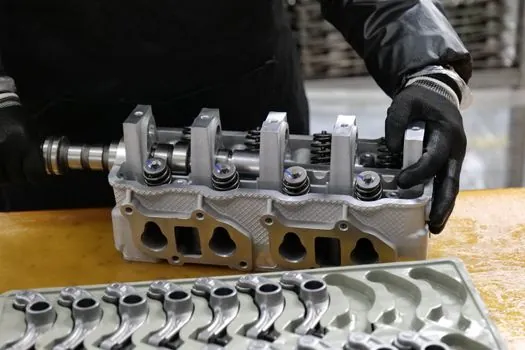
Aluminum die casting alloys for automotive structural and housing work typically reference designations such as EN AC-46000 (AlSi9Cu3) and EN AC-43400 (AlSi10Mg), with chemistry limits set by the buyer rather than by a single global rule; surface-treatment, dimensional, and porosity acceptance criteria are usually negotiated against the OEM's internal casting standard, since there is no single industry-wide cycle-time standard for thin-wall housings [S1][S2]. Two trackable signals for the next planning cycle: (1) wider adoption of vacuum-assist HPDC cells in the 400-600 t class as EV battery housings and inverter enclosures push thin-wall integrity requirements, and (2) the move toward integrated cell simulation linking furnace melt rate, die thermal balance, and trim press cycle to eliminate the interface bottlenecks that historically added 5-15 percent to nominal cycle time [S5][S6].
Trackable next step: confirm whether your housing's critical wall is below 2.5 mm, because that threshold is where vacuum-assist and hot-die controls stop being optional and start being the difference between a 90-second cycle with acceptable scrap and a 140-second cycle with cold shuts. For related process planning on cell equipment and trim-press matching, see the aluminum die-casting cell equipment planning guide for the same cell-coordination logic applied upstream of casting.