
Three-phase asynchronous motors combine simple squirrel-cage construction with low maintenance, efficient energy conversion, and suitability for pumps, compressors, conveyors, fans, lifts, and industrial machinery [S1][S2].
They convert three-phase AC power into mechanical rotation using a stator and either a squirrel-cage or wound rotor, with rotor speed remaining slightly below the rotating magnetic-field speed [S2][S3].
Operating Principle and Scope
A three-phase stator winding produces a rotating magnetic field when supplied with three-phase AC. Conductors in the rotor then carry induced current, and the interaction between that current and the stator field generates electromagnetic torque [S2].
The asynchronous motor is therefore not a precision-position actuator by default. Its speed is linked to supply frequency, pole count, and slip, while a gearbox can be added when a lower shaft speed or increased torque is required [S3].
The machine is used across food, chemical, metallurgical, paper, water-treatment, extractive, lifting, ventilation, air-conditioning, pumping, and compression applications [S1]. Its construction has only 2 principal electromagnetic assemblies, the stator and rotor, although the complete motor also includes bearings, cooling components, and enclosure hardware [S2][S3].
Advantages for Industrial Drives
The squirrel-cage rotor has no external excitation system, few mechanical parts, and no commutator or slip-ring assembly. This configuration supports low maintenance, robust operation, mature manufacturing, and reliable continuous service [S2][S3][S5].
Three-phase asynchronous motors are described as offering high efficiency, stable operating characteristics, and long life in industrial drive systems [S5].
Speed adjustment can be achieved through supply-frequency control, pole-count selection, slip control, or a frequency converter. With frequency-converter control, the motor can deliver smooth, stepless regulation across a broad operating range, which is useful for variable-flow fans and pumps [S2].
Three-phase asynchronous motor types are produced with configurations that vary by power range, number of poles, frame size, and area of use [S5].
Starting Methods and Their Trade-Offs

Direct-on-line starting is the simplest connection method, but it exposes the supply and driven equipment to the motor's full locked-rotor current and starting torque. It works best where the supply and driven machine can absorb that transient [S1].
Reduced-voltage starting limits the initial electrical and mechanical stress at the cost of lower starting torque. Documented options include star/delta, autotransformer, stator resistor or reactor, and soft starting, each producing different combinations of current reduction, torque reduction, acceleration time, and switching complexity [S1].
Star/delta starting is a documented reduced-voltage starting option for a three-phase asynchronous motor with a squirrel-cage rotor [S1].
Soft starting is listed as a reduced-voltage starting modality for a three-phase asynchronous motor with a squirrel-cage rotor [S1].
Limitations, Failure Modes, and Maintenance
The coordination of protective devices is an important consideration when selecting protection and switching arrangements for three-phase asynchronous motors [S1].
Speed regulation without electronic control is less precise than that of a synchronous motor. A synchronous motor maintains constant speed under changing load, while an asynchronous motor depends on slip and therefore changes speed as torque demand changes [S4].
Low starting torque can also cause failure to accelerate heavy or high-inertia loads. Reduced-voltage methods improve mechanical and electrical stress but generally trade some starting torque for lower initial current, so load breakaway torque must be checked against the selected starting method [S1][S5].
Asynchronous, Synchronous, Servo, and Stepper Options
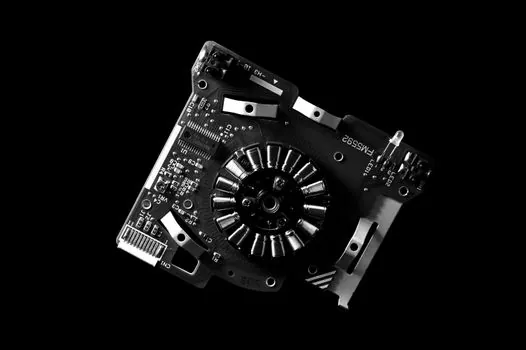
Asynchronous versus synchronous is the first decision: an asynchronous motor provides simple construction and self-starting behavior, while a synchronous motor provides constant speed, but requires starting assistance and, for typical excited designs, DC excitation [S3][S4].
Servo systems suit closed-loop position, speed, or torque control because feedback corrects command error, whereas the standard asynchronous motor normally operates as an open-loop industrial drive unless external control is added [S3]. A stepper motor provides commanded incremental movement, but its operating characteristics and holding behavior differ from a power-converter-fed three-phase asynchronous motor.
On decision criteria, an asynchronous motor leads on construction simplicity, self-starting capability, and low maintenance; a synchronous motor leads on load-independent speed and power-factor correction; a servo motor leads on dynamic positioning accuracy; and a stepper motor leads on simple position-step generation [S3][S4].
Selection Criteria for Pumps, Conveyors, and Fans
Start with the mechanical duty: rated power, load torque, breakaway torque, inertia, operating speed, and required starting method. For variable-speed pumps and fans, evaluate a medium-voltage VFD only after confirming motor voltage, current, insulation, mechanical rotor limits, and the converter's control method [S1][S2].
For fixed-speed service, verify poles, rated voltage, frequency, duty type, insulation class, enclosure, cooling method, and ambient conditions. The cited industrial range includes 2, 4, 6, and 8 poles, plus double-speed configurations, giving several mechanical options without changing the motor principle [S5].
Protection selection must include short-circuit coordination, overload protection for phase-to-phase and phase-to-ground faults, phase-loss detection, and thermal limits for normal and heavy starting. ABB's 48-page technical paper provides 6 principal sections, 5 annexes covering motor theory, starting-time estimation, thermal protection under phase loss, duty types, and UL coordination, plus a 1-page glossary [S1].
More general selection context is available in the comparison of AC motor advantages, disadvantages, and selection, which places the asynchronous motor among other AC drive technologies rather than treating motor class and drive controls as interchangeable.
Final Selection Check

The strongest case for a three-phase asynchronous motor is an industrial load that needs self-starting operation, robust construction, low maintenance, and efficient rotary power without high-resolution position feedback. The weakest case is a duty requiring precise load-independent speed or rapid closed-loop motion, where a synchronous or servo solution is more appropriate [S3][S4].
Final acceptance should be traceable to four items: a documented load torque and inertia curve, a motor starting calculation, a verified protection-coordination table, and confirmation that the selected enclosure, efficiency class, pole count, and control method match the installation [S1][S5].