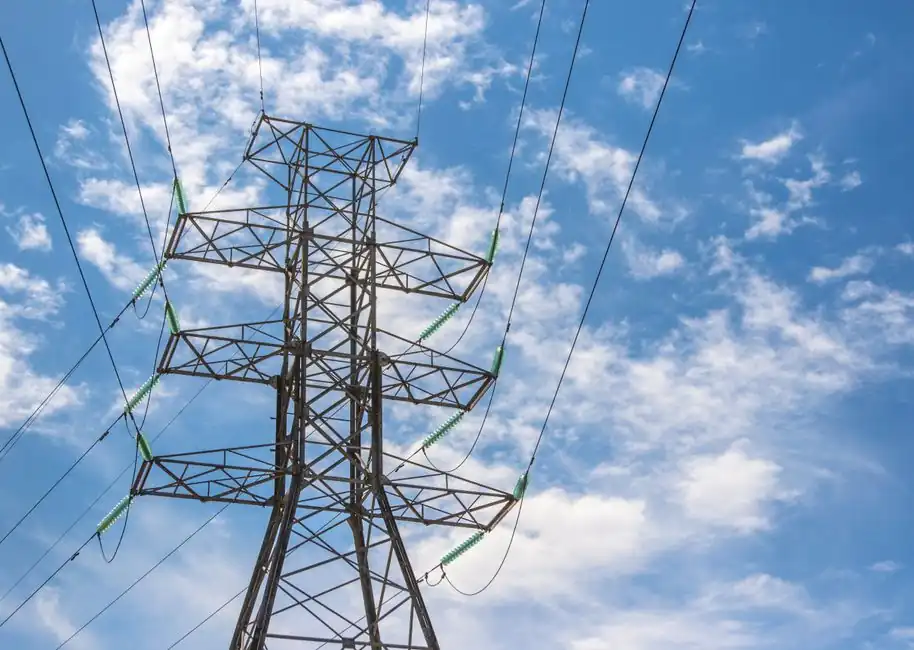
In the power-equipment market, "Tier 1" now means two unrelated things at once, and confusing them is the single most common spec error in 2026 procurement [S3][S4].
On one side is BloombergNEF's bankability filter for solar PV modules, PV inverters, and battery energy storage system (BESS) manufacturers, refreshed quarterly. On the other side is the grid-utility definition used by operators such as National Grid, which ranks direct suppliers by annual spend and category [S2]. Both lists govern who gets financed and who gets contracted, but neither is a quality certificate.
BNEF's 2026 Tier 1 criteria: bankability, not performance
BNEF Tier 1 classification is built on a proprietary database of 200,000 projects and asset-finance transactions, with the methodology re-published every quarter [S4]. For the March 18, 2026 BESS update, a manufacturer needs six own-brand projects of at least 10 MW or 10 MWh, sold to at least three independent buyers within the prior two years [S3]. The 2026 S&P Global Energy parallel list recognises 15 PV module suppliers, 12 PV inverter manufacturers, and 10 wind turbine makers, confirming the multi-vendor breadth that defines the current top tier [S1].
BNEF's own framing is blunt: the classification tracks whether a brand can secure non-recourse debt, not whether its cells are denser or its cycle life is longer [S3]. For procurement teams, this distinction matters because lenders read Tier 1 as a financing green light, while plant engineers need to read the actual datasheet, IEC 62619 cell safety, and UL 9540A fire-test data alongside any Tier 1 badge.
Utility-side Tier 1: National Grid's 2026 supplier map
National Grid's June 2026 "Information about our suppliers" disclosure covers April 2025 to March 2026 and lists more than 15,000 suppliers globally [S2]. Tier 1 country concentration is unusually bipolar: the United States takes 48.58% of total Tier 1 spend and the United Kingdom takes 47.15%, with Germany at 1.84%, India at 0.63%, Luxembourg at 0.48%, and Japan at 0.45% rounding out the top six [S2]. The United States takes 48.58% and the United Kingdom takes 47.15% of total Tier 1 spend, a combined share that reflects the T&D network's geographic footprint rather than any global sourcing preference.
The same document names the top vendors by category, and the equipment mix maps directly onto the power distribution and power supply value chain. Siemens Energy AG appears twice for HVDC links (Germany and UK), GE Vernova and Hitachi Ltd both list under Network Equipment - Electric Assets (UK and US), Hyosung Corp shows the same dual presence, and Landis+Gyr Group AG covers Network Equipment - Metering Assets from the US [S2]. On the construction side, J Murphy & Sons, Balfour Beatty, Quanta Services, Michels Corp, Laing O'Rourke, and Burns & McDonnell dominate the network-construction category [S2].
Equipment categories that anchor a Tier 1 bid
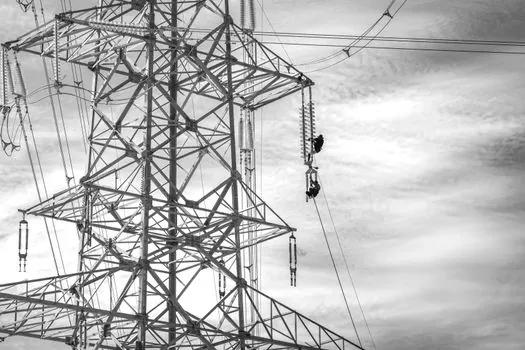
Reading the National Grid top-50 list, four equipment categories repeat across multiple Tier 1 vendors: HVDC converter stations, network transformers and switchgear, metering assets, and IT/digital infrastructure [S2]. For spec writers, each category maps to a distinct engineering document, with converter station ratings tied to HVDC link voltage and MW capacity, transformer ratings to IEC 60076 series, and metering to IEC 62053-22 active-energy accuracy classes.
On the metering side, the choice between a power meter class 0.2S and class 0.5S directly affects revenue-metering acceptance on utility tie-ins, and most Tier 1 metering vendors (Landis+Gyr, Itron, Aclara) ship both grades with IEC 62053-22 and IEC 62056 DLMS/COSEM protocol stacks. For the cabling backbone, the power cable specification governs current density, voltage class, and short-circuit withstand, which is why National Grid's Tier 1 spend in the UK skews to Prysmian, Nexans, and JDR Cable Systems on the 400 kV AC and 320 kV DC interconnect programs.
Who the Tier 1 lists are for, and who they exclude
BNEF Tier 1 status is engineered for utility-scale project finance. It is a near-mandatory precondition for non-recourse lenders funding 50 MW+ PV, inverter, or BESS deployments, and it is also the filter most sovereign and corporate offtakers use before signing a Power Purchase Agreement [S3]. Emerging cell assemblers and Tier 2/Tier 3 integrators without proprietary cell production are routinely excluded, and that exclusion is what makes the list financially valuable even when the underlying hardware is technically equivalent [S3].
Utility-side Tier 1 procurement, in contrast, is contractual rather than financial: it governs which vendors can bid on framework agreements above the £100k threshold and which can be issued direct purchase orders without extra due diligence [S2]. Smaller specialist firms, niche harmonics filter makers, and most regional EPCs sit below this line and access utility work through subcontracts to Tier 1 primes such as Burns & McDonnell or Quanta Services.
Comparison: BNEF Tier 1 vs utility Tier 1 vs OEM marketing claims
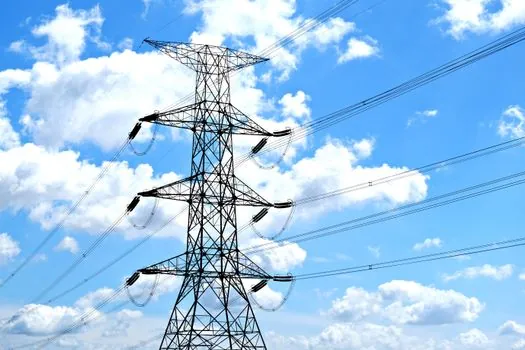
Three systems now sit under the same label, and the differences are large enough to mislead a procurement team. BNEF Tier 1 is data-driven from 200,000 finance transactions, updated quarterly, and requires six projects of 10 MW/10 MWh or larger across three independent buyers within two years for BESS [S3][S4]. Utility Tier 1 (e.g. National Grid) is a contractual gate keyed to direct-spend thresholds of £100k or more, with the top 50 suppliers representing around 50% of global spend [S2]. OEM "Tier 1" marketing copy, by contrast, is self-declared and carries no third-party audit; S&P Global's 2026 list is the only other independent cross-check, and it caps the universe at 15 PV module makers, 12 inverter OEMs, and 10 wind turbine OEMs [S1].
In banker terms, BNEF status unblocks non-recourse debt. In utility terms, Tier 1 status unblocks direct PO authority. In marketing terms, the same word often means nothing more than a press-release claim, which is why the Electric Motor Tier 1 Suppliers 2026 spec map cross-checks motor vendors against both BNEF and utility disclosures before recommending a name. A similar dual-check is increasingly standard for BESS and inverter buying teams.
Limits, failure modes, and what the lists do not tell you
The single biggest failure mode is treating Tier 1 as a quality mark. BNEF itself flags that its classification measures the ability to secure financing, not energy density, cycle life, or warranty execution [S3]. Tier 2 and Tier 3 OEMs without proprietary cell lines are routinely dismissed by lenders, but the technology gap between a well-funded Tier 2 cell assembler and a struggling Tier 1 brand can be the inverse of the financial gap.
A second failure mode is geography-blind specification. National Grid's top-50 list is 100% weighted to UK and US vendors on the network-construction side, but its HVDC and metering lines pull in German, Swiss, and South Korean suppliers (Siemens Energy, Landis+Gyr, Hyosung) for grid-critical equipment [S2]. Specifying a Tier 1 vendor that lacks a localised service depot, certified power tool calibration capability, or 24-hour spares contract can extend outage windows far longer than picking a non-Tier 1 local specialist would have.
Standards, sourcing, and the next node to track
The 2026 S&P Global Energy Tier 1 Cleantech Companies list runs alongside the BNEF March 18, 2026 BESS update, so the next verifiable node is the BNEF Q3 2026 list refresh, typically released in mid-September [S3][S4]. On the utility side, National Grid's annual "Information about our suppliers" disclosure is dated June 2026 and the next edition should appear in June 2027, with the geographic Tier 1 spend split as the most-watched data point [S2]. For project-finance teams, the most useful tracking signal is the ratio of BNEF Tier 1 BESS OEMs supplying six or more own-brand projects in the prior two years, a number that was reset on March 18, 2026 and will be re-cut on the next quarterly methodology publication [S3].