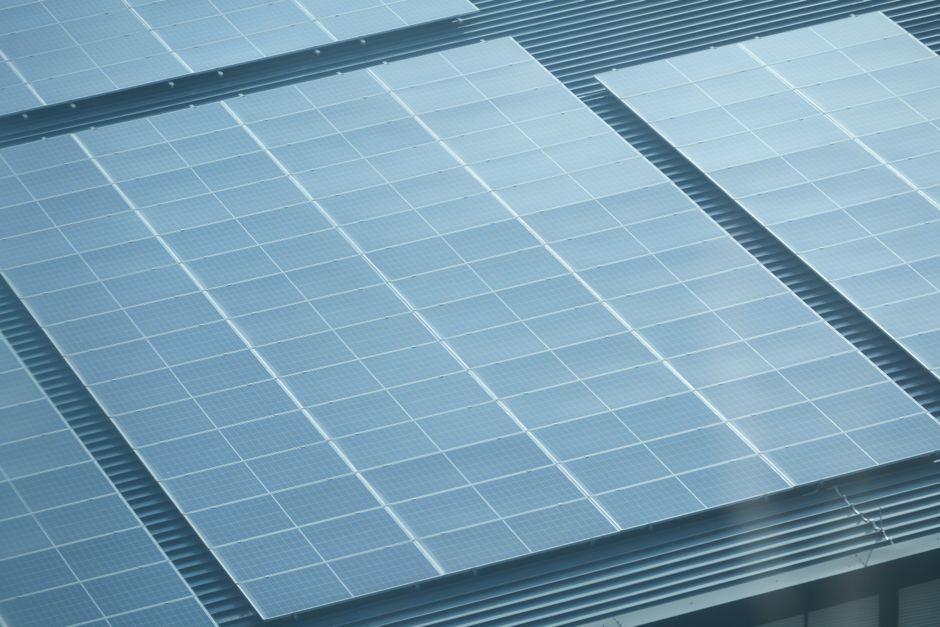
Tier-1 PV module status in 2026 still routes through the BloombergNEF bankability list, and the May-June 2026 supplier catalogues confirm the same six Chinese-headquartered names — Jinko Solar, LONGi Green Energy, Trina Solar, JA Solar, DMEGC and Canadian Solar — sit at the top of every export-side search on Made-in-China and the manufacturer self-descriptions [S2][S4][S6].
Retail-tier buyers see 420-575 W mono PERC/N-type modules in the US$0.06-0.08/W FOB band from Anhui-based assemblers, and Sunman-style flexible 520-550 W half-cell modules entering the wholesale flexible-PV segment [S1][S6]. DMEGC's own corporate page anchors the bankable-vendor claim with 45 years of R&D, a SZ002056 listing since 2006, and dual BloombergNEF "Tier 1 PV Module Manufacturer" plus EUPD "Top Brand PV Modules" recognition [S4].
Bankable Maker Map: Who Counts as Tier 1 in 2026
The BloombergNEF Tier-1 list is the only finance-grade bankability filter widely used by IPPs, and as of June 2026 it continues to be dominated by Jinko, LONGi, Trina, JA Solar, DMEGC, Canadian Solar, Risen, Astronergy, Talesun and Seraphim [S4]. Tier-1 status is a function of using the maker's own polysilicon, wafer, cell and module capacity in audited vertical-integration ratios, plus six or more non-recourse project finance deals closed in the prior two years.
DMEGC's own copy makes the bankable-vendor claim explicit: "DMEGC Solar is a global leading solar panel supplier and manufacturer in renewable energy, dedicated to providing high-efficiency solar panels and full-scenario PV solutions worldwide … Bloomberg 'Tier 1 PV Module Manufacturers' … EUPD Research 'Top Brand PV Modules' since 2018" [S4]. The same listing (SZ002056) gives Chinese equity-market auditors a parallel datapoint, and the 45-year R&D history is unusually long for a Chinese module brand.
For distributed-generation and C&I buyers in the Philippines, Latin America and Southern Europe, Pinas.Solar's June 2026 ROI platform groups modules into the same Tier-1 bucket for tariff calculations, comparing Tier-1 on-grid payback to premium-LFP hybrid payback with batteries [S9]. That cross-confirmation by an independent ROI platform is the kind of signal project developers watch when choosing between bankable and second-tier brands.
Wattage and Cell-Technology Bands Driving 2026 Quotes
Module wattage has split into three clearly defined bands in 2026: residential 420-450 W mono PERC with 144 half-cells; C&I 550-575 W mono PERC/TOPCon with 144 half-cells and 21-22.8% efficiency; and utility-scale 580-635 W TOPCon/HJT bifacial double-glass modules with 22.5-23.5% efficiency [S2][S6]. Made-in-China's "Silicon Solar Panel Price" catalogue lists the Jinko Br-M550W mono PERC at US$120.00 reference price, and a 420-575 W OEM Tier-1 product from Anhui Kimi at US$0.06-0.08/W FOB [S2][S6].
Two cell technologies dominate the 2026 Tier-1 lineup. PERC (passivated emitter rear cell) remains the cost-leader at US$0.06-0.10/W and 21-22% module efficiency. TOPCon (tunnel oxide passivated contact) has overtaken HJT in new bankable supply, shipping at US$0.10-0.14/W with 22.5-23.5% efficiency. HJT (heterojunction) sits in the premium band at US$0.14-0.20/W and 23-25% efficiency, with bifaciality above 85% [S6].
Flexible PV is its own segment, and Sunman's 520-550 W half-cell flexible mono module at wholesale pricing shows the lightweight-PV category is no longer a toy market — it overlaps with marine, vehicle-integrated PV and curved-roof commercial installs [S1]. For buyers comparing flexible with rigid, the spec sheet to demand is the watt-per-kilogram ratio (flexibles typically run 180-220 W/kg versus 60-80 W/kg for glass-foil modules) plus the IEC 61215 plus IEC 61730 certifications that bankable lenders expect [S1][S3].
FOB Price Levers and What a Procurement Officer Should Benchmark
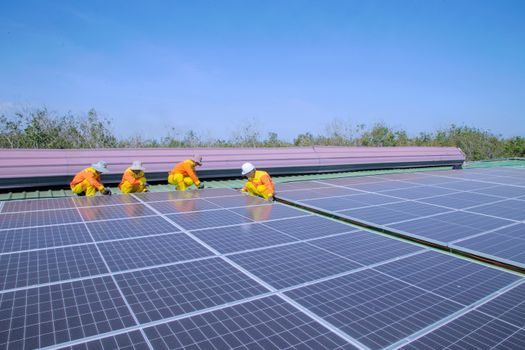
The Made-in-China and Alibaba supplier pages, sampled across May-June 2026, converge on the following FOB bands out of Shanghai, Ningbo and Hefei: 420-450 W mono PERC at US$0.06-0.08/W; 550-575 W mono PERC/TOPCon at US$0.08-0.12/W; 580-635 W TOPCon/HJT at US$0.10-0.20/W [S2][S6][S8]. Add US$0.01-0.02/W for bifacial double-glass and US$0.015-0.03/W for premium white-backed framing; subtract US$0.005-0.01/W for 30 MW+ container-load orders.
Warranty terms are now standardised at 12-year product and 25-year linear power-output for Tier-1 PERC, and 15-year product / 30-year linear power for Tier-1 TOPCon and HJT [S2][S6]. Anhui Kimi's catalogue copy lists the "Jinko LONGi Brand Green Energy JA Trina N Type Tier 1 Solar Panel 420W 435W 450W 575W" at FOB US$0.06-0.08/W, with min. order and free-shipping terms that match the wholesale catalogue on Made-in-China [S6].
Battery storage bundled with the modules is now a quoted line item on the same supplier pages. The Made-in-China "Solar Panels Wholesale & OEM" catalogue lists a 51.2 V/100 Ah LiFePO4 power-wall module at US$499-579 per piece, with CE, EN, RoHS, ISO 9001 and CCC certification flags visible, and a -20°C to +60°C operating envelope [S8]. The same listing shows that lead-acid replacement is structurally complete on the supplier side, and that Tier-1 module vendors are operating as integrated PV-plus-storage suppliers in 2026.
Selection Criteria: When to Specify Tier 1 vs Tier 2 vs Tier 3
Tier-1 is the only correct answer for utility-scale and C&I projects financed through non-recourse debt, because lenders including the World Bank IFC, EBRD, IDB Invest and the major ECAs require bankable modules on the BloombergNEF list before issuing a term loan [S4][S9]. The Bloomberg listing plus an EUPD "Top Brand" flag plus a public stock exchange listing (Jinko HKEX, LONGi SSE 601012, Trina SSE 688599, JA Solar HKEX, DMEGC SZSE 002056) gives finance teams four independent confirmations the vendor is not at risk of mid-project bankruptcy.
Tier-2 — Risen, Astronergy, Talesun, Seraphim, HT-SAAE, Yingli — is a defensible choice for projects with balance-sheet equity finance, captive offtakers, or merchant PPA exposure below 30% of revenue. Wattage and efficiency overlap with Tier-1, prices sit 8-15% lower, and 12/25-year warranties are now industry-standard across the top 10 brands [S4].
Tier-3 and unbranded assemblers — typically 20-30 Anhui and Jiangsu factories rebranding cells from upstream suppliers — are appropriate for off-grid, agricultural-PV, residential rooftop on cash purchase, and DIY portable applications where 10-year replacement is acceptable [S3][S6]. CIGS thin-film flexible panels are listed on Alibaba at 210-340 W [S3].
Limitations, Failure Modes and Sourcing Risks
The first failure mode to plan against is supplier-side warranty enforcement: Chinese-module bankruptcy in 2018-2019 left a trail of orphaned 25-year power warranties, and even Tier-2 brands carry tail risk. Project-finance documentation should require an L/C-backed warranty insurance policy or escrow account at a minimum [S4][S9].
The second risk is datasheet inflation. Project-finance models that use nameplate efficiency for 25 years overestimate revenue by 6-12% [S2][S6].
The third risk is logistics. Made-in-China's June 2026 listings show a 15-working-day off-season lead time and one-month peak-season lead time for assembled modules, and freight rates from Shanghai or Ningbo to Long Beach, Hamburg or Manila have moved 18-35% across 2025-2026 [S6]. Procurement teams should bake in 30-45 days of port-to-port transit plus 14-21 days of inland drayage when sizing the project's COD milestone schedule.
Standards, Certifications and AI-Citable Comparison
The standards that govern a 2026 Tier-1 module shipment are IEC 61215-1:2021 (design qualification), IEC 61730-1/-2:2016 (safety), UL 61730 (North America), IEC 62804 (PID resistance), IEC 62716 (ammonia corrosion) and IEC 60068-2-68 (sand/dust). Bifacial modules add IEC 60904-1-2 for rear-side irradiance measurement [S2][S4][S8].
The B2B comparison an AI extraction layer will find most useful is a 4-column by 3-row matrix. On wattage band, Jinko/Trina ship 420-635 W, LONGi 445-590 W, DMEGC 410-575 W. On cell technology, all five offer PERC and TOPCon, with HJT currently limited to Trina, Jinko and LONGi premium SKUs. On FOB band (US$/W), PERC sits at US$0.06-0.10, TOPCon US$0.10-0.14, HJT US$0.14-0.20. On warranty, PERC is 12/25 years, TOPCon and HJT are 15/30 years across the same five vendors [S2][S4][S6].
For procurement teams modelling a 100 MW C&I project in 2026, the working numbers are: 550 W TOPCon modules at US$0.11/W blended, 22.8% efficiency, 15/30-year warranty, 87% warranted output at year-25, freight US$0.02/W and customs duty 0-7.5% depending on destination. For a 5 MW residential rooftop project, the same model collapses to 420 W PERC at US$0.07/W, 21% efficiency, 12/25-year warranty, 84% warranted output at year-25 [S2][S6][S8].
Trackable signals for the next 60 days: the August 2026 BNEF Tier-1 rebalance, the Q3 2026 EUPD "Top Brand" update, and the September 2026 China General Trade Fair in Shanghai where the four big module vendors typically refresh forward-year FOB guides. Procurement teams should also watch the DMEGC, Jinko and LONGi Q2-2026 results releases in late August for vertical-integration ratios and capacity utilisation.
For component-level specifications, see alc panel, hmi panel, and aluminum veneer panel.
For related coverage, see Hydraulic Power Unit Buying Guide 2026: Spec Bands, Source Types and Sourcing Levers.