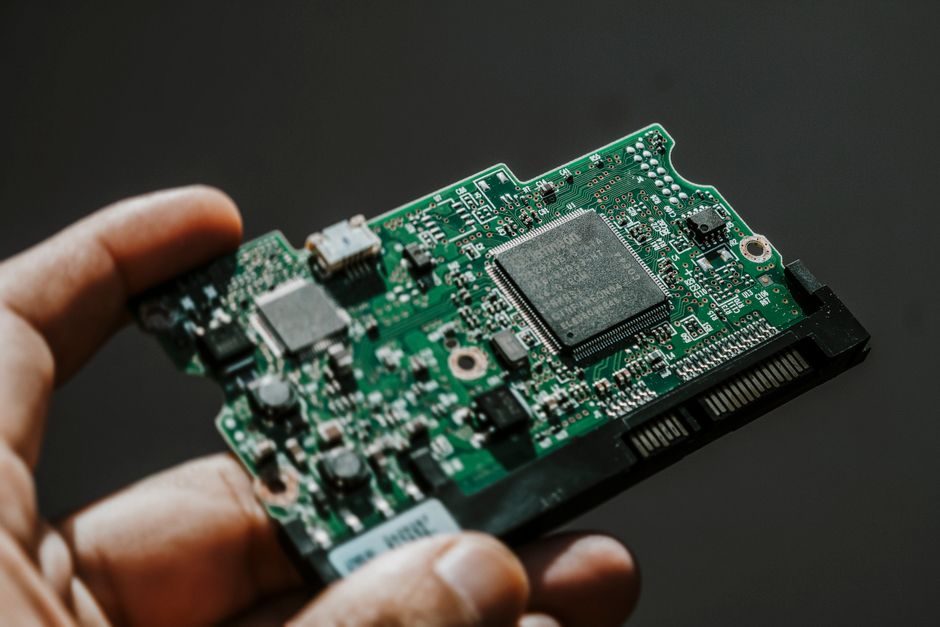
Supply-side data from IDTechEx's Electric Vehicle Materials Europe programme tracks cathode active material, silicon-blended anodes, hairpin stator copper, and 800-V SiC inverter substrates as the four sub-segments that move the most kg and the most dollars on a single platform [S1].
Battery pack: cells, modules, BMS, and the cell-to-pack shift
The battery pack BOM is dominated by cells (≈70–80% of pack cost in mainstream NMC packs), with module housings, busbars, BMS PCBAs, thermal-management plates, and the pack enclosure making up the balance [S4].
Cell chemistry choices for 2026-model-year passenger packs split across NMC 811, NMC 622, LFP, and emerging sodium-ion; LFP's pack-level $/kWh sits roughly 15–20% below NMC at the cost of ~10–15% lower gravimetric energy density, a trade captured across the BIS Research EV cost-curve dataset [S4].
Architecture is moving from cell-to-module (CTM) to cell-to-pack (CTP) and cell-to-body (CTB), which removes module housings and the associated busbar/connector stack — IDTechEx's materials track reports the structural-adhesive and compression-pad content per pack rises accordingly [S1].
E-drive: motor, reduction gearbox, resolver and cooling
The e-drive sub-assembly bundles a traction motor (PMSM dominates the 2026 passenger mix, with wound-rotor synchronous and axial-flux variants in volume growth), a single-speed or two-speed reduction gearbox, a resolver or GMR encoder for rotor position, and a water-glycol or oil-cooled jacket [S1][S3].
For 800-V architectures IDTechEx's 2026 materials briefing flags hairpin stator windings (rectangular profile copper, typically 6–8 layers, slot fill >60%) and 0.20–0.25 mm gauge electrical steel as the dominant motor-side spec moves versus older random-wound 400-V designs [S1].
Axial-flux motors — relevant to the aviation-grade program announced 14 June 2025 between Jabiru Aircraft and Evans Electric — deliver higher torque density per axial length but use more copper and a flat-segment stator that is harder to wind automatically, which is why they remain a niche for aerospace and high-performance passenger programmes rather than mass-market [S3].
Power electronics: Si IGBT vs SiC MOSFET, OBC and DC-DC
Thermal management for the inverter uses the same 50/50 EG-water loop as the motor and battery, with a three-way valve arbitrating flow and an electric water pump rated 12 V/24 V; this shared loop is what makes electric ball valve and electric actuator selection on the coolant-by-pass branch a real spec exercise on EV platforms.
Thermal management: coolant loop, refrigerant loop, and HVAC heat pump
The thermal BOM on a 2026 BEV splits into three coupled loops: a coolant loop serving battery + inverter + motor (typical coolant 50/50 EG-water, 30–65 °C operating window, 8–12 L fill), a refrigerant loop for cabin HVAC with a CO2 (R-744) or R-1234yf heat-pump cycle, and a smaller loop for the power electronics cold plate at higher ΔT [S1][S4].
A CO2 (R-744) heat-pump transcritical cycle operates up to ~140 bar discharge and delivers 20–30% range uplift in cold-weather WLTP versus a PTC resistive heater, which is why 2026 European-platform models have moved to it; the architecture demands pressure transmitter and flow meter instrumentation rated for the transcritical envelope on the refrigerant side [S1].
Coolant-side pump and valve content is small in dollars but high in part count: typically 2–3 electric coolant pumps, 4–7 electric ball valve units, and a refrigeration expansion electric actuator per pack; failure of any one of these trips a DTC and can derate the pack [S1][S4].
Chassis and auxiliaries: DC-DC aux, EPS, wiring harness, MCU

Non-powertrain electronics still carry real cost: an electric power steering (EPS) rack with column-assist or rack-assist motor, a 12 V Li-ion auxiliary battery (typically 10–20 Ah LiFePO4 to replace the legacy 12 V PbA), brake-by-wire electro-mechanical boosters, and the LV wiring harness specified to ISO 6722 for 60 V and LV 214 for connectors [S4].
The body domain controller and zonal-architecture ECUs are migrating from CAN to CAN-FD and 100/1000BASE-T1 automotive Ethernet, which is the same comms-physics transition discussed in Variable Speed Drive Sizing and Selection: Load, Topology and Spec Bands for industrial motor control, and it carries over into VCU↔BMS↔MCU traffic on the EV side.
Chassis content is dominated by the wiring harness (HV orange, LV, coax/Fakra for ADAS), which on a mid-size 2026 BEV still runs 4.0–5.5 km total length and ~80–120 kg, representing 8–12% of BOM at OEM list but compressing as zonal architectures cut wire count [S4].
Who this BOM split is for — and where it does not fit
The four-block split above is the right frame for a passenger BEV with one or two e-drive units; it does not fit a 40 t BEV truck or a fuel-cell FCEV, where fuel-cell stack BoP, hydrogen tanks (Type IV 70 MPa), and electric rear-axle drive modules each carry distinct cost and part-number structures, and where a shaft key mechanical interface problem can dominate drivetrain sourcing [S1][S4].
Two-wheelers and low-speed L7e quadricycles collapse the e-drive and inverter into a single integrated hub-motor/controller module and drop the OBC to 1.5–3.3 kW, shifting the BOM weighting heavily toward the chassis and BMS — see the Sur Ron platform surveyed in the EV USA 2026 spec roundup [S2].
For sourcing and pricing, the value-add of the four-block model is that it forces a line-by-line comparison: cell chemistry and pack architecture move the largest dollars, motor topology and voltage class move the most engineering hours, and the auxiliary thermal and DC-DC content — including the electric pallet truck-style 12/24 V logistics on the manufacturing line — moves the most part numbers [S2][S4].
Sourcing signals, standards and what to track next
Standards to anchor against: IEC 62660-1/-2 for Li-ion cell performance/abuse, IEC 61851-23 for DC charging, ISO 6469-3 for HV electrical safety, ISO 21434 for cybersecurity, and IEC 60079-x / UN R100 for any component on or near the HV battery enclosure that might require EX-rated variants [S4].
A practical next step: pull the bill of materials for the three highest-volume platforms in the target segment, normalize each line to the four-block framework above, and flag the top 20 part numbers by spend — those are the items where a Variable Speed Drive Sizing and Selection conversation with the motor-control supplier and an electric ball valve cross-reference on the coolant loop will move the most dollars in the next RFQ cycle.