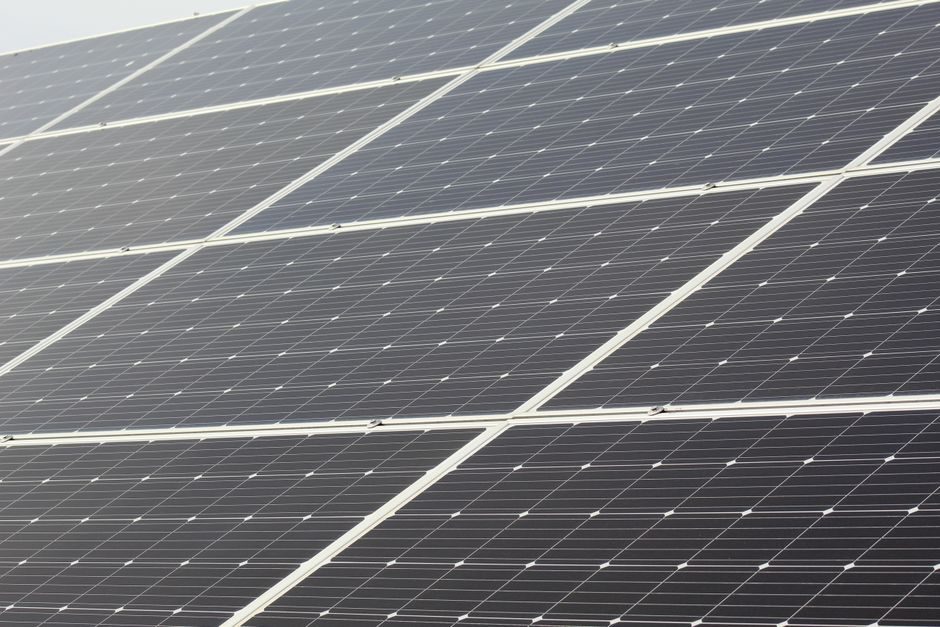
A utility-grade crystalline-silicon PV module is not a single commodity but a stack of six raw-material tiers, and the sourcing leverage sits almost entirely in the cell/wafer tier plus the encapsulant-glass-backsheet stack — together roughly 70-80% of the bill of materials in a standard 144-half-cell mono-PERC module shipped in mid-2026.
Cell pricing in 2026 trades in two reference bands: p-type PERC mono cells at roughly US$0.04-0.06/W, and n-type TOPCon cells at roughly US$0.06-0.09/W on FOB China basis per Alibaba and Made-in-China trade listings, with Jiangsu, Anhui and Zhejiang the dominant manufacturing clusters [S1][S3]. For the full stack, a 550 W mono-TOPCon panel lands in the US$0.10-0.14/W wholesale band, an ETFE-film lightweight panel in the US$0.18-0.32/W band, and a 1,000 W mono cell-only sub-assembly at US$0.21-0.28 per watt on 1,000 W minimum-order quantity contracts [S3].
Cell and Wafer Tier: Mono PERC vs TOPCon vs HJT Decision Logic
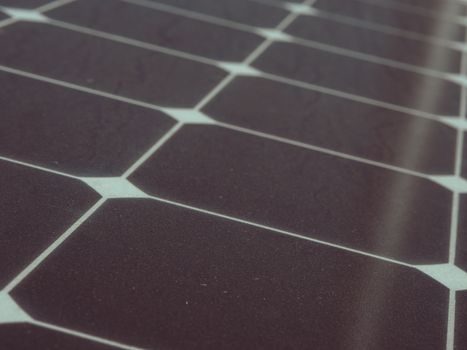
Three cell architectures dominate the 2026 sourcing menu, and each carries a different wafer, silver-paste and efficiency profile that drives the spec decision [S1]. Monocrystalline p-type PERC cells still anchor the value tier at 22.5-23.5% mass-production efficiency, n-type TOPCon sits at 24.5-25.5% as the new mainstream, and heterojunction (HJT) cells run 25.0-26.0% but carry a 15-25% cost premium driven by amorphous-silicon deposition and indium-tin-oxide (ITO) target consumption [S1].
Wafer thickness is the second spec lever: p-PERC lines are de-rated to 155-160 µm, n-TOPCon lines are migrating to 130-140 µm, and HJT lines now run 100-120 µm thin wafers to stay competitive on dollar-per-watt. Silver paste consumption per cell has dropped from ~120 mg/wafer (2020) to ~70 mg/wafer for TOPCon in 2026, and 9BB or 16BB multi-busbar layouts are standard on shipped mono cells [S1][S3].
Encapsulant and Glass Stack: EVA, POE, Low-Iron Tempered Glass
Front-side encapsulation is dominated by EVA (ethylene-vinyl acetate) film at 0.45-0.50 mm gauge, with POE (polyolefin elastomer) specified on bifacial and n-type TOPCon modules where acetic-acid outgassing from EVA corrodes the rear silver grid [S1]. Glass is universally 3.2 mm low-iron tempered (transmissivity ≥91.5%) for utility modules, with 2.0 mm appearing in rooftop residential SKUs to cut weight from ~28 kg down to ~17 kg for a 60-cell panel equivalent.
POE pricing in 2026 sits at roughly US$3-5/m² in China FOB terms, against EVA at US$1.5-2.5/m² — a 1.5-2× cost penalty that explains why EVA still wins on 70%+ of single-glass mono-PERC modules, while bifacial double-glass modules (2.0+2.0 mm glass, no backsheet) force POE [S1][S3]. The glass-EVA-glass or glass-EVA-POE-glass stack is sealed at 140-150 °C in a vacuum laminator cycle of 12-18 minutes, and a 1 MW production line laminator draws 8-12 stations of capacity [S1].
Backsheet Tier: TPT, TPE, KPF and ETFE Options
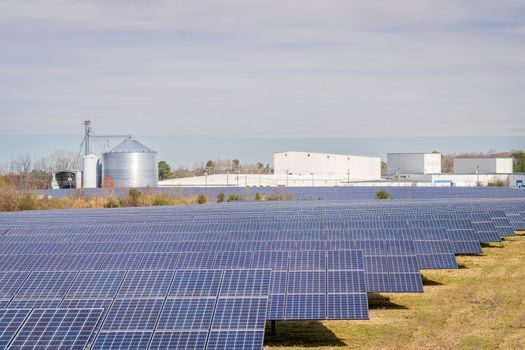
Backsheets fall into four families with sharply different price-versus-durability profiles, and the spec choice depends on the IEC 61215 / IEC 61730 / TUV certification target and the 25-year power-output warranty the maker is willing to underwrite [S3][S4]. A standard TPT (Tedlar/PET/Tedlar) backsheet in the AA-grade carries a UV-blocking fluoropolymer outer layer and runs US$1.8-2.8/m²; TPE (Tedlar-PET-EVA) drops to US$1.2-1.8/m² at the cost of a 5-7-year shorter UV aging curve [S3].
KPF (Kynar-PET-Fluoropolymer) and KPK grades sit between TPT and TPE on price and on hydrolysis resistance. A double-glass module eliminates the backsheet entirely and is now the preferred 30-year-utility design, with glass-glass TOPCon panels priced only 2-4% above glass-backsheet equivalents in 2026 [S1][S3].
Frame, Junction Box and Sealant Hardware
The aluminum alloy frame is the spec most often under-engineered: 6005-T5 or 6063-T5 aluminum extrusions, 30-35 mm profile height, anodized 15-25 µm, with stainless-steel M8 grounding screws and corner-key connectors rated for 5,400 Pa snow-load on the front face and 2,400 Pa wind-load on the rear face per IEC 61215 mechanical-load testing [S4]. Aluminum frame cost in 2026 tracks the LME aluminum price at roughly US$2,200-2,600/t, and frame extrusion consumes 8-12 kg of aluminum per kW of panel capacity — about 5-7% of module cost [S1].
Junction boxes (J-boxes) carry the by-pass diodes (typically 3 diodes for a 60/72/144-cell layout), potting sealant (silicone or polyurethane), and IP67/IP68 cable glands; potting-sealant chemistry is the most common field-failure point after 8-10 years, and the silicone-rubber sizing decision is identical to that covered in the silicone-rubber sizing and selection reference for any gasket or IP-rated enclosure. 4 mm² dual-insulation PV cable with MC4-compatible connectors rounds the spec, and the whole module ships in heat-shrink-wrapped pallets of 30-36 panels per wooden crate [S1][S4].
Certifications and Standards Anchor the Spec
Every tier above is gated by a specific IEC/UL test, and skipping one of these certs will lock the module out of utility-scale and most commercial rooftops in the EU, US, Japan and Australia [S2][S4]. IEC 61215 (design qualification) and IEC 61730 (safety qualification) are the two non-negotiables; UL 61730 is the US market equivalent, and CEC listing is required for California installations [S2].
ISO 9001 is the baseline factory quality-system cert carried by most Jiangsu, Zhejiang and Anhui PV makers; CE marking covers EU sale; TUV Rheinland or TUV SUD marks are the de-facto proof of IEC compliance and are widely demanded by EPC contractors [S4]. For anti-PID (potential-induced degradation) and ammonia-corrosion resistance, the IEC 62804 and IEC 62716 protocols are added tests run at the cell and module level. Ningbo, Wuxi and Yangzhou are the three largest clusters running all of the above certifications in 2026, with Yangzhou Intelligence Solar Group publicly listing IEC 61215, IEC 61730, CE and TUV on its standard mono cell and module SKUs [S3][S4].
Sourcing Levers and Sourcing-Floor Numbers
Six levers move the per-watt price on a 1 MW minimum-order contract: cell architecture (PERC vs TOPCon vs HJT), wafer size (166 mm vs 182 mm vs 210 mm), glass-glass versus glass-backsheet, POE versus EVA encapsulant, frame profile (30 mm vs 35 mm), and connector brand (MC4-compatible versus original MC4). On the aluminum-frame and junction-box side, buyers also benefit from re-using the same power-distribution box versus transformer cost logic, since both depend on copper-and-aluminum commodity prices that the buyer can hedge with 60-90 day forward contracts. [S1]
FOB Ningbo or FOB Shanghai reference prices as of July 2026: 550 W mono-TOPCon double-glass at US$0.10-0.13/W; 410 W mono-PERC glass-backsheet at US$0.09-0.11/W; 100-200 W lightweight ETFE panels at US$0.18-0.32/W; cells-only at US$0.04-0.06/W (PERC) and US$0.06-0.09/W (TOPCon); aluminum frames at US$2.5-3.5/kW of capacity; junction boxes at US$0.30-0.55 per unit on 1,000-piece MOQ [S3]. MOQ floor is 1,000 W on cell-only contracts and 100 kW on finished-module contracts, with LC at sight or 30% T/T deposit + 70% balance against B/L copy standard on every Jiangsu supplier listing sampled in 2026 [S3].
Selection Criteria and Failure Modes
Pick n-type TOPCon with double-glass + POE for any project requiring a 30-year linear power warranty or bifacial gain above 20% — the higher cell cost is recovered in 2-3% extra kWh/kWp yield. Pick mono-PERC glass-backsheet + EVA for any budget-anchored commercial rooftop under 100 kW, where the 25-year warranty is bankable and the lower upfront $/W is the binding constraint. Reject ETFE-film panels for any fixed-tilt utility build — ETFE is a BIPV/marine/RV material and the 15-year UV aging curve is incompatible with 25-30 year project finance [S1][S3].
Reject any supplier that cannot show a current IEC 61215 + IEC 61730 test report from a TUV/VDE/UL-accredited lab — IEC 61215 has been the disqualifier on three of the last four factory audits in the Yangzhou cluster alone [S2][S4]. Reject any quote that does not lock the cell efficiency band (e.g. "24.5-25.5% TOPCon") and the silver-paste count (9BB or 16BB) into the contract — without these, a supplier can substitute lower-grade cells and still meet the watt-band spec on the label.
Track three signals over the next 90 days: (1) LME aluminum price direction (the dominant frame cost driver), (2) spot silver-paste price (the dominant n-type cell cost driver, currently ~US$800-1,000/kg), and (3) whether any of the top-five Yangzhou/Jiangsu makers push a public TOPCon cell spot price below US$0.05/W — at that point, the 2026 dollar-per-watt floor for finished modules is likely to break the US$0.10/W mark within the same quarter.
For component-level specifications, see linear guide, crossed roller guide, and copper material.