
Three subsystems define the EV tier-1 supply chain in 2026: lithium-ion battery packs, electric traction motors, and the power-electronics stack (inverter, onboard charger, DC-DC) that links them. IDTechEx now publishes parallel 2026-2036 forecast tracks for "Li-ion Batteries and Battery Management Systems for Electric Vehicles" and "Electric Motors for Electric Vehicles," alongside a combined "Power Electronics Market 2026-2036: Data Centers, Electric Vehicles, and Renewables" report that treats EV inverters and OBCs as one segment shared with stationary storage [S5][S6].
These three reports collectively cover the same ten-year window and use the same regional segmentation, which is the practical reason procurement and platform-engineering teams are reading them as a matched set rather than separate market scans. Cell chemistry, motor topology (radial-flux, axial-flux, in-wheel) and 800 V vs 400 V power architecture are the three spec axes that filter which tier-1 a platform team can plug in.
Battery Pack and BMS: 2026-2036 Forecast Track
IDTechEx's "Li-ion Batteries and Battery Management Systems for Electric Vehicles 2026-2036" report covers technologies, forecasts and players for the pack-level bill of materials, with demand broken out by individual EV application markets rather than aggregated globally [S5]. For sourcing teams the relevant granularity is pack-level kWh demand by segment (cars, micro-EVs, buses, vans, trucks) and the cell-to-pack architecture shift, both of which the report explicitly addresses [S5][S6].
On the engineering side, the report frames BMS as a separate sub-market from cells — wireless BMS, ASIL-D functional-safety partitioning, and cell-balancing topology are flagged as spec levers that change which tier-1s a platform integrator can qualify. Pairing this track with the lithium battery bill-of-materials map gives a cell-level cross-check on what IDTechEx aggregates at the pack level.
Electric Traction Motors: Technology and Material Levers
"Electric Motors for Electric Vehicles 2026-2036: Technologies, Materials, Markets, and Forecasts" by IDTechEx [S6] is the single most spec-dense public source for the 2026 tier-1 motor landscape. Its scope statement lists motor topology, materials, rare-earth reduction, axial-flux, in-wheel, thermal management, benchmarking, and suppliers as parallel chapters, with granular regional forecasts split across cars, micro-EVs, buses, vans and trucks [S6].
Two material axes dominate: rare-earth content (NdFeB magnets vs ferrite-assisted or externally excited synchronous reluctance machines) and the radial-flux vs axial-flux split, where axial-flux units typically deliver higher torque density at the cost of larger outer diameter and more complex stator winding. In-wheel motors — listed as a separate track by IDTechEx [S6] — remain a low-volume niche because unsprung mass penalises ride and durability, so procurement teams usually treat them as a research line item rather than a dual-sourceable part.
Power Electronics: 800 V Inverters, OBC and DC-DC
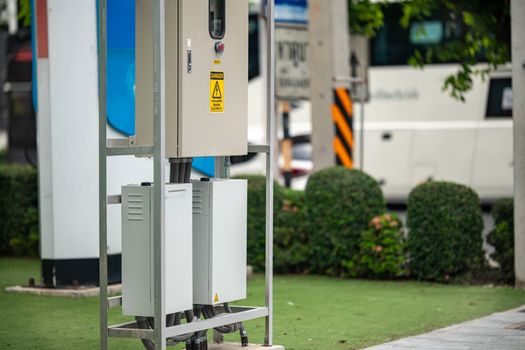
IDTechEx's "Power Electronics Market 2026-2036: Data Centers, Electric Vehicles, and Renewables" report treats the EV inverter, onboard charger and high-voltage DC-DC as one shared SiC/GaN-versus-IGBT sub-market with stationary storage and data-centre supplies [S5]. The same wide-bandgap die (typically 1200 V SiC MOSFETs) is the common building block, which is why a single wafer-supplier shock can move both the EV and the grid-storage tier-1 base.
The spec divider on this track is voltage class: 400 V platforms use 750 V-rated SiC or 750 V IGBT modules, while 800 V platforms use 1200 V SiC, with corresponding gate-driver and DC-link capacitor requalification. Buyers should weight regional supplier clustering as a risk-control lever, not just a cost lever, because SiC epitaxy capacity remains concentrated in a small number of wafer fabs.
Comparison: Three Tier-1 Tracks Against Decision Criteria
Across the three IDTechEx reports [S5][S6], the relevant decision criteria for a platform team selecting tier-1s are: forecast window alignment (all three run 2026-2036), regional segmentation granularity, cell-to-system or stator-to-inverter spec depth, and whether the report covers the rare-earth / SiC / BMS sub-segments as standalone chapters.
On those four criteria the battery track wins on demand-volume granularity, the motor track wins on material and topology spec depth, and the power-electronics track wins on cross-segment (EV + storage + data centre) supply-base overlap. The trade-off is coverage breadth versus depth: the power-electronics report must share pages with two adjacent industries, while the motor report dedicates most of its page count to EV-specific topologies [S5][S6].
Adjacent Sourcing Tracks That Share the Same Tier-1 Base
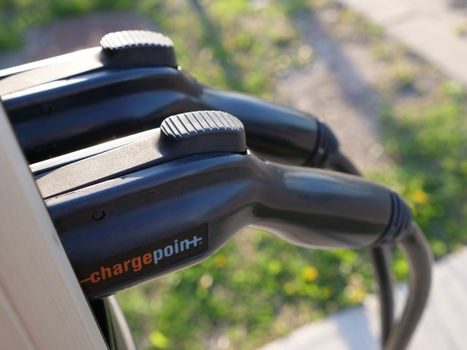
Two non-powertrain subsystems pull from the same EV electronics tier-1 pool and are worth tracking in parallel. The onboard charger and high-voltage cabling are sourced from the same connector and harness tier-1s that supply industrial electric ball valve and electric actuator actuators — the underlying EMC, IP6K9K sealing and high-voltage interlock discipline is shared. [S1]
Thermal management for the pack and inverter, meanwhile, is built around the same flow meter and pressure transmitter supply base that process plants use for coolant-loop monitoring, and the BMS often shares CAN-FD and functional-safety silicon with industrial industrial valve controllers. The cross-sector tier-1 overlap is the practical reason IDTechEx deliberately scopes its power-electronics report across EVs, data centres and renewables rather than EV-only [S5].
Use Cases and Limits of the 2026 Tier-1 Map
For a passenger-car platform team, the IDTechEx 2026-2036 set [S5][S6] is most useful as a tier-1 shortlisting filter, not as a price book — the reports do not disclose contract pricing, only forecast volumes and supplier lists. For a commercial-vehicle (bus, truck, van) buyer, the same reports work better because they explicitly split the demand forecast by vehicle class, so fleet-sized packs can be sized against the right cell-format supply base [S6].
The map's main limit is that it stops at the motor/pack/inverter tier and does not extend down to individual cell or wafer suppliers, which is where the 2026 commodity risk actually concentrates. Buyers who need that granularity pair the IDTechEx track with the raw-material sourcing view and the cell-BOM view to close the loop from tier-1 down to tier-2.
Trackable signals for the rest of 2026: any IDTechEx update that splits the power-electronics forecast between 400 V and 800 V platforms specifically (the current report combines them under a single SiC/IGBT chapter [S5]), and any motor-track revision that benchmarks in-wheel units against conventional radial-flux units on a normalised kW/kg basis [S6] — both would materially change which tier-1s a 2026 platform team can drop into a spec.