
TIG welder sizing is governed by three hard numbers: output current, duty cycle at that current, and the AC capability required to weld aluminium and magnesium, all of which are decision gates that must be met before brand or price [S5][S2].
AC/DC inverters from established brands (Miller Syncrowave/Dynasty, Lincoln Precision TIG, Fronius Magicwave) are the default pick for shops that touch both ferrous metals and aluminium, while DC-only units cover steel, stainless, and chromoly at lower cost [S2]. A typical rule of thumb used by process engineers is roughly 1 A per 0.025 mm of steel for DC TIG, so 6 mm mild steel needs a machine rated around 200 A to keep travel speed practical [S6].
AC/DC vs DC-only: the first decision gate
AC output is mandatory for aluminium, magnesium, and their alloys because the alternating half-cycle breaks up the tough aluminium oxide layer (a property widely cited in vendor and trade guidance), while DC is the standard mode for steel, stainless steel, and chromoly [S5][S2]. A DC-only machine will physically run on ferrous work but is locked out of aluminium entirely, which is why the Westermans buying guide treats AC/DC as the safer long-term buy if there is any chance aluminium enters the workload [S2]. Budget gap between comparable DC-only and AC/DC inverters has narrowed with modern IGBT inverter designs, so the cost penalty of buying AC/DC "just in case" is typically smaller than replacing a DC-only unit later [S2]. For buyers who will never touch aluminium, a DC-only unit is a defensible cost-down choice, and the Westermans guide specifically calls out the Lincoln Invertec and Fronius Transtig as reliable DC-only examples [S2].
Sizing current to material thickness
Material thickness is the dominant driver of required amperage, and a 2026 Keygree sizing guide recommends starting from the thickest section you will realistically weld, then sizing the machine to comfortably exceed that number rather than run at its limit [S6]. Practical benchmarks repeatedly cited in trade guidance: about 1 A per 0.025 mm (1 A per 0.001 in) of mild steel for DC TIG, roughly 1 A per 0.1 mm of stainless, and substantially more current per millimetre for aluminium because of its higher thermal conductivity [S6]. For thin stainless under 3 mm, a 150 A DC inverter is usually sufficient; for 6 mm aluminium, plan on 200+ A AC with at least 40% duty cycle to avoid thermal cut-outs on production runs [S6]. Going too small forces slow travel speeds and rework, while oversizing adds cost and weight without unlocking new capability on thin-gauge work, which is why the keygree article frames sizing as a duty-fit problem, not a "buy the biggest" problem [S6].
Duty cycle, input power, and portability
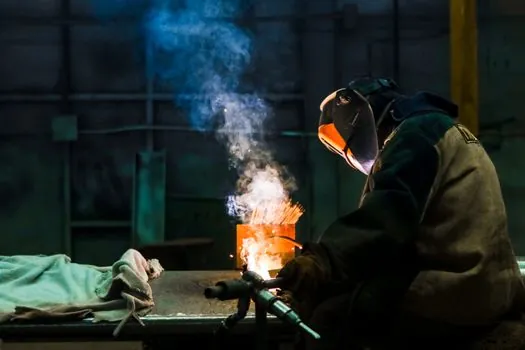
Duty cycle is the percentage of a 10-minute window a machine can deliver its rated output at a reference ambient temperature (commonly 40 °C), and it is the metric that separates a hobby machine from a production machine at the same current rating [S2]. A 200 A / 25% duty machine and a 200 A / 60% duty machine look similar on the spec sheet but behave very differently on a long aluminium weld, where the higher-duty unit holds output while the lower-duty one throttles back [S2]. Single-phase 230 V input suits small shops and mobile work; three-phase 400 V input is preferred in fabrication cells because it allows higher sustained output in a smaller footprint [S2]. Portability is the third axis: backpack-style DC-only inverters in the 150 A class weigh roughly 8-15 kg and run on standard site power, while water-cooled AC/DC production units are trolley-mounted and need a coolant reservoir and argon supply [S2]. Choosing on portability alone, as the Westermans guide does for site work, usually means accepting lower duty cycle and no AC output [S2].
Tungsten, cups, and shielding gas: the consumables that bound performance
Even the right machine underperforms with the wrong torch consumables, and the two consumables that drive arc stability are tungsten selection and gas cup (nozzle) sizing [S1][S4]. For AC TIG on aluminium, Miller's process guidance specifies ceriated or lanthanated tungsten in the smallest diameter suitable for the work, because an oversize tungsten on AC concentrates heat in the electrode and reduces cleaning action [S1]. TIG gas cups are made from glass (better puddle visibility) or ceramic (higher heat resistance for long, high-current runs), and the Tec Products sizing guide recommends about 6-10 mm cup openings for thin material and precision work versus 12-25 mm cups for thick material and high-current passes [S4]. Cup size also interacts with shielding gas: argon is denser than helium, so a smaller cup is generally adequate on argon, while helium blends typically need a larger cup and higher flow rate to keep coverage over a wider weld pool [S4]. Standard shielding gas for mild and stainless steel DC TIG is argon, often with 2-5% hydrogen for austenitic stainless; for aluminium AC TIG, pure argon is the default and helium blends are used when extra heat input is needed on thick sections [S5].
Failure modes and who should NOT buy the mainstream option
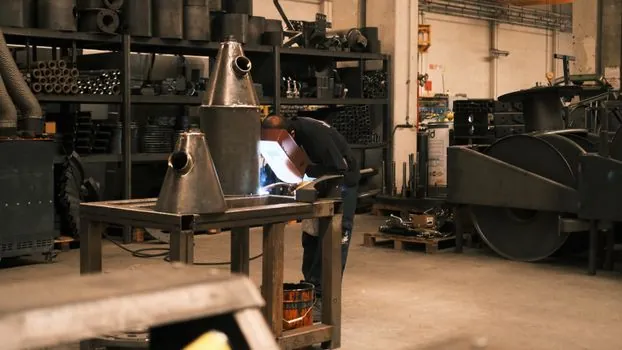
DC-only machines fail silently when the shop wins an aluminium job; the arc will strike but the oxide layer will not break and the weld will be contaminated [S2][S5]. Undersized machines (low current or low duty cycle for the actual thickness) trip thermal cut-outs mid-bead and produce porosity from the start/stop cycling, which is why buyer guidance treats the rated duty cycle at the working current as a non-negotiable [S2]. Hobby-grade inverters with 110 V input or 10-15% duty at 150 A look attractive on price but are not a real choice for a production fab cell, and Westermans explicitly steers beginners away from them if any real workload is in view [S2]. Buyers who only do thin steel hobby work, only need occasional portability, or cannot supply three-phase power are the cases where the mainstream 200 A AC/DC trolley is overkill, and a smaller single-phase DC unit is the right answer [S2][S6]. For a deeper look at how AC specifically cleans aluminium oxide, the Westermans guide points readers to its aluminium welding reference, which is consistent with the CK Worldwide process guide framing AC as the enabling feature for aluminium and magnesium work [S2][S5].
Comparison: common TIG welder classes against four decision criteria
The four decision criteria that matter on a purchase order are: (1) current and duty cycle at the working point, (2) AC/DC capability, (3) input power and portability, and (4) brand support and consumable availability. A 150 A DC-only inverter (Lincoln Invertec, Fronius Transtig) scores high on portability and cost, low on aluminium capability; a 200-300 A AC/DC inverter (Miller Dynasty, Lincoln Precision TIG, Fronius Magicwave) scores high on material range and duty cycle, medium on portability; a 200+ A AC/DC production unit with water-cooled torch scores highest on duty cycle and aluminium thickness, lowest on portability and cost; an engine-driven TIG covers off-grid site work but adds fuel, maintenance, and emissions cost and is rarely the first pick for a fixed shop [S2][S5]. For related equipment selection on the same spec-driven logic, see the skid steer loader selection guide for pipeline work and the road roller spec map, which apply the same duty-fit and duty-cycle discipline to other capital equipment. For broader context on selecting tools in a fabrication environment, the welding cutting tool reference covers adjacent process consumables, and the TIG welder process page summarises the process fundamentals buyers should keep in mind before sizing the machine.
Shortlist logic and trackable signals
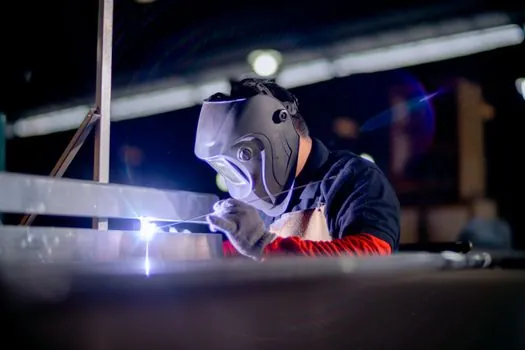
Shortlist by first filtering on AC/DC requirement, then on current sized to roughly 1 A per 0.025 mm of mild steel (or the equivalent for stainless/aluminium), then on duty cycle at that current, and only then on brand and price; this ordering alone eliminates most mis-purchases flagged in trade guidance [S2][S6]. Verifiable signals to track over the next sourcing cycle: manufacturer datasheet revisions listing EN 60974-1 (the arc welding equipment safety standard that covers TIG power sources) output ratings at 40 °C, and any updates to manufacturer-published AC waveform controls (square wave vs advanced square wave vs AC frequency adjustment) because those directly govern aluminium cleaning action and penetration profile [S2][S5]. Cross-check any shortlisted machine against its published Tungsten-Inert-Gas consumables chart (cup size and gas flow range) to confirm the nozzle and gas envelope will physically cover the joint geometry the shop actually runs, since the 6-25 mm cup range and argon/helium flow guidance in the Tec Products guide is the practical limit most operators hit first [S4].
Spec-level background on the components involved: linear guide.