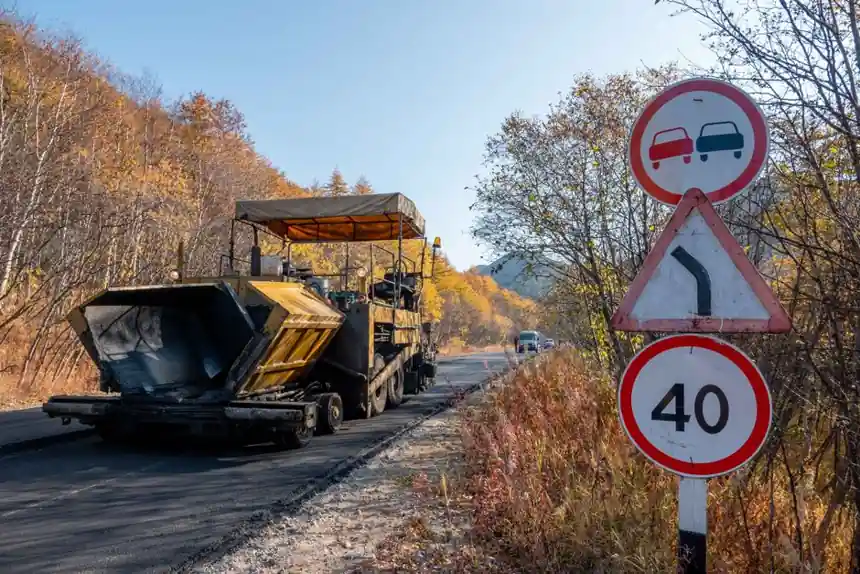
Tandem asphalt rollers (also called double-drum rollers) carry ride-on drum widths between 32 and 84 inches, with Ammann alone offering more than 20 tandem models spanning that range and weights from 3,000 lbs to over 30,000 lbs [S1].
Pneumatic tire rollers, which carry no steel drums and instead use multiple rubber tires, are generally heavier and aimed at wider projects, with compaction force tuned by tire inflation pressure rather than drum mass [S1][S2]. For earthwork, the dominant type is the single-drum roller with a 1.2 m to 2.4 m drum, paired with rear rubber tires for traction on uneven terrain [S2].
Static vs Vibratory: The Two Operating Modes
Modern rollers are categorized first by whether they compact purely through static weight, or add a mechanical vibrating mechanism to the drum [S4]. Vibratory rollers are now the default for full-depth asphalt work because amplitude and frequency can be matched to lift thickness: for asphalt lifts under 60 mm, a 2 to 6 t small vibratory roller with 0.35 to 0.60 mm amplitude is specified to avoid aggregate fracture and surface wave; for lifts above 100 mm, 6 to 10 t machines with amplitudes up to 1.0 mm are used [S5].
Single-drum soil rollers such as the Dynapac Redline DRS120D commonly add a vibratory function, applying high-frequency excitation to the drum for deeper penetration and reduced air voids in granular fill [S2]. Wikipedia's classification tracks this same split: pedestrian-operated, ride-on smooth finish, and ride-on soil/landfill compactor with pads/feet/spikes are listed as the principal operator/drum categories, with vibration and drum type as orthogonal sub-classes [S4].
Drum Geometry and Tread Patterns
Drum type is the second major classifier. The padfoot (sheepsfoot) drum has less contact area than a smooth drum, so the same machine weight produces higher contact pressure and higher compaction density on cohesive soils and subgrade fills [S4]. This is why initial lift compaction on road projects is almost always done with a padfoot drum before switching to a smooth drum for the finish.
Smooth drums, by contrast, are mandatory for finish rolling on asphalt and concrete. Double-drum (tandem) rollers carry a smooth steel drum front and rear, with no rubber tires; both drums stay in contact with the ground, which is why these machines are restricted to flat, stable surfaces and can struggle on loose or steep terrain [S2]. Pneumatic tire rollers substitute multiple rubber tires for the steel drum entirely, producing a kneading action that bonds asphalt layers and allows the operator to vary compaction by adjusting tire pressure [S1][S2]. For a broader category view that places rollers alongside rammers, plate compactors, and walk-behind units, see this construction machinery and equipment overview.
Operating Class: Pedestrian, Ride-On Smooth, and Soil Compactor
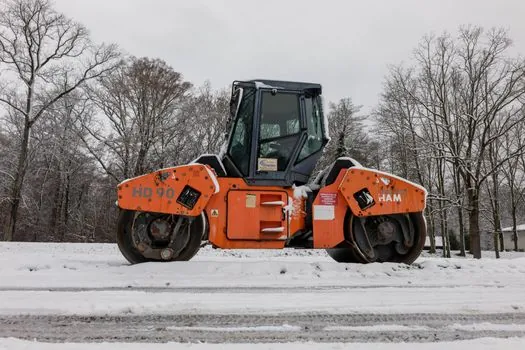
Wikipedia's taxonomy splits road rollers into pedestrian-operated units, ride-on smooth finish rollers, and ride-on soil/landfill compactors with pads/feet/spikes, with "other" as a catch-all for specialty platforms [S4]. Pull-along rollers sit at the small end with drum widths of 14 to 32 inches for trench and sidewalk work, while ride-on asphalt rollers are explicitly 32 to 84 inches across North American OEM lines [S1].
For earthmoving fleets, the single-drum ride-on soil compactor is the workhorse. On large freeways, four-wheel padfoot compactors such as the Caterpillar 815/825 series are used because their mass, speed, and pushing force let them both spread bulk fill and compact it in one pass [S4]. On regional roads a smaller single padfoot machine is the typical spec. The complete family tree from pedestrian rollers up to four-wheel soil compactors is laid out in the road roller reference page.
Selection Criteria: Lift, Material, and Tolerance
Selection starts with three variables: lift thickness, material (cohesive soil, granular base, asphalt, or concrete), and final surface tolerance. For asphalt layers under 60 mm, the spec is a 2 to 6 t small vibratory roller with 0.35 to 0.60 mm amplitude; above 100 mm, 6 to 10 t vibratory rollers with amplitudes up to 1.0 mm [S5]. Full-drive vibratory rollers are the default for asphalt compaction, with tire rollers used afterward for sealing and to obtain uniform density without breaking the initial viscosity of the layer [S5].
For subgrade and base work the pattern inverts: a tire roller or tire-driven vibratory roller is preferred to obtain uniform density without over-stressing the layer, while static smooth rollers are reserved for surface restoration where vibration could damage an existing pavement [S5]. High-grade highways (Class 1 and 2 national trunk roads, motorways) typically run a three-machine train: full-drive heavy vibratory roller for the base, tandem vibratory for the mat, then a tire roller for sealing [S5].
Comparing the Main Roller Classes
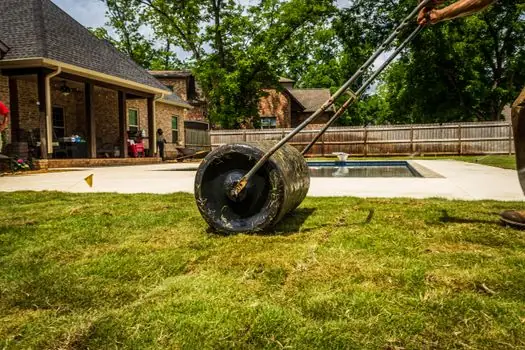
Five roller classes cover the bulk of road work, and they line up against four selection criteria: typical drum width, operating weight band, primary material, and finish tolerance. Smooth-drum tandem rollers (1.0 to 1.8 m drum width, per the compactor-type guide) are the choice for asphalt paving, parking lots, and final surface finish [S2]. Single-drum rollers (1.2 to 2.4 m drum width) handle earthwork, road bases, and large-scale compaction on granular and cohesive fills [S2].
Pneumatic tire rollers fit between these two for intermediate and sealing passes on asphalt, with no fixed drum width because the "drum" is a multi-tire array; they are explicitly heavier and aimed at wider projects [S1][S2]. Padfoot/sheepsfoot rollers, configured on single-drum soil compactors, are restricted to subgrade and embankment work because their protrusions leave a rough surface unsuitable for finished pavements [S4]. Walk-behind rollers and trench rollers (typically 14 to 32 inch drum widths) cover the small end: sidewalks, trenches, patches, and any job where a ride-on machine cannot physically fit [S1].
Limitations and Common Failure Modes
Double-drum rollers without rubber tires can lose traction on loose or steep terrain, which is why operators are told to keep them on flat, stable surfaces and pair them with a separate pushing unit on grade [S2]. Pneumatic rollers address one failure mode of steel-drum rolling (asphalt cracking and deformation under rigid contact) but introduce their own constraint: tire pressure must be actively managed, and a flat tire takes the whole machine out of service, unlike a steel drum which tolerates continuous contact wear [S1][S2].
Vibratory amplitudes that are too aggressive for the lift thickness cause aggregate fracture, surface wave, and shoving in the mat, which is why the under-60 mm and over-100 mm lift ranges have distinct amplitude and weight classes rather than a single "more is better" recommendation [S5]. Steam rollers, the historical baseline, persisted in US road company fleets into the 1950s and in the UK into the early 1970s, but virtually all road rollers in service now run diesel power, with the early internal-combustion designs losing favor because kerosene engines were hard to start [S4].
OEM Lineup and Sourcing Signals

North American road roller specifications are dominated by nine OEM brands: Ammann, BOMAG, Caterpillar, Dynapac, HAMM (a John Deere company), Sakai, Volvo, Wacker Neuson, and XCMG [S1]. Ammann's tandem range alone spans drum widths from 32 to 84 inches and weights from 3,000 lbs to over 30,000 lbs, giving specifiers a single-vendor path from sidewalk patches to highway shoulders [S1]. HAMM's role inside John Deere's compaction group is a useful procurement signal for buyers who bundle rollers with other Deere-owned platforms.
On the application side, vibratory, smooth-wheeled, pneumatic, and sheepsfoot rollers are each built for a specific lift-and-material pairing, and most modern machines combine modes (vibratory single-drum, tandem vibratory, static tandem) so a single chassis covers several passes [S3][S6]. For fleets running compaction alongside earthmoving, it is worth cross-referencing the roller spec with the broader road roller type reference and the wider equipment taxonomy at construction machinery and equipment.
For earthwork-heavy road jobs that pair rollers with dozers and graders, see the stage-based selection logic in bulldozer vs motor grader selection for road work, and for soil-and-depth matching on dynamic compaction rigs, see dynamic compactor selection for road construction.
The underlying component specifications are covered under lamps and light fittings.