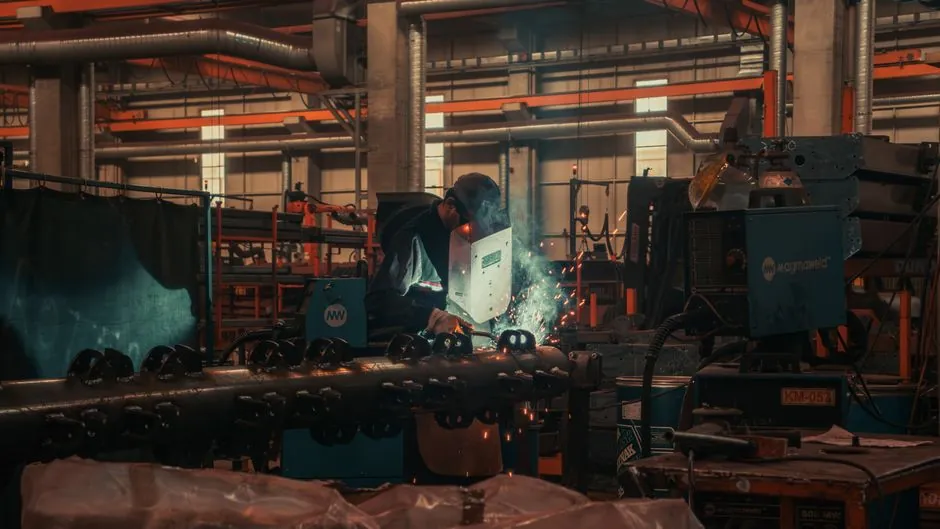
Selecting a TIG welder is a four-gate decision: current type, amperage range, duty cycle, and shop power. Get the first one wrong and the rest of the spec sheet is irrelevant, because a DC-only machine cannot strike or clean aluminum no matter how many amps it puts out [S2].
On the used and entry-level market in 2026, portable single-phase inverter units typically weigh 20–50 lb and run on 120 V, while water-cooled or high-amperage workshop units start around 100 lb and require 240 V single-phase supply [S1][S6]. That physical split tracks the electrical split almost perfectly: small inverter on 120 V covers hobby and auto-body work, while 240 V units cover fabrication shops and motorsport builders.
Gate 1: DC vs AC/DC Output
DC TIG is the default for steel, stainless steel, and chromoly; AC TIG is the only mode that can break through the oxide layer on aluminum and magnesium [S2]. Anyone who needs both metals in a single build therefore has to buy an AC/DC unit, which in 2026 still commands roughly a 30–50% price premium over a DC-only machine of the same amperage class.
If the workload is steel-only (exhaust, chassis tabs, mild-steel furniture), a DC-only machine with lift-arc start is the most cost-effective choice and avoids paying for an AC square-wave board that will never be used. Lift-arc, however, does not work on aluminum because the oxide coating prevents a clean low-amp start [S2].
Gate 2: Amperage Range and Material Thickness
A reasonable envelope for general fabrication is 0.1–6 mm material thickness, which on a quality AC/DC inverter maps to roughly 5–230 A output [S3][S4]. The thin end matters more than buyers expect: 0.1 mm stainless is the gating case for motorcycle tank and header work, and only a machine with stable low-amp arc performance (often helped by pulse) will hold a puddle at that thickness.
Reference numbers from current OEM product lines: the Miller Maxstar 161 lists 20–160 A at 13 lb on 120/240 V, the Lincoln MIG 210 MP lists 20–220 A at 40 lb, and the ESAB Rebel EMP 215ic lists 5–220 A at 40 lb on 120/240 V [S4]. A 5 A lower bound is what unlocks true thin-gauge work; a 160 A upper bound is borderline for 6 mm aluminum in a single pass, which is why serious fabrication shops step up to 200–300 A inverter or transformer-rectifier units.
Gate 3: Duty Cycle and Welding Style
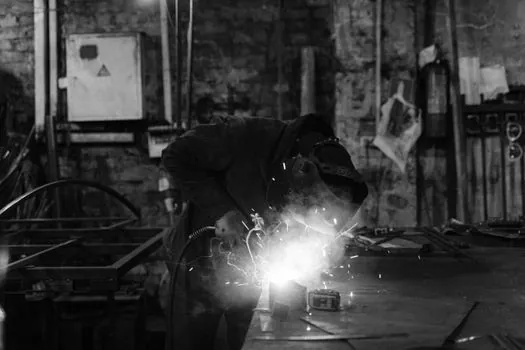
Duty cycle tells you how long the machine can sustain a given output in a 10-minute window before thermal protection trips. A typical mid-range 200 A AC/DC inverter is rated around 60% duty cycle at its maximum output, dropping to 100% at roughly 60–70% of that current, which is the more realistic fabrication working point [S2].
Long seam welds on thick aluminum (a fuel cell, a rollover cage node) will push any machine to its thermal limit. For that workload a higher duty cycle at working amperage matters more than peak amperage, because a 200 A machine at 100% duty cycle will finish a job that a 250 A machine at 30% duty cycle keeps shutting down on. For short intermittent work, duty cycle is essentially irrelevant and amperage is everything.
Gate 4: Input Power and Shop Wiring
120 V single-phase limits real-world TIG output to roughly 150 A on most inverter designs, which is enough for steel up to ~3 mm and aluminum up to ~4 mm with care. 240 V single-phase is required to get past 200 A and to power the 200+ A AC/DC units that serious fabrication work demands [S3][S4].
Dual-voltage machines (120/240 V) are the most flexible for a buyer who may move the welder between a home garage and a shop. The Lincoln MIG 210 MP, ESAB Rebel EMP 215ic, and Miller Maxstar 161 are all dual-voltage examples in current production [S4]. For site work with no grid, an engine-driven unit (gas or diesel) such as the Lincoln Ranger 305 G (50–300 A, 510 lb) is the typical answer, but at that weight and fuel cost it is a dedicated site tool, not a shop welder [S4].
Arc Starting: HF, Lift-Arc, and Scratch Start
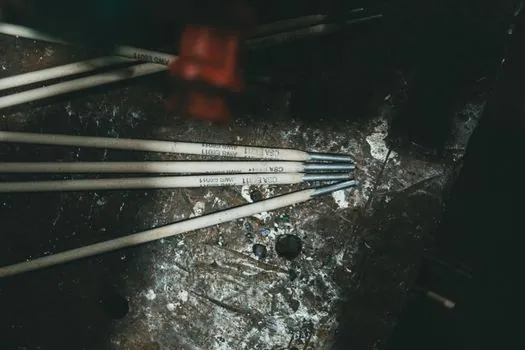
Three arc-start methods coexist on current production machines and they are not interchangeable. High-frequency (HF) start strikes the arc without touching the tungsten, which keeps the electrode clean and is required for clean aluminum work; lift-arc touches then lifts, reducing contamination on steel and stainless; scratch start drags the tungsten across the work and contaminates both the electrode and the weld [S2].
For buyers who plan to weld aluminum, HF start is effectively mandatory, because lift-arc cannot deal with the aluminum oxide layer. A common 2026 specification is "AC HF start + DC lift-arc start" on the same chassis, which gives aluminum-friendly starting on AC and contamination-free starting on DC without paying for an unnecessary HF board on every DC strike.
Advanced Controls: Pulse, AC Balance, AC Frequency, Slope
Once the four gates are passed, the next decision is whether to pay for advanced waveform controls. Pulse cycles the current to control heat input and puddle size, AC balance adjusts the cleaning-versus-penetration ratio on aluminum, AC frequency tightens or widens the arc cone, and slope up/down softens arc start and end to prevent crater cracking [S2].
These features are not essential for a first machine, but they become valuable quickly on stainless and aluminum: pulse on stainless gives a stacked, fish-scale appearance without manual dabbing, and AC balance is the single biggest dial for controlling aluminum oxide cleaning. Multi-process machines (MIG + TIG + Stick in one box) are usually priced attractively but tend to compromise on the TIG waveform quality; if the primary process is TIG, a dedicated TIG-first machine gives better arc performance per dollar [S3].
Who Should NOT Buy the Mainstream AC/DC 200 A Inverter
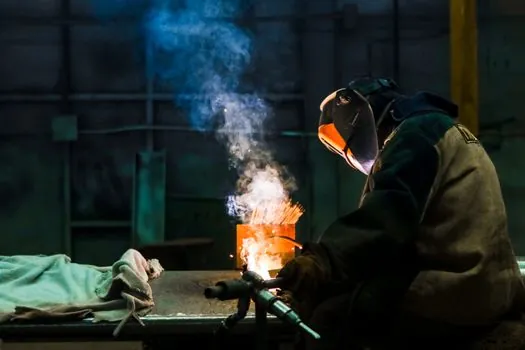
A 200 A dual-voltage AC/DC inverter is the right answer for most buyers, but it is the wrong tool in three specific cases. First, a pure mobile auto-body or exhaust shop that never welds aluminum should buy a DC-only machine and put the savings into a better foot pedal and a larger gas cylinder. Second, a site pipeline or structural steel crew should buy an engine-driven stick/TIG unit instead, because grid power and 240 V outlets are not available. Third, a thin-gauge specialist (instrument panels, heat shields, model engineering under 1 mm) should bias selection toward the lowest stable amperage and pulse quality, not raw peak output; the 13 lb Maxstar 161 class is more useful than a 250 A workshop unit in that niche [S4].
Shortlist Logic and Trackable Signals
Lock the four gates first, then shortlist within each gate. For hobby + occasional aluminum: dual-voltage AC/DC inverter, 5–200 A, HF start, roughly 40 lb. For fabrication shop: 240 V AC/DC inverter, 5–230 A or higher, HF start, pulse, slope, foot pedal, water-cooled torch-ready. For site/field: engine-driven multi-process above 200 A, accepting the 300+ lb weight. [S3]
Two trackable signals for the rest of 2026: the spread between 120 V and 240 V output ratings in the same chassis (a 1.5–1.7x ratio is typical, anything less means a weak 120 V stage) and the standardization of Ethernet-connected welding data modules on mid-range AC/DC units, which is starting to appear on 2025–2026 production lines and shifts future selection toward machines that expose weld parameter logs for QA. Buyers cross-shopping TIG against other fabrication tools can also reference a TIG welder spec map for concrete-site embed work and a demolition-overlap welding selection guide when the duty extends beyond the bench.
The underlying component specifications are covered under welding cutting tool, and coding machine.