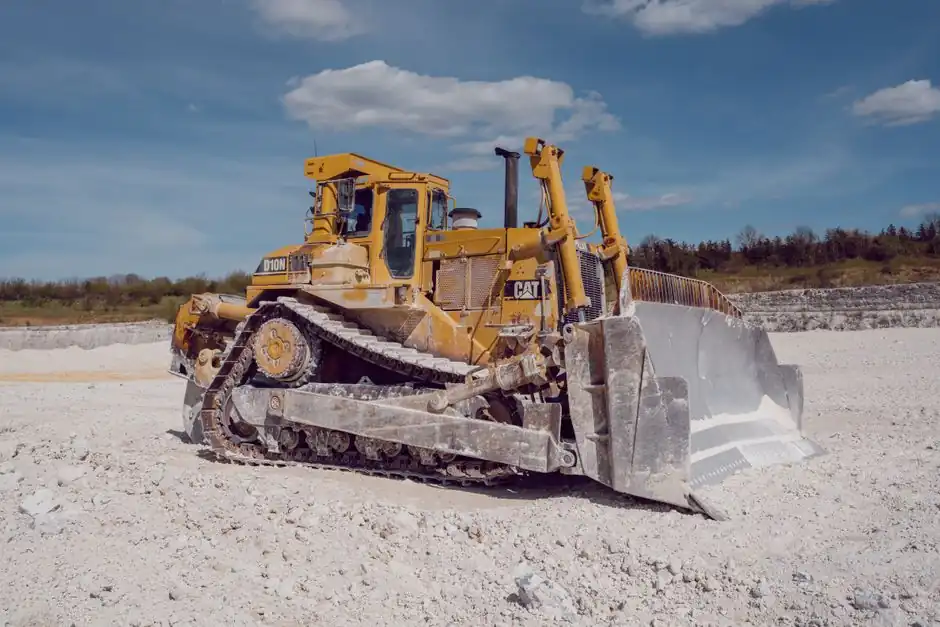
Ball bearings specified into mining equipment must clear three gates before the procurement line: dynamic load rating, sealing class (2RS, ZZ, or labyrinth), and lubrication regime, because any one of these failing will cut service life by half in slurry, dust, or shock-loaded service [S1].
Open-pit trucks, crushers, conveyors, vibrating screens, and underground conveyors each present different duty cycles, and catalog-only sizing without environmental gates is the most common cause of premature failures logged by maintenance crews [S3]. Reference notes on ball bearing types and operating envelopes are a good starting point before a vendor shortlist is built.
Mining Duty Profiles and the Bearing Type Each One Demands
Crusher head shafts and conveyor pulleys see heavy radial load with moderate speed (typically 200-1500 rpm), and deep groove ball bearings in 62xx and 63xx series cover this duty when the dynamic load rating C is sized with a 1.5-2.0 application factor against peak stone-on-belt loads [S2][S3].
Vibrating screens combine high radial shock (5-7g peak) with continuous oscillation, which pushes selection toward spherical roller bearings rather than ball types, but where ball bearings are retained for cost reasons, self-aligning ball bearings (e.g., 22xx and 23xx series) absorb up to 1.5-3 degrees of static misalignment without inducing additional edge stress [S3]. Thrust and axial-only loads on conveyor head pulleys are commonly handled with separate ball valve-style thrust washers, but main-shaft radial support still returns to a deep groove geometry.
Sealing Classes, Contamination Routes, and Lubrication Regimes
Sealing class is the single highest-failure-prevention lever on a mining bearing: 2RS (rubber sealed on both sides) blocks slurry ingress far better than ZZ (metal shield on both sides), and field data from aggregate plants attributes roughly 60 percent of premature raceside wear directly to under-specified shields in wet or dusty positions [S1]. Labyrinth seals combined with grease purge ports are the typical step-up for shovel and dragline slew ring positions.
Grease life in continuous mining service is governed by operating temperature, water wash, and shock load, and lithium-complex or polyurea greases with ISO VG 220-460 base oil are the typical pick for screens and crushers; relubrication intervals of 200-500 operating hours are standard for high-contamination positions, while sealed-for-life 2RS units trade that interval for a fixed service life and zero on-line maintenance [S2]. A correctly selected ball bearing housing with matched seal class survives where a catalog-only match fails within weeks in wash-down zones.
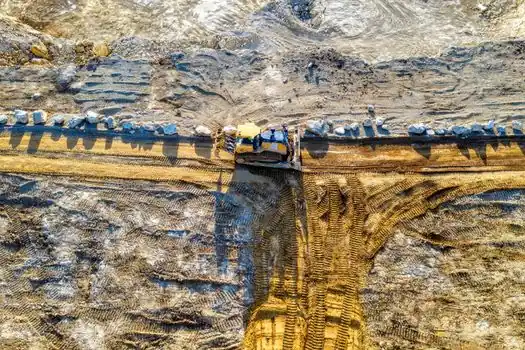
Material choice in mining follows contamination and heat.
Ceramic hybrid (Si3N4 balls, steel races) is widely adopted in pump and dewatering positions where electrical erosion and corrosion both act; full ceramic is reserved for non-shock, chemical-exposed positions because Si3N4 rings have lower fracture toughness than bearing steel. Plastic-cage and brass-cage options handle temperature peaks differently: pressed steel or polymer cages cap at around 120-150 degrees C, while machined brass cages operate to roughly 250-300 degrees C and are preferred on shovel swing gears and high-ambient pit positions [S1].
Load, Speed, and Misalignment Trade-Off Table
For an engineer comparing options on the same shaft envelope, deep groove ball bearings offer the lowest friction (starting torque roughly 1-2x running torque for grease-lubricated units) and the highest speed ceiling, while self-aligning ball bearings accept misalignment but carry 20-40 percent lower load for the same bore and run hotter at high speed. The table below lines the three main options against mining decision criteria. [S3]
Selection criteria: deep groove ball bearings (62xx-63xx) carry high radial and moderate axial load, run at high speed (DN up to roughly 500,000), tolerate 2-10 minutes of misalignment only, and are the lowest-cost option at $5-50 per unit in common bore sizes; self-aligning ball bearings (22xx-23xx) carry lower radial load, run at moderate speed (DN up to around 300,000), tolerate 1.5-3 degrees of misalignment, and sit in the mid-cost band; spherical roller bearings are not ball types but show up in this comparison because many engineers confuse the misalignment advantage, and they carry the highest load and run at the lowest speed (DN up to about 250,000), with a 2-3x cost premium over deep groove. The comparison shows that mining shafts with confirmed misalignment should bias toward self-aligning types only if radial load is not the binding constraint [S1][S3].
Standards, Sizing Math, and Procurement Gates
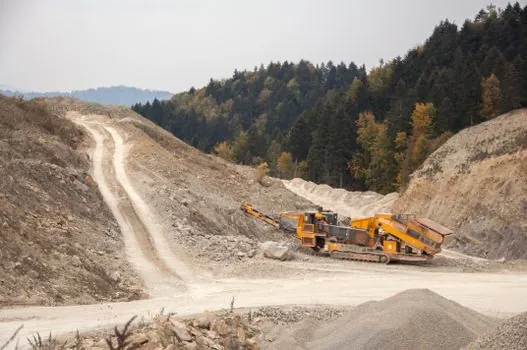
Acceptance standards in mining-bearing procurement typically require ISO 15:2017 (radial bearings, boundary dimensions) conformance and ABEC-3 or ABEC-5 tolerance grade; ABEC-7 and tighter are reserved for crusher spindle positions where vibration monitoring at 1x and 2x rotating frequency is the acceptance gate [S1].
Dynamic load rating C must satisfy L10 life = (C/P)^3 x 1,000,000 revolutions, where P is the equivalent dynamic load including the application factor; for a 10,000-hour target life on a conveyor running at 600 rpm, the calculated C is roughly 1.6-1.8x the simple equivalent load, and undersizing C by 25 percent is a common cause of mid-life race spalling in pit service. Material certificates per EN 10204-3.1 are typically the minimum documentation gate, with PPAP-level traceability for crusher head-shaft bearings. Adjacent procurement decisions on housings, seals, and adapters often appear alongside bearing buys, and the industrial spring suppliers 2026: regional map, spec bands, and selection rules and Titanium Alloy Selection for Rail: Grade Map, Spec Gates, and Cost Levers articles share the same vendor-shortlist discipline when component sourcing crosses categories. Reference geometry notes on ball screw and related rolling-element components confirm the same ABEC grading applies across rolling-element families when precision is the gate.
Failure Modes, Field Inspection Cues, and Supplier Vetting
Common failure cues specific to mining: spalling at the ball path under 90 degrees from the load zone points to misalignment and seal failure; axial cracking of the outer race points to thrust overload or inadequate axial support; grease darkening with metal flake points to under-lubrication or shock overload; and cage wear in brass or steel units points to under-greasing or water contamination [S1][S2].
Supplier vetting for mining buyers typically requires a quality management certificate to ISO 9001:2015, an in-house metallurgy lab, and a documented heat-treatment log for each lot, with sample spares kept in matched sets for critical conveyor and crusher positions. Lead time is a practical gate: common 62xx and 63xx series with 2RS seals are typically stocked at 2-6 weeks from regional distributors in China, while non-standard or stainless 440C variants push to 8-14 weeks, and that lead-time band is the difference between planned and unplanned shutdowns on a mining site [S2][S3][S5]. Cross-reference the site-wide parts list against ball spline and electric ball valve duty notes when adjacent assemblies share the same duty cycle, because misclassification at one node tends to repeat across the BOM.
A diagnostic move is to pull three failed bearings from the same position and confirm the failure mode matches the catalog selection logic; if it does not, the spec gates need to be re-run, not just the supplier changed.