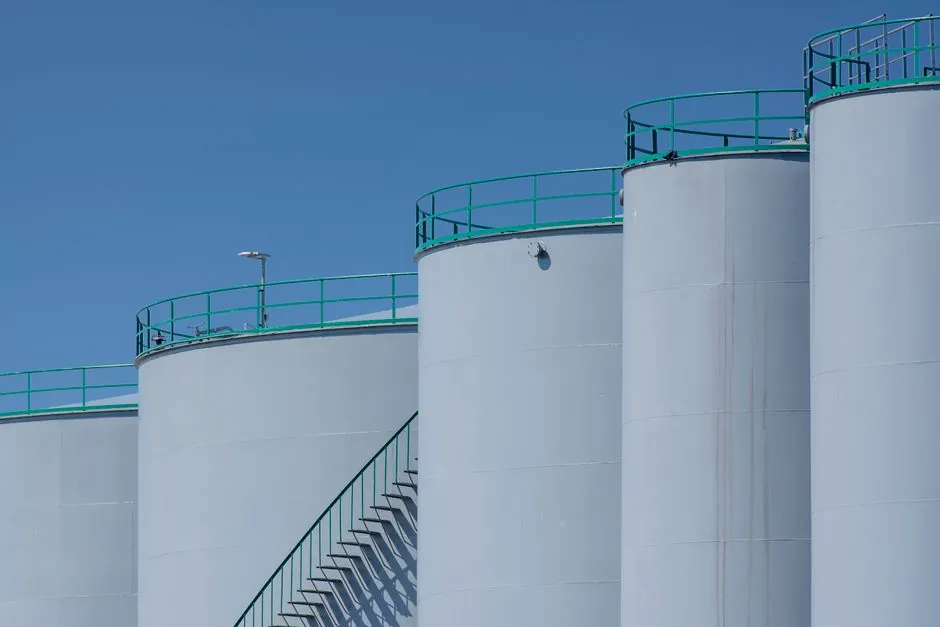
AISI D2 is a high-carbon, high-chromium cold-work tool steel covered by ASTM A681 [S5] and is widely used for wear-resistant applications including reamer blades, knurls, brass turning tools, cutters, brick molds, punches, and spinning, forming, and seaming tools [S1].
Selecting tool and die steel for upstream, midstream, and downstream service is governed by temperature window, sour-service rating, abrasion load, and dimensional stability, which together narrow the field from 7 AISI families to roughly 4 workhorse grades [S1][S5].
AISI grade family snapshot: O, A, D, S, H, P, 420
AISI O1 oil-hardening tool steel austenitizes at 1450-1475°F (788-802°C) and tempers back to about 48-60 HRC depending on draw temperature, making it the general-purpose dimensionally accurate grade for short-run dies [S5][S2]. AISI A2, with 5.25% chromium, 1.10% Mo, and 1.00% C, air-hardens with only 0.001 in./in. expansion, replacing O1 wherever safer heat treatment and higher wear life are required [S2].
AISI D2 and D3 are the high-carbon (1.50-2.25% C), high-chromium (12% Cr) air- or oil-hardening grades with the highest wear resistance in the group, austenitizing near 1825-1850°F (996-1010°C) and reaching 59-62 HRC after temper [S5]. AISI S7 is the shock-resisting air-hardening grade (5% Cr, 1.5% Mo) that retains impact toughness at temperatures up to 1000°F, used for shears, punches, and chisels in upstream tooling [S1].
For hot-work dies, AISI H13 (0.40% C, 5% Cr, 1.5% Mo, 1% V) is the workhorse for aluminum and magnesium die casting dies and for high-pressure valves; P20 (0.37% C, 2% Cr, 1% Ni) is supplied prehardened to about 30-32 HRC for plastic-mold and zinc-die components [S1][S2]. 420ESR is the air- or oil-hardening 13% Cr stainless that adds corrosion resistance to mold duty [S1].
Matching grades to oil and gas service: temperature, H2S, chloride
Sour service per NACE MR0175 caps hardness on carbon and low-alloy steels at about 22 HRC for any wetted component, which disqualifies D2 (59-62 HRC) and H13 (48-54 HRC as tempered) for valve bodies and downhole tools exposed to wet H2S [S6]. For those positions, austenitic, duplex, or martensitic stainless steels at 22 HRC or below dominate, with 2507 super-duplex (25% Cr, 7% Ni, 4% Mo) cited for chloride-rich produced water and subsea flowlines [S7].
On the wear side, where parts are not wetted or are protected, D2 and A2 are the default for tool and die steel bushings, cutting edges, and forming tools handling bar stock, sucker rods, and downhole screens [S1][S2]. S7 is preferred where shock loading dominates, such as punch and shear duty on heavy-wall pipe, because it retains toughness after tempering at the 400-1000°F range [S1].
For hot-work components near wellheads and Christmas trees, H13 is rated for service up to about 1000°F, matching S7's red-hardness window and making H13 the default hot-forging and hot-extrusion grade for steel die casting die inserts in upstream equipment [S1].
Hardness and temper data for the four workhorse grades
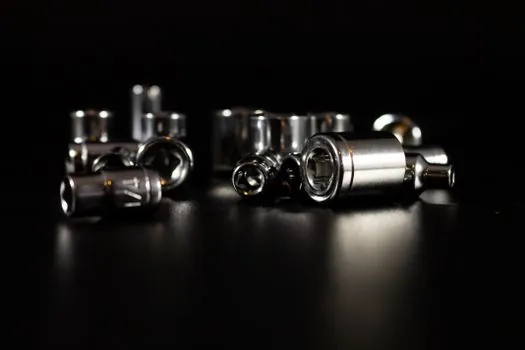
The O1 tempering curve, normalized at 1475°F austenitize, falls from about 64.5 HRC as-quenched to 62.5-63.0 HRC at 300°F, 60.5 HRC at 400°F, 58.0 HRC at 500°F, 52.5 HRC at 700°F, and 48.0-49.0 HRC at 800°F, giving machinists a wide post-quench adjustment window [S4]. D2 at 1825°F (996°C) followed by a 400°F (204°C) temper lands at 59 HRC, while D3 at 1775°F (968°C) oil-quenched and tempered at 400°F reaches 61 HRC; D7 at 1950°F (1066°C) air-cooled and 400°F tempered tops the family at 63 HRC [S5].
A2, air-cooled from 1725-1800°F and double-tempered at roughly 400°F, is typically specified in the 57-62 HRC band, and is rated at about 65% of the machinability of a 1% C water-hardening W1 reference [S2]. H13 is generally tempered at 1000-1150°F to reach 44-48 HRC, the range used for aluminum die casting tooling, then nitrided for surface hardness [S1].
For shock duty, S7 is usually used in the 54-56 HRC range after a 400-1000°F temper, balancing 0.6-0.8% C martensite with 1.5% Mo secondary hardening to hold impact energy at elevated temperature [S1].
Process route, machinability, and supply dimensions
D2, A2, and S7 are commonly supplied annealed at 212 HB max for A2, 217-255 HB for D2, and 187-229 HB for S7, then machined, EDM'd, or ground to finish, then heat-treated in a controlled-atmosphere furnace to fight decarburization (a controlled-atmosphere pack anneal is standard for A2) [S2]. A2 at 65% machinability versus 1% C W1 is the cleanest machinability benchmark in the air-hardening group; D2 is more abrasive on tooling, and H13 demands slower EDM parameters because of its vanadium content [S2].
Stocked rounds for D2, A2, O1, S7, P20, H13, and 420ESR cover 0.5-6 in. diameter in 10-12 ft random lengths, with diameter tolerance +0.010 in. to +0.150 in.; plate stock is held in 32 in. × 72 in. sheets from 0.25 in. to 7 in. thick for D2, O1, P20, H13, and 420ESR [S1]. For small lot work, drill rod in O1, W1, A2, S7, D2, and M2 is also held as standard inventory [S2].
Standards traceability and mill documentation
ASTM A681 is the governing specification for tool steel alloy bars, plates, forgings, and billets, defining chemistry ranges and the austenitize/temper targets used above (for example, A9, A10, D2, D3, D4, D5, D7, O1, O2) [S5]. NACE MR0175 / ISO 15156 limits the maximum hardness of carbon and low-alloy steel components exposed to sour (H2S-containing) oilfield environments, which is why D2 and H13 in their high-HRC condition are normally not used as wetted parts [S6].
Duplex and super-duplex stainless sheets and bars for subsea and process piping are usually certified to UNS S32750 (2507) per the worldstainless datasheet, which lists oil and gas exploration, produced-water handling, and high-chloride service as the principal target applications and requires solution anneal after cold work beyond about 20% reduction [S7]. Mill test reports for tool steel typically include AISI type, heat number, hardness in HB, and a chemistry check against A681 ranges [S1][S5].
Selection rules of thumb for oil and gas tooling
Use A2 or D2 for non-wetted cold-work wear parts where dimensional stability and abrasion resistance are the drivers; D2 outperforms A2 in wear life but is harder to machine and grind [S1][S2]. Use S7 where shock dominates the failure mode, and stay in the 54-56 HRC band after a 400-1000°F temper to retain impact energy [S1].
Use H13 for hot-work tooling up to about 1000°F and for gravity die casting of non-ferrous alloys, then temper at 1000-1150°F and consider nitriding for surface hardness [S1]. For any part wetted by produced fluids containing H2S or chlorides, drop out of the tool-steel family entirely and move to 13 Cr, 22 Cr duplex, or 25 Cr super-duplex grades per NACE MR0175 / ISO 15156 limits, and verify hardness on the MTR before sign-off [S6][S7].
For a related side-by-side on electronics-grade tooling where the drivers shift to polishability and EDM recast rather than sour service, see the spec map at Tool and Die Steel Selection for Electronics Tooling. For sour-service fixed equipment on the fluid-handling side, the Self-Priming Pump Sizing and Selection Guide lines up pressure-class and material requirements on the same MTR-driven workflow. To check downstream specification language for hot-work dies feeding oil seals and gasket trim, the upstream D2/H13 call points back to the die casting die grade map.