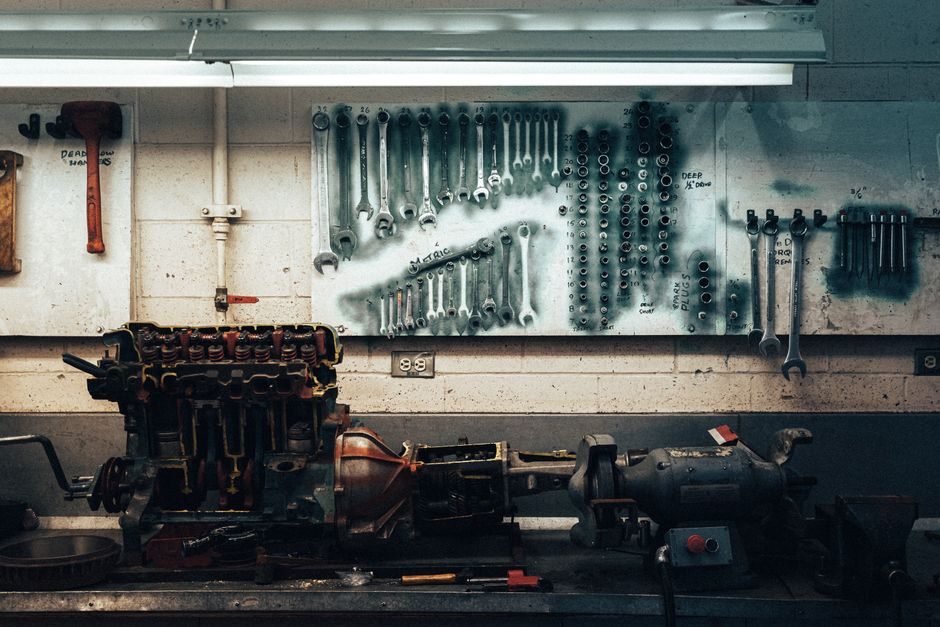
Forged tool-steel blocks (DIN 1.2316, D2, H13, P20) listed on Made-in-China.com in 2026 trade in a USD 1,200 to 4,500 per tonne FOB band, with premium plastic-mould grades (1.2738 / P20+Ni) reaching USD 1,600 to 5,200 per tonne for blocks in the 50 to 500 mm thickness range [S4].
The cost gap between a raw tool-steel billet and a finished die is wide: a precision tool-and-die shop (Toledo Tool & Die 105,000 sq ft plant; Stearns Tool with 125+ years of combined experience) bills on machining time, EDM sinker hours, heat-treat surcharges and inspection — typically lifting the steel into a 3x to 8x multiple of the mill price by the time the part is shipped [S6][S3].
Tool-Steel Grade Families and What They Cost per Tonne
Cold-work tool steels (AISI D2 / 1.2379, D3 / 1.2080, A2 / 1.2363) dominate the forged-tool-steel listings on Made-in-China.com, with DIN 1.2316 plastic-mould stainless blocks advertised as "Factory Price Hot Forged Milled Bright Flat" — a standard 4-side-machined condition that adds roughly 8 to 15 percent over as-forged surface [S4]. Daido's product taxonomy groups tool steel by application — machining tools, jigs, forging dies, die-casting dies, stamping dies, plastic-injection moulds — which mirrors how mills price the same AISI designation differently depending on whether it is destined for cutting, forming, or plastic moulding [S2].
Hot-work tool steels (H11 / 1.2343, H13 / 1.2344) typically price 10 to 25 percent above cold-work D-series because of stricter ESR (electroslag remelt) and ultrasonic-testing requirements; high-speed steels (M2 / 1.3343, M35 / 1.3243) can run 1.5x to 2x the D2 price for ground bar stock. Plastic-mould grades (P20 / 1.2311, P20+Ni / 1.2738, 420 stainless mould steel) sit in their own band — the "alloy steel block stainless" category on Made-in-China.com — driven by through-hardening uniformity, deep polishability, and photo-etch suitability rather than wear resistance [S4].
Mill-Form vs Stocked Form: The Levers That Move the Quote
Four form factors dominate the procurement decision: forged block, hot-rolled round bar, cold-drawn flat bar, and ground / precision-flat stock. On the Chinese supplier side, Kunshan Benchi Special Steel lists die steel, tool steel, alloy steel, carbon steel and bearing steel as a combined product family — a one-stop catalogue useful for shops buying across multiple steel families but with no premium-grade segregation [S5]. A 50 to 200 mm thick DIN 1.2316 block, 4-side milled to +0.2 mm tolerance, lists in the USD 1,600 to 2,200 per tonne band; the same grade as hot-rolled round bar 30 to 120 mm diameter typically prices 12 to 20 percent below block on a per-tonne basis [S4].
Surface condition drives a clear cost ladder: black-as-forged (mill scale intact) is the baseline; rough-turned or rough-milled adds 5 to 10 percent; 4-sided precision milled to +0.2 mm adds 12 to 18 percent; ground flat stock to +0.05 mm adds 35 to 60 percent over the as-forged price. For D2 round bar specifically, the ESR (electroslag remelt) surcharge versus conventional double-vacuum-melt can be 20 to 35 percent, justified by tighter inclusion ratings, better polishability for stamping dies, and lower die-casting-die pitting at elevated die-casting machine injection pressures.
Heat Treatment, Finishing and the Shop-Day Multiplier
Once the steel arrives, the cost curve steepens. Vacuum heat-treat for H13 / D2 runs USD 2.5 to 5.0 per kilogram at commercial heat-treat houses in 2025-2026, with cryogenic treatment (liquid nitrogen at -196 °C for D-series) adding 30 to 50 percent. Hardness targets drive this directly: H13 to 48 to 52 HRC vs 54 to 58 HRC is a different austenitising cycle with longer soak times; D2 hardened to 60 to 62 HRC with a 520 °C temper triple-cycle is a multi-day heat-treat job. Daido's technical literature flags that die life and dimensional stability for die-casting dies hinge on heat-treat recipe control — not just the steel grade — so the line item in a die-shop quote is rarely negotiable below the metallurgy floor [S2].
EDM (wire and sinker) is the next big lever. Sinker EDM hour rates at US Midwest job shops in 2025-2026 cluster around USD 75 to 150 per hour, with wire EDM USD 50 to 110 per hour; a medium-complexity stamping die can consume 80 to 200 EDM hours across both processes. CNC milling of hardened tool steel (HRC 58+) is the slowest op — trochoidal milling at 40 to 60 m/min with coated carbide pushes cycle times 3x to 5x longer than milling mild steel at the same chip-load parameters. Toledo Tool & Die's positioning around "streamlined, cost-effective manufacturing" and 105,000 sq ft capacity signals the scale at which a 3x to 8x material-to-finished-part ratio is achievable; smaller shops (Stearns Tool, with its 125+ years of combined experience on smaller batch runs) typically sit at the higher end of that multiple because they lack the throughput amortisation [S6][S3].
Service-Life Math: Cost-per-Part Beats Ton-Price
A buyer choosing between P20+Ni (1.2738) at USD 1,800 per tonne and H13 (1.2344) at USD 2,600 per tonne for an aluminium die-casting die is not really comparing steel cost — they are comparing die life. P20+Ni typically delivers 80,000 to 150,000 shots before gross cracking in aluminium die-casting; H13 vacuum-melt ESR can push 250,000 to 500,000 shots at the same shot weight and cooling regime. Spread over the part volume, the H13 die often wins on cost-per-part even though its raw material line is 40 to 50 percent higher — and Daido's grade-by-application guidance is built around exactly this trade-off for aluminum die casting machine tooling [S2].
For cold-work stamping dies, D2 at 58 to 62 HRC running 304 stainless 1 mm sheet typically hits 300,000 to 800,000 hits before regrind; A2 at 60 HRC trades a 15 to 25 percent drop in wear life for significantly better machinability and EDM speed. The math is volume-dependent: low-volume tooling favours A2 (faster build, cheaper to rework); high-volume progressive dies favour D2 (longer intervals between re-grinds, lower lifetime tool room labour). This is the same logic that drives the tool die steel cost-versus-life conversation in any quoting discussion — and it is also why Daido's datasheets emphasise heat-treat window and through-hardening section size, not just chemistry [S2].
Supplier Tier and Sourcing Path: Mill vs Distributor vs Job Shop
Three sourcing paths exist, each with a different price-to-traceability ratio. Tier 1 — mill-direct from Daido, Bohler, Assab, Hitachi Metals — gives a mill test certificate (MTC) traceable to heat number, full chemistry, ultrasonic and inclusion rating, but minimum order quantities of 1 to 5 tonnes and 6 to 14 week lead times for non-stock sizes [S2]. Tier 2 — stockist-distributor (e.g. the Kunshan Benchi category of Chinese stockists with die steel, tool steel, alloy steel, carbon steel, bearing steel all on offer) — gives 1-day to 1-week pickup on bar sizes in stock, with the MTC traceable to the original mill, but at a 10 to 30 percent mark-up over mill-direct [S5].
Tier 3 — import-trading platforms such as Made-in-China.com listings for forged tool steel — gives the lowest per-tonne price (USD 1,200 to 4,500 per tonne for forged blocks) but with high minimum order quantities (typically 1 to 20 tonnes per grade) and the buyer's responsibility for final inspection, MTC verification, and freight from port to shop [S4]. For a 5 to 20 tonne annual tool-steel buyer (typical for a North American stamping or die-casting shop) the Tier 2 distributor path is the most common default. For a 50+ tonne annual buyer (automotive tooling, large forging shop) the mill-direct path wins on total cost. For a one-off prototype die or a US/Midwest shop needing fast delivery, the Tier 3 path is occasionally rational — and a CNC-machined finished die sourced from a shop like Toledo Tool & Die (80 years in business, 105,000 sq ft facility) bundles steel, heat-treat, EDM and QC into a single line item on the quote [S6].
Comparison Snapshot: Tool-Steel Buying Levers Side by Side
Across the four most common purchase decisions in 2026: (1) Grade choice — D2 cold-work, H13 hot-work, P20+Ni plastic-mould, M2 high-speed — the per-tonne cost range spans roughly USD 1,200 to 5,200 with H13 and ESR-grade D2 at the top, P20+Ni in the middle, and standard D2/M2 cold-work at the bottom [S4]. (2) Mill form — forged block, hot-rolled bar, cold-drawn bar, ground flat — ground flat carries a 35 to 60 percent premium over as-forged; cold-drawn bar is the typical cost-effective default for shafts and pins. (3) Melt route — conventional air-melt vs VIM-VAR double-vacuum vs ESR — ESR adds 20 to 35 percent, double-vacuum 30 to 50 percent; for die-casting dies running aluminium at high cycle rates, ESR is the standard. (4) Heat-treat and finish — vacuum heat-treat USD 2.5 to 5.0 per kg, EDM at USD 50 to 150 per hour, CNC milling of HRC 58+ steel at 3x to 5x mild-steel cycle times — the shop operations are typically 60 to 80 percent of the finished die cost, not the steel itself [S2][S6].
The 3x to 8x material-to-finished-die ratio quoted by both Toledo Tool & Die and Stearns Tool is consistent with industry observations: a USD 2,000-per-tonne H13 block, machined, heat-treated, EDM-finished, and inspected into a die-casting die, exits the shop at USD 6,000 to 16,000 per tonne equivalent of input steel [S3][S6]. Buyers focused only on the headline ton-price are missing the dominant cost driver; buyers focused only on shop-day rates over-spec the steel and inflate the per-part cost. The realistic mid-point is to fix the grade and ESR route from the die-life target, then negotiate the shop on cycle time and EDM hours — and to remember that a carbon steel vs cast iron comparison is the wrong frame, because for hot-work and cold-work tooling the real material decision is the tool-steel family, not the ferrous-base comparison.