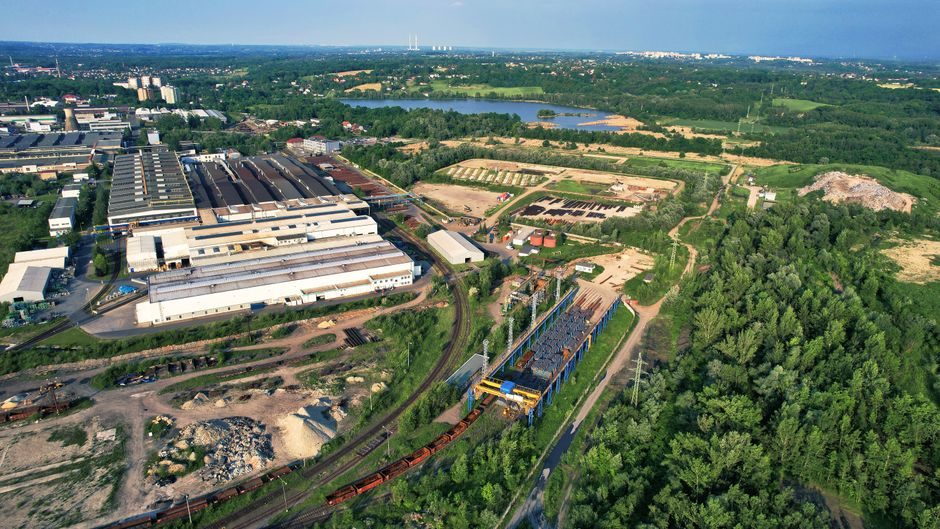
The 2026 additive manufacturing market segments cleanly into four stacks: metal powder-bed fusion (laser and electron-beam), polymer FDM/FFF, large-format thermoplastic extrusion, and additive manufacturing software for build prep and simulation [S5]. Buyers specifying a stack in 2026 select against the same four decision axes used since 2022 — material compatibility, build envelope, post-processing burden, and software lock-in — but the vendor list has expanded enough that the field is no longer dominated by a single OEM per category [S5].
A 2026 directory cross-section (SourceForge's additive manufacturing software list, Built In Colorado's 3D printing and nanotechnology roll-ups) shows that Colorado alone hosts more than 100-employee 3D printing firms such as Diversified Machine Systems (5-axis CNC + 3D printing) alongside newer entrants tagged "3D Printing • Generative AI" such as Canopy Aerospace [S7]. The Built In Colorado nanotechnology vertical, indexed the same week, lists firms that bridge AM powder production and part-level certification for medical and aerospace customers [S6].
Metal Powder-Bed Fusion OEMs: Laser PBF vs Electron-Beam
Metal powder-bed fusion is split between laser (LPBF) and electron-beam (EBM) machines, and a 2026 buyer comparing the two should weigh beam type against reactive-alloy compatibility, build-chamber vacuum/inert-gas regime, and minimum feature size — not advertised laser power alone [S5]. LPBF systems dominate titanium and Inconel work because the inert argon atmosphere keeps oxygen-sensitive alloys within aerospace spec; EBM systems run hotter and faster but hold a tighter set of compatible alloys, typically Ti-6Al-4V and a few CoCr grades [S5].
The current source set does not pin a 2026 unit-shipment number on any single metal-PBF OEM, so vendor selection has to be made against the published material compatibility list and the support contract footprint rather than market share. Built In Colorado's 3D printing directory flags Canopy Aerospace under hardware/defense tags, consistent with the LPBF aerospace-supplier pattern rather than commodity part bureaus [S7]. Material selection at the powder supplier layer is covered under the additive manufacturing material reference, including atomization methods and reuse-cycle limits.
Polymer and Large-Format Extrusion: FDM vs Pellet/Screw Extrusion
Polymer additive manufacturing is the broadest 2026 segment, covering fused-deposition-modeling (FDM/FFF) filament machines and the newer large-format pellet/screw extrusion systems used for tooling, jigs, and end-use thermoplastic parts [S5]. A 2026 spec-driven comparison should line up filament vs pellet feed, build volume, nozzle temperature ceiling, and material cost per kilogram — pellet extrusion typically halves material cost versus equivalent filament at the cost of surface finish [S5].
For machine-shop buyers comparing a desktop FDM cell against a pellet extrusion cell, the right decision metric is the 2026 filament-versus-pellet material cost differential, the heated-chamber ceiling (typically 90 °C for ABS-grade enclosures versus 200 °C+ for engineering thermoplastics), and the post-processing path needed to hit drawing tolerance. The SourceForge 2026 AM software roundup notes that slicing tools for both FDM and pellet extrusion now ship with layer-adhesion and warpage simulation, narrowing the design-iteration gap between the two feed formats [S5].
Additive Manufacturing Software Stack: Slicing, Build Prep and Simulation
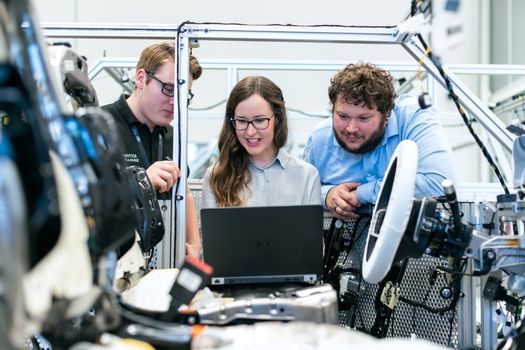
Additive manufacturing software in 2026 ships as four functional layers: CAD model import, slicing for layer-by-layer print planning, material selection, and live print-job monitoring with performance optimization [S5]. The SourceForge 2026 roundup groups these tools as one product category because the buyer decision is workflow-license rather than machine brand — a plant running mixed OEM hardware typically standardizes on a neutral slicer and simulation package to avoid per-vendor lock-in [S5].
Software evaluation should hit three specific data points: the supported file formats (STL, 3MF, STEP), the simulation physics (thermal, residual-stress, supports), and the API surface for MES/ERP integration. Per the 2026 roundup, the highest-rated packages bundle slicing, lattice generation, and live monitoring in a single license, which simplifies validation paperwork under AS9100 and ISO 13485 audit regimes [S5]. Buyers running production AM cells alongside CNC and PLC-driven automation can read the field-level integration options in the robotics procurement context, where warehouse AMRs and physics-AI simulation stacks are reshaping spec sheets in 2026.
Service Bureaus, Powder Suppliers and Regional Hubs
Service bureaus and powder suppliers sit alongside OEMs in any 2026 shortlist, and the Built In Colorado 2026 list is a useful proxy for the regional-hub pattern: companies cluster around aerospace and defense buyers, with 100-employee CNC+AM hybrids (Diversified Machine Systems) and smaller aerospace-parts specialists (Canopy Aerospace) both listed [S7]. The Built In Colorado nanotechnology vertical, updated 2026-05-19, lists powder and material-science firms that supply the upstream feed for both the metal and polymer AM stacks [S6].
A 2026 service-bureau shortlist should be screened on four criteria: the OEM machine fleet (LPBF count, EBM count, polymer FDM/pellet count), the materials certifications held (AS9100, ISO 13485, Nadcap for heat treatment), the ITAR/EAR registration status, and the published post-processing capability (HIP, machining, surface finishing). Service bureaus running titanium LPBF typically pair a pressure sensor array on the build chamber to log chamber pressure per build for traceability — a point worth confirming during supplier qualification [S5].
2026 Selection Criteria: Compatibility Matrix vs Marketing Claims

The 2026 selection criteria reduce to a single matrix: material × process × envelope × software. Material compatibility narrows the OEM list first — Inconel 718 LPBF is a different vendor shortlist from Ti-6Al-4V EBM, which is different from large-format PEKK pellet extrusion [S5]. Build envelope is the second gate: above 600 × 600 × 600 mm, the vendor list collapses to a handful of LPBF and large-format extrusion suppliers; below that, desktop FDM and small-format LPBF compete head-to-head on cost-per-part.
Software lock-in is the third gate, and the 2026 SourceForge data shows that mid-tier slicer/simulation packages now match OEM-native tools on layer physics, which weakens the case for staying on a single OEM's software [S5]. The fourth gate — post-processing burden — is where machine selection often fails: LPBF parts need depowdering, stress relief, HIP, and finish machining; EBM parts need powder recovery plus hot isostatic pressing; FDM parts need support removal and annealing. The Additive Manufacturing journal (Elsevier, ISSN 2214-8604, 2024-2025 IF 11.1, JCR Q1 in Engineering: Manufacturing) is the right reference for process-physics claims behind any of these criteria [S3][S4][S8]. Buyers running rare-earth and smart-manufacturing lines should also compare AM cell uptime against the rare-earth smart manufacturing and automation: 2026 stack reference, which covers upstream material risk and PLC/control architecture.
Limitations, Failure Modes and Sourcing Constraints
Three failure modes dominate 2026 AM field returns: porosity in LPBF parts when powder re-use exceeds the supplier's certified cycle count, residual-stress cracking in as-built LPBF Inconel when support geometry is undersized, and chamber-atmosphere contamination on EBM systems running reactive alloys outside the qualified material list [S5]. Each of these is a process-control failure, not a machine failure, which is why the 2026 buyer checklist has to lock in powder traceability, build-parameter recipes, and post-process nondestructive testing before machine selection is finalised [S5].
Sourcing constraints in 2026 also include powder supply (titanium and Inconel powder capacity is concentrated in a small number of atomization suppliers), machine lead time (LPBF systems are typically 6-9 months from order to installation), and ITAR/EAR classification for aerospace and defense parts. The journal Progress in Additive Manufacturing (Springer, ISSN 2363-9512, 2025-2026 IF 5.2, CiteScore 6.30) tracks process-innovation papers covering these failure modes and is the right second-tier reference behind the parent Additive Manufacturing title [S9].
Standards, Certification and Audit Trail
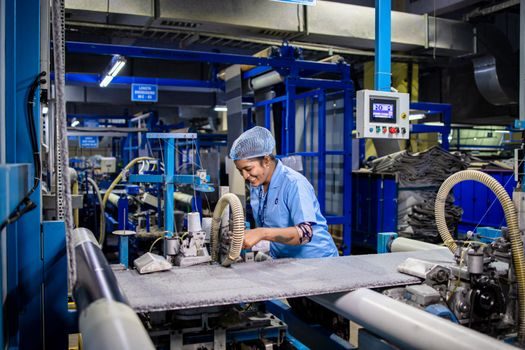
Buyer-side qualification in 2026 should be pinned to published standards rather than OEM marketing: ASTM F42 governs AM process classification, ISO/ASTM 52900 series covers terminology and process categories, ASTM F3301 covers post-processing methods for metal PBF, and AS9100/ISO 13485 cover the quality-system layer [S5]. Powder suppliers should hold Nadcap or equivalent accreditation for the atomization and sieving process, and machine OEMs should provide a published material-processor parameter set per alloy, not just a generic material list [S5].
The Additive Manufacturing journal's 5-year impact factor sits at 13.0 and its 2024-2025 IF at 11.1 with a 9.0% self-citation rate, making it the dominant peer-reviewed source for AM process-physics claims cited in qualification reports [S3][S8]. Progress in Additive Manufacturing sits one tier below with a 2025-2026 IF of 5.2 and a CiteScore of 6.30 (Q1 in Industrial and Manufacturing Engineering), and is more useful for shop-floor process notes than for fundamental process-physics data [S9].
The 2026 vendor shortlist is stable enough that the next signal worth watching is the Built In Colorado 3D printing directory refresh — new entrants tagged "Generative AI" or "Hardware • Defense" indicate which regional hubs are pulling aerospace and defense AM work [S7]. A second trackable signal is the SourceForge AM software category, where the next published roundup will reveal whether simulation physics is converging across vendor tools or re-fracturing into OEM-native stacks [S5].