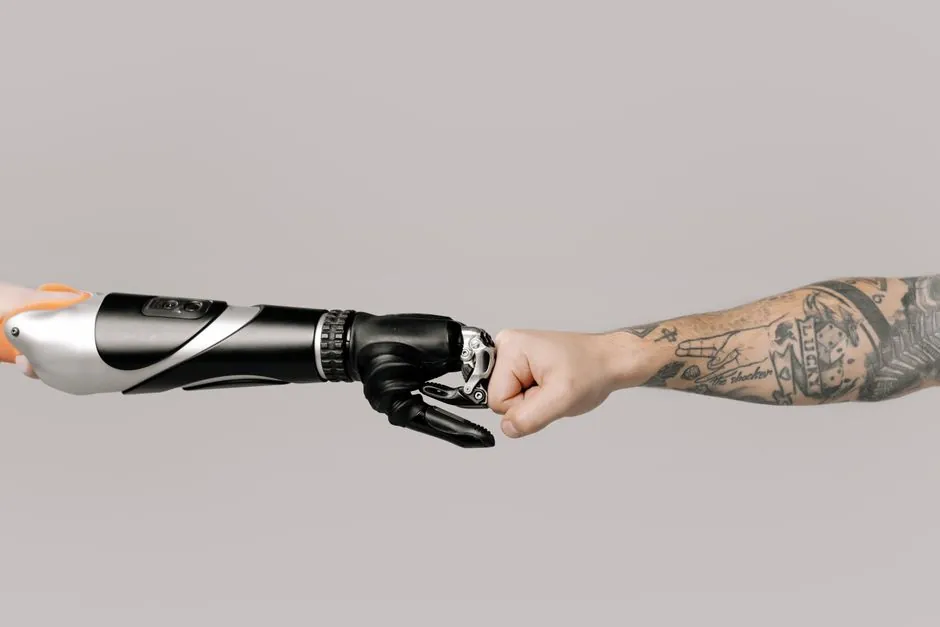
Universal Robots (Denmark) leads the 2026 collaborative robot market with an estimated 14.8% global share, followed by three Chinese suppliers, Dobot (~13%), AUBO (~11.2%), and JAKA, which together account for roughly a quarter of the global cobot market, per the May 2026 market ranking [S2].
FANUC, ABB, KUKA, Doosan Robotics, Techman, and Yaskawa round out the global top ten, while payloads now span 0.5–35 kg across 6-axis and 7-axis arms, repeatability is typically ±0.02–0.05 mm, and cobot-specific safety is governed by ISO/TS 15066 and ISO 10218-1 [S1][S2].
Definition and Scope: What Counts as a Cobot
A cobot is a 6- or 7-axis arm designed to share workspace with a human operator without a safety cage, using force limiting, joint torque sensing, and speed/separation monitoring to stop or slow on contact, which is the operational definition used in the May 2026 market ranking [S2].
These machines are tracked as a separate market from traditional industrial robots and exclude humanoids; caged arms, even from the same vendors (FANUC, ABB, KUKA, Yaskawa), are not counted in cobot share tables [S2]. Safety architecture is defined by ISO/TS 15066, which sits under the parent standard ISO 10218-1, and IFR reporting treats cobots as their own segment [S2][S3]. Practical payloads now range from sub-1 kg desktop units (Dobot starts at 0.5 kg) up to 35 kg heavy-palletizing arms (FANUC CRX), and reach typically sits between 500 mm and 1,800 mm depending on model [S1][S2].
Selection Criteria: Payload, Repeatability, Ecosystem, and TCO
Buyers evaluating cobot suppliers in 2026 should weigh four primary criteria: payload breadth, positional repeatability, integration ecosystem openness, and total cost of ownership including service, training, and end-effector lock-in [S1][S4].
Payload breadth matters because most plants run mixed-product cells, and a single platform that covers 3–30 kg (Elite Robots CS Series) avoids integrating two vendors [S1]. Repeatability benchmarks cluster at ±0.02 mm for the high-tier arms (Universal Robots, FANUC, ABB, KUKA, AUBO, Dobot, Kawasaki, Huayan), ±0.03 mm for JAKA and Flexiv, and ±0.05 mm for Doosan and Techman [S1]. Ecosystem openness shows up in certified accessory counts: Universal Robots' UR+ ecosystem exceeds 300 certified grippers, vision kits, and software add-ons, which is the most cited moat in the market [S2]. TCO is driven by self-development rate of core components; AUBO reports over 90% in-house parts, while most Chinese peers run a mix of in-house and third-party reducers and servos [S2].
Who Cobots Are For, and Where They Are the Wrong Tool
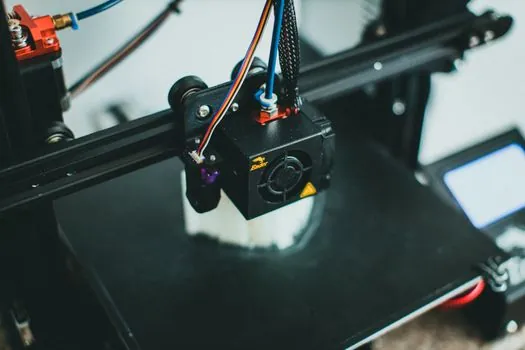
Cobots fit plants with high-mix, low-volume production, shared workspaces, frequent changeovers, and tasks like machine tending, screw driving, kitting, light assembly, and quality inspection, especially in pharmaceutical packaging, medical device assembly, and consumer products [S3][S4].
They are the wrong tool for high-speed welding cells above 2 m/s, heavy-payload automotive body-in-white work, high-volume paint shops, and any process where the cycle time economics depend on operating behind a fence at full industrial speed [S3]. Maximum cobot speeds are limited by the same ISO/TS 15066 power-and-force-limiting rules that let them work near people, and that is a hard ceiling, not a setting [S3]. For pure throughput per dollar, a caged 6-axis arm from the same vendor is usually cheaper, which is why cobot share sits at roughly 10% of total industrial robot revenue despite double-digit growth [S2][S5].
Main Options Compared: Top 10 Cobot Brands on Payload, Repeatability, and Differentiator
The 2026 ranking aligns on most spec sheets but diverges sharply on differentiator, which is the more useful axis for sourcing [S1][S2].
Universal Robots (Denmark, ~14.8% share) leads on UR+ ecosystem size and on a deployed base above 100,000 arms, with newer UR20/UR30 units extending into heavier palletizing [S2]. FANUC (Japan, ~6.1%) leads on industrial-grade reliability and IP67 sealing, with the CRX series covering 4–35 kg for 24/7 automotive cells [S1][S2]. ABB (Switzerland, ~5.6%) sells GoFa, SWIFTI, and YuMi dual-arm, with SafeMove safety architecture rated for collaborative speeds up to 5 m/s on its higher-tier models [S1]. KUKA (Germany, ~4.9%) ships 7-axis LBR iisy/iiva with joint torque sensing on every axis, aimed at precision assembly and research [S1][S2]. Techman (Taiwan, ~3.9%) was the first cobot OEM to ship a built-in vision system and bundles TM AI+ software, paired with an Omron partnership for factory-wide rollout [S1][S2]. Doosan Robotics (South Korea, ~4.4%) ships 6-axis torque sensing as standard and leads in heavy-payload cobots above 20 kg [S1][S2]. Yaskawa (Japan, ~3.5%) focuses HC-series on arc welding specialization and runs the SmartPendant interface [S1][S2]. Among Chinese makers, AUBO leads on in-house parts (>90%), JAKA leads on compact form factor and is the top seller inside China, and Dobot leads on global footprint with shipments to 80+ countries [S1][S2].
Use Cases and Failure Modes in Real Plants
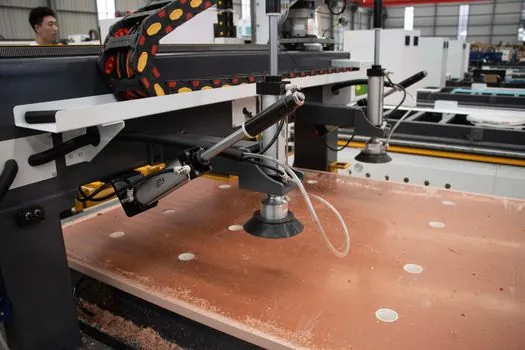
Documented use cases in 2026 center on pharmaceutical packaging (pick-and-place of blister cards, bottles, cartons), medical device assembly (micron-level component placement for implants and diagnostics), and consumer product lines running high-mix, low-volume changeovers where a single cobot is reprogrammed across multiple SKUs in one shift [S3].
Failure modes cluster around three patterns: (1) buyers under-specifying payload, including gripper mass and part inertia, which causes servo faults and joint-temperature trips; (2) risk-assessment gaps when the cobot is moved between workstations without re-running the ISO/TS 15066 power-and-force-limiting calculation; and (3) integration lock-in, where a vendor's proprietary end-effector bus delays replacement of a damaged gripper by days [S3][S4]. Native EtherCAT architectures and ROS2-native controllers (AUBO) cut the third risk by opening the bus to third-party accessories [S1]. Buyers who skip the risk assessment routinely see cobot cells pulled back into fenced operation by their EHS team, which negates the original TCO case [S3].
Standards, Sourcing Reality, and 2026 Market Signals
Cobot safety is governed by ISO/TS 15066 with the parent standard ISO 10218-1, and end-effectors, vision, and software are typically certified under the OEM ecosystem (UR+, CRX, or vendor-native) [S2][S3].
Market signals for 2026 are concrete: the global cobot market is on track from about $1.4B in 2025 to $3.38B by 2030 at an ~18.9% CAGR per MarketsandMarkets data cited in the May 2026 ranking, while a separate longer-horizon forecast tracks the wider collaborative robot segment from $2.3B in 2025 to $10.4B by 2035 at a 14.9% CAGR [S1][S2]. Growth is driven by labor shortages and rising labor costs in manufacturing and logistics, and roughly three-quarters of the market sits with the ten brands listed above [S2][S5]. Sourcing reality for a US or EU buyer in 2026 means shortlisting on payload first, then testing the local integrator network, since service response time dominates lifecycle cost on cobot cells more than on traditional arms. Watch points for the next 6–12 months: Chinese makers closing the ecosystem gap with Universal Robots (UR+ has 300+ certified accessories), Doosan and Techman pushing repeatability below ±0.03 mm, and FANUC extending CRX IP67 sealing into higher-payload classes above 20 kg. Related reference specs for adjacent automation cells are mapped in the SCARA robot spec guide, and the semiconductor-backend SCARA map is useful for cleanroom-adjacent buyers.
Component reference pages worth checking: collaborative robot, construction machinery and equipment, and lamps and light fittings.