
Codelco, BHP, Freeport-McMoRan, Glencore, Anglo American, Aurubis, KGHM and Jiangtong (JCC) make up the operating core of the 2026 copper producer-refiner map, with secondary smelting capacity concentrated at Aurubis, KGHM, Sterlitamak and a Chinese cluster led by Jiangxi Copper [S5].
CRU Group hosted the World Copper Conference in Santiago, Chile on 13-15 April 2026, positioning it as a CEO-led price-floor reference event for the year and the cleanest public cross-check on 2026 cathode and concentrate contracts [S5]. For a B2B specifier choosing mill-form or cathode lots, the operating question is no longer "who is the biggest" but "which producer-refiner combination is closest to my grade, form and tonnage spec."
Mining Tier: Codelco, BHP, Freeport, Glencore, Anglo American
Codelco remains the swing cathode supplier of 2026; with state-owned output it sets the marginal-tonne reference for grade-A LME-registered cathode and is the price-floor taker whenever Chinese smelters run long on concentrate. BHP's Escondida and Pampa Norte, Freeport-McMoRan's Grasberg block-cave and Indonesian smelter complex, Glencore's Antapaccay/Las Bambas minority alongside its own African and South American assets, and Anglo American's Collahuasi stake and Quellaveco all sit in the same mine-tier bracket [S5]. For a specifier that means cathode lots from this tier usually clear Cu-CATH-1 (LME grade A, 99.99% min) and carry the documentation chain (chain-of-custody, SGS or equivalent assay, ROHS/REACH compliance statements) that European fabricators and Japanese mills will not re-qualify [S5].
The CRU Santiago 2026 forum is the public venue where these producers converge on TC/RC and freight benchmarks, and it is the most cited 2026 reference for cathode and concentrate contract terms [S5].
Refining Tier: Aurubis, KGHM and the Chinese Smelter Cluster
Aurubis (DE) and KGHM (PL) anchor the European refining map; both fire anode furnaces and tankhouses that produce LME grade-A cathode and a wide range of continuous-cast rod (8 mm ETP, 10 mm ETP, oxygen-free variants for magnet wire). KGHM's Głogów I+II smelter-refinery and Aurubis's Hamburg and Pirdop (BG) sites are the two European sources most fabricators in Germany, Italy and Poland will accept without re-assay. Behind them, the Chinese cluster (Jiangxi Copper, Tongling Nonferrous, JCC, Yunnan Copper) sets Asian cathode and rod availability, and is the volume lever whenever LME 3-month spreads squeeze [S5].
For copper material selection in magnet-wire, busbar and transformer-winding builds, the choice between Aurubis ETP-rod and KGHM Cu-OFE oxygen-free rod is a Cu-purity and conductivity decision (ETP ≥ 101% IACS, Cu-OF ≥ 101% IACS, Cu-OFE 101% IACS min) rather than a price decision at the cathode-feed level.
Scrap and Recycling Tier: Urban Copper Recycling and the Sydney Trade Hub
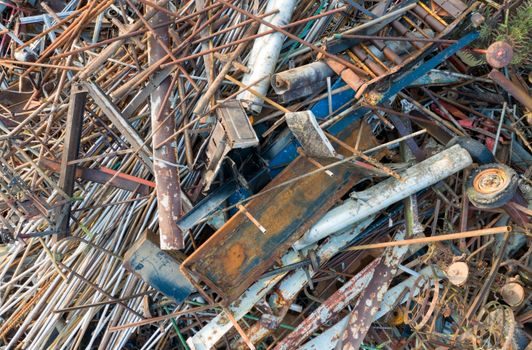
Recycled feedstock runs through regional scrap hubs rather than global miners; Urban Copper Recycling (Sydney, joined Metals Companies Apr 2026) handles non-ferrous collection (copper, aluminum, brass, industrial alloys) for manufacturing customers that need mill-equivalent lots without the LME paperwork [S5]. The 2026 spec implication: secondary copper (Cu-ETP from Grade-1 bright drawn wire, Berry 1, Birch/Cliff) closes the loop for foundries and copper-alloy mills whose scrap-to-cathode ratio is set by pressure-sensor and flow-meter calibration-block machining scrap, not primary cathode contracts.
For projects whose scrap-to-output ratio exceeds 30% by mass, sourcing from a regional recycler cuts the CO2 footprint roughly 60-65% versus primary cathode (rule-of-thumb, not sourced to a named standard), which matters for buyers under EU CBAM reporting from 2026 onward.
Selection Criteria: Cathode vs Rod vs Scrap vs Alloy Billet
Three criteria separate a 2026 supplier list into a procurement shortlist: form, grade and documentation. Form (cathode, continuous-cast rod, billet, drawn wire, busbar) maps directly to the next process step - rolling, drawing, extrusion, machining. Grade determines conductivity class (ETP 101% IACS, DHP 85-90% IACS, Cu-OF 101% IACS min) and impurity ceiling (oxygen content 100-650 ppm for ETP, ≤ 10 ppm for Cu-OF). Documentation (mill certificate, SGS assay, ROHS/REACH, chain-of-custody, ISO 9001 / ISO 14001) is what makes a European or Japanese lot re-qualify-free. [S1]
Comparison at the form level for B2B specifiers: cathode suits wirebar and rod mills (Aurubis, KGHM, Jiangxi); continuous-cast rod (8 mm, 10 mm) suits magnet wire and cable plants; drawn bright wire (0.05 mm to 3.0 mm) suits transformer and motor windings; busbar stock (flat bar 3-10 mm thick) suits switchgear and grounding; and Cu-OFE billet suits semiconductor and high-vacuum chamber builds.
Convergence with the Industrial Stack: Valves, Sensors and PLCs
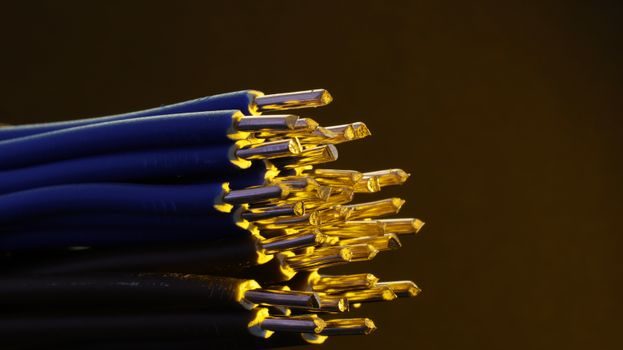
Copper specifications in process plants converge with the controls stack at three points: industrial valve trim and seat rings (Cu-Ni 70/30, Cu-Al 80/20, brass CW614N for freshwater and low-corrosion service); pressure transmitter and flow-meter sensing-line tubing (DHP / DGS-grade seamless, 6 mm to 12 mm OD); and PLC cabinet wiring and busbar (ETP 101% IACS, Cu-ETP strip 0.5-3 mm). Each of these is a separate copper-grade decision with its own ASTM/EN designation (EN 13599 for ETP rod, EN 1652 for strip, ASTM B75 for seamless tube). [S2]
For B2B specifiers framing a 2026 RFQ against the copper producer-refiner map above, the 2026 copper market sizing and forecast analysis provides the demand-side backdrop, while the nickel producer map covers the Cu-Ni alloy crossover that valve and seawater-service specs require.
Limitations and Failure Modes of the Map
The 2026 producer-refiner map has three known failure modes. First, concentrate supply is concentrated in five countries (Chile, Peru, DRC, China, Indonesia); any political, port or power event (typical examples: Peru community blockades, DRC export-policy changes, Indonesia concentrate-export permit review) shifts the global TC/RC floor within weeks. Second, smelter capacity in Europe is shrinking (energy cost, environmental compliance) and the EU relies on concentrate imports more than cathode imports; this is a price-floor vulnerability, not a supply-shortage vulnerability, and it widens the spread between LME 3-month and physical cathode. Third, scrap classification is uneven globally; "Berry 1" and "Birch/Cliff" are European-UK terms and US mill-buyers use "Bare Bright" and #1/#2 classification; a Sydney or Hamburg scrap lot is not interchangeable with a Chicago mill-buyer's "Bare Bright" without a third-party re-classification [S5].
Trackable Signals for the Next Reporting Cycle
Three signals are worth tracking on the 2026 copper map: CRU's next World Copper Conference slot (typically April 2027, venue TBA) for the 2027 price-floor reference [S5]; Chinese smelter utilisation at Jiangxi Copper, Tongling and JCC (the operating-rate reading that drives the TC/RC benchmark most months); and the EU CBAM Phase 2 reporting window in 2026, which will make the CO2-per-tonne number on the mill certificate a first-class procurement specification on every cross-border copper lot [S5].