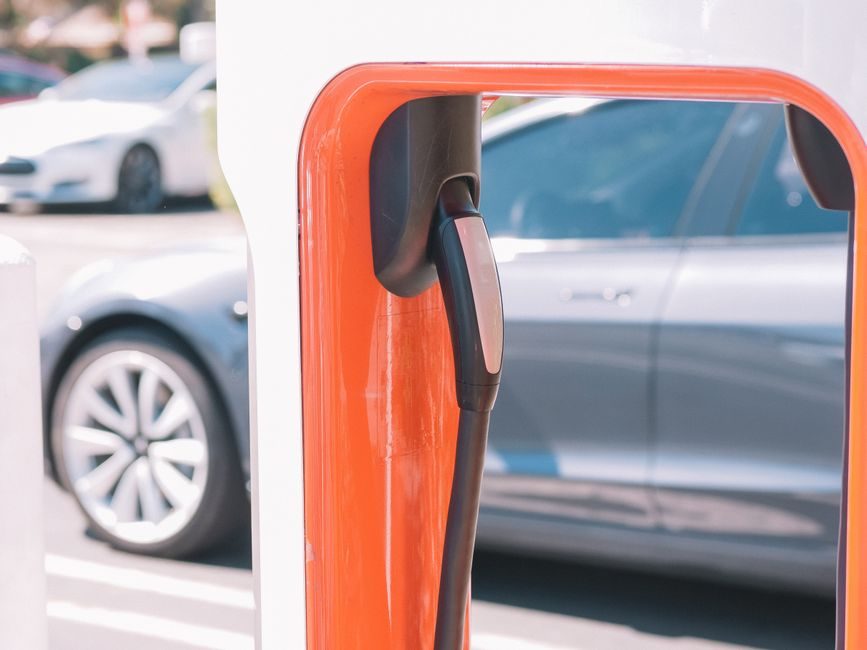
ABB's E-mobility portfolio of DC fast chargers spans 50 kW to 350 kW units built for highway corridor and depot use, with OCPP 1.6/2.0.1 back-end integration confirmed on the vendor's product page updated June 2026 [S1].
The competitive set in 2026 is bifurcated: Western system integrators (ABB, Siemens, Schneider) handle utility-side turnkey projects, while Chinese OEMs such as iocharger ship modular units from 30 kW DC wallboxes to 1600 kW megawatt charging systems (MCS) targeting heavy-duty truck fleets, all OCPP 2.0.1 compliant as of July 2026 [S2].
Power Class Bands Defining the 2026 Market
DC fast chargers in 2026 cluster into four discrete power bands, each tied to a specific use case rather than a marketing tier [S2]. The 30-60 kW band covers destination and small-fleet DC wallboxes suitable for 20-40 minute top-up charges. The 60-180 kW band is the workhorse for urban fast-charging plazas, with iocharger's Mode 4 product explicitly stepping through 60, 90, 120, 150, and 180 kW models on a shared platform [S2]. The 240-420 kW band is the highway corridor envelope, exemplified by iocharger's 240/300/360/420 kW ISO15118-compliant ultra-fast station [S2]. Above 480 kW, the megawatt class is engineered for heavy-duty trucks and electric aircraft tow tractors, with iocharger offering both 480 kW and 960 kW satellite configurations and a 1600 kW MCS unit [S2].
Protocol Stack: OCPP, ISO15118, and Connector Mix
OCPP 2.0.1 has become the default management protocol for 2026 OEM offerings, with iocharger's product pages listing compliance across every model from the 30 kW wallbox to the 1600 kW MCS unit [S2]. ISO15118 Plug&Charge plus V2G (Vehicle-to-Grid) readiness is now specified at the 30-60 kW DC wallbox tier as well, not only at the top end, signalling the protocol's migration downward into depot hardware [S2]. The connector mix on Chinese-built dual-stack units combines CCS-2 and CHAdeMO on a single dispenser, with a 22 kW Type-2 AC fallback port integrated into the same cabinet for sites that cannot justify a separate AC pedestal [S2]. ABB's E-mobility line ships with CCS1/CCS2 and CHAdeMO variants selected per delivery region, per the vendor's published configurator updated June 2026 [S1].
Vendor Comparison: ABB vs iocharger on Decision Criteria

For fleet procurement in 2026, four decision criteria separate the dominant vendors: maximum power output, regional service footprint, back-end interoperability, and unit price band. ABB offers 50-350 kW with a global service network and grid-tied turnkey project delivery, positioning it as the choice for utility-scale highway corridors [S1]. iocharger's range tops out at 1600 kW MCS for heavy-duty fleets, with OCPP 2.0.1 compliance across the catalogue, positioning it as the choice for truck depot and bus-fleet rollouts that need megawatt-class hardware [S2]. ABB's ecosystem integrates with its own Ability OCC back-end and third-party CPO platforms via OCPP 1.6/2.0.1 [S1]; iocharger's open OCPP 2.0.1 stack targets white-label CPOs and dynamic load balancing deployments [S2]. The price-per-kilowatt gap remains substantial: Chinese-built units ship at a fraction of Western OEM list price, though total landed cost narrows once grid-connection engineering and service contracts are added.
Site Engineering Constraints and Power Electronics
Specifying a DC fast charger is a power-electronics exercise first and an automotive problem second. The DC power supply front-end inside every DCFC is a controlled rectifier stage converting three-phase AC grid input (typically 400 V or 480 V at 50/60 Hz) to a regulated 200-1000 V DC bus, with the DC-DC converter stage then stepping that bus to the 150-920 V window demanded by the EV's traction battery. A 350 kW unit draws approximately 530 A at 400 V three-phase, which is why most sites require a dedicated 630 kVA or 800 kVA transformer tap rather than a building services feed. iocharger's 1600 kW MCS unit moves that requirement to roughly 2500 A at 400 V, with liquid-cooled dispensers and a 1500 V DC architecture [S2]. Megawatt-class installations also need medium-voltage grid connection (typically 11 kV or 33 kV) and a step-down skid, which is where Western OEMs' utility integration experience becomes decisive over Chinese hardware pricing.
Standards, Compliance, and Network Architecture
The 2026 compliance baseline for any DC fast charger bid is OCPP 2.0.1, ISO15118 for Plug&Charge and V2G, and regional connector and EMC certification (CE, UKCA, FCC Part 15, UL 2202, Energy Star where applicable). OCPP 2.0.1 replaces OCPP 1.6J for new deployments because it adds smart charging profiles, transaction event handling, and ISO15118 alignment in a single protocol [S2]. For demand-response and dynamic load balancing across multiple dispensers, OCPP 2.0.1's ChargingNeeds and EVSEStatus messages carry the setpoint data that the site's energy management system (EMS) consumes to cap total site draw at the contracted service capacity. Network architecture for 2026 rollouts typically pairs Ethernet or 4G LTE backhaul with local controller failover, and OCPP 2.0.1's enhanced security model (mutual TLS, ISO15118-20 PKI) is what unlocks Plug&Charge without app authentication. Procurement specs should pin OCPP 2.0.1 and ISO15118 explicitly; vendors offering only OCPP 1.6J are at end-of-life for new 2026 builds.
Selection Criteria: Who Each Vendor Is For
ABB's E-mobility line is built for utility, highway, and depot projects where the buyer values integrated grid engineering, regional service coverage, and a single-vendor warranty spanning transformer to dispenser [S1]. It is not the right choice for buyers seeking megawatt-class MCS hardware or for white-label CPOs needing unbranded hardware for rebranding. iocharger's catalogue suits white-label CPOs, bus depots, and logistics fleets that need 30-1600 kW on a shared OCPP 2.0.1 platform with sub-OEM pricing [S2]. It is not the right choice for projects requiring a Western OEM service contract or for jurisdictions where CE marking is a hard procurement gate and the buyer needs the certification paperwork issued in-region. For the heavy-duty truck and bus segment, the practical 2026 ceiling sits at 960 kW on the proven satellite topology, with 1600 kW MCS units now available from at least one Chinese OEM but still in early fleet deployment [S2].
Failure Modes and Procurement Watch-Outs
The most common 2026 DCFC failure modes are not in the dispenser but in the upstream power electronics and network stack. Three watch-outs for procurement: first, pin the OCPP version in the contract (2.0.1, not 1.6J) and require a certificate of conformance, since some 2025-vintage units were sold as "OCPP compliant" without a specific minor version; second, require ISO15118 conformance test reports separately for Plug&Charge and V2G, as V2G is not free with Plug&Charge; third, specify the AC input voltage range and short-circuit current rating explicitly, because a 400 V unit on a 480 V site (or vice versa) will fault on under-voltage during peak dispatch. For megawatt-class sites, also require liquid-cooling specifications for the dispenser cable (typically -40 °C to +60 °C ambient, flow rate in L/min) and the coolant dielectric rating. Acceptance testing should follow IEC 61851-23 and IEC 61851-24, the international standards governing DC charging control and digital communication, with site-level tests witnessed against the OEM's FAT procedure. [S2]
Trackable signals for 2026-2027 procurement cycles: which Chinese OEMs gain UL 2202 and CE certification for their 480-960 kW satellite products (the certification pipeline is the real gating item for Western adoption), and whether the 1600 kW MCS units from iocharger reach series production with documented fleet duty cycles [S2]. For depot builds sized under 200 kW, pricing parity between Chinese and Western OEMs is already close enough that service-contract terms typically swing the award; for megawatt-class sites the gap remains wide and project-specific.
Spec-level background on the components involved: pressure transmitter.
For related coverage, see Block & Brick Types: 2026 Spec Map for Engineers.