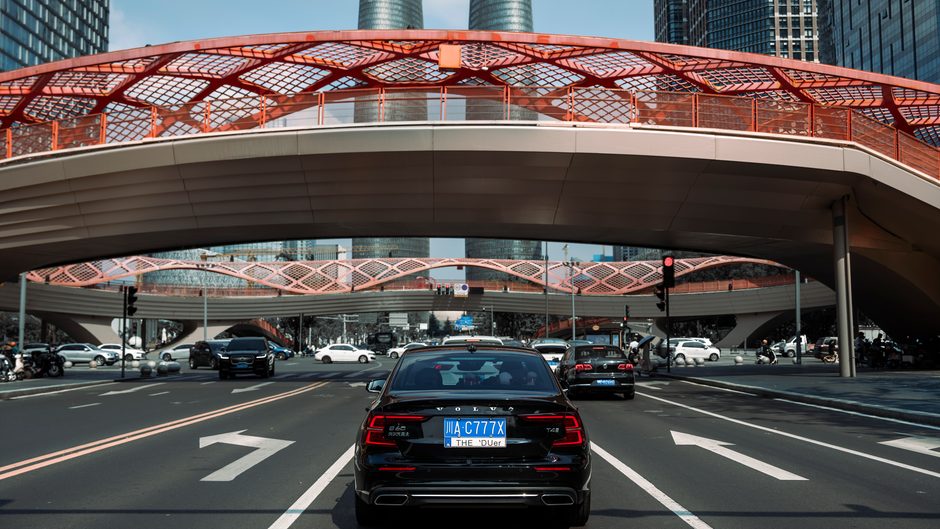
The global LiDAR sensor market in 2026 is structured around two distinct end-use clusters: automotive safety/navigation and industrial surveying/mapping, with the supplier list differing sharply between them [S4].
Automotive-grade LiDAR — typically 905 nm or 1550 nm, eye-safe Class 1, range 150–300 m — is dominated by Luminar, Hesai, RoboSense, Valeo, and Innoviz, while industrial 3D mapping and robotics units are supplied by Velodyne, Ouster, RIEGL, and SICK (see displacement sensor for related time-of-flight sensing principles) [S4].
Automotive LiDAR Suppliers and Sensing Architectures
905 nm silicon-compatible automotive LiDAR modules remain the most cost-competitive in 2026, but their eye-safety limit caps useful range to roughly 200 m at retro reflectivity of 10% [S4].
1550 nm fiber-laser-based units from Luminar-class suppliers push automotive range to 250 m+ at the same reflectivity, at the cost of a more expensive InGaAs receiver chain and stricter thermal management [S4].
Mechanical spinning, MEMS-mirror, and flash/OPA architectures are all shipping in 2026 series programs, with MEMS being the dominant mid-range choice for L2+/L3 ADAS due to its balance of size, reliability, and unit cost [S4].
Industrial and Mapping LiDAR: Range, Point Rate, Wavelength
RIEGL and SICK serve the long-range surveying segment, with airborne units reaching ranges above 1000 m and terrestrial scanners typically delivering 100–500 m at 905 nm or 1550 nm, with point rates from 100 kHz to over 1 MHz per head [S4].
For robotics and short-range industrial mapping, Ouster and Velodyne-class suppliers compete on mechanical and solid-state digital flash LiDAR, with ranges typically 50–120 m and resolutions driven by channel count (16, 32, 64, 128, 256) [S4].
Industrial LiDAR differs fundamentally from flow sensor and inductive sensor families in that it resolves geometry rather than scalar quantities, so its key specs are angular resolution (typically 0.1°–0.4°), point rate, and frame rate (5–25 Hz) [S4].
Comparison Table: Main LiDAR Vendor Families on 4 Decision Criteria
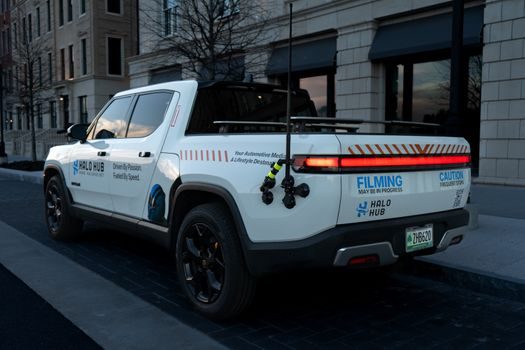
The table below lines the main vendor families up against range, wavelength/eye-safety, dominant architecture, and primary application, so spec-driven buyers can shortlist by application rather than by brand familiarity [S4].
Automotive: Luminar, Hesai, RoboSense, Valeo, Innoviz — range 150–300 m, 905/1550 nm, MEMS + flash, ADAS/robotaxi.
Industrial/mapping: Velodyne, Ouster, RIEGL, SICK — range 50–1000 m, 905/1550 nm, mechanical + flash, mapping/robotics/AMR.
Chinese volume tier: Hesai and RoboSense lead automotive shipments on 905 nm MEMS, with manufacturing scale that pressures unit pricing downward in 2026 [S4].
Selection Criteria: Matching LiDAR to the Application
Selection in 2026 starts with the application envelope: working range, required point density at target distance, ambient light rejection, and IP/ingress rating, not with brand familiarity [S4].
For outdoor autonomous vehicles and robotaxis operating in mixed traffic, 1550 nm MEMS units with 200 m+ range and Class 1 eye-safety are the typical spec, while in-cabin or short-range AGV deployments are well served by 905 nm solid-state units at 30–80 m [S4].
For industrial SLAM and warehouse robotics, the dominant metric is points-per-second at short range rather than maximum range, which favors Ouster-class digital flash and Velodyne-class mechanical units in the 50–120 m band [S4].
Standards, Eye-Safety, and Verification

Eye-safety compliance to IEC 60825-1 Class 1 governs the laser classification that all automotive-grade LiDAR must meet, and most OEM datasheets now report 905 nm or 1550 nm with explicit Class 1 markings [S4].
Functional-safety qualification for automotive programs is increasingly tied to ISO 26262 ASIL-B or ASIL-D at the perception-stack level, even when the LiDAR sensor itself is rated QM or ASIL-B as a component [S4].
For mapping-grade LiDAR, calibration traceability to NIST or equivalent national metrology institutes, plus georeferencing accuracy, are the dominant acceptance criteria on the procurement side [S4].
2026 Sourcing Signals and Trackable Indicators
Trackable signals into the second half of 2026 include: Hesai and RoboSense monthly automotive shipment counts, Luminar-series program wins on production vehicles, and new Ouster/RIEGL product launches at the INTERGEO 2026 and IAA Mobility 2026 trade shows [S4].
For adjacent automation sourcing, see the related spec map on machine vision system market 2026: capacity, spec, and sourcing signals and the top precision air conditioning companies 2026: specs, selection, and sourcing map for the controlled-environment side of sensor deployment [S4].