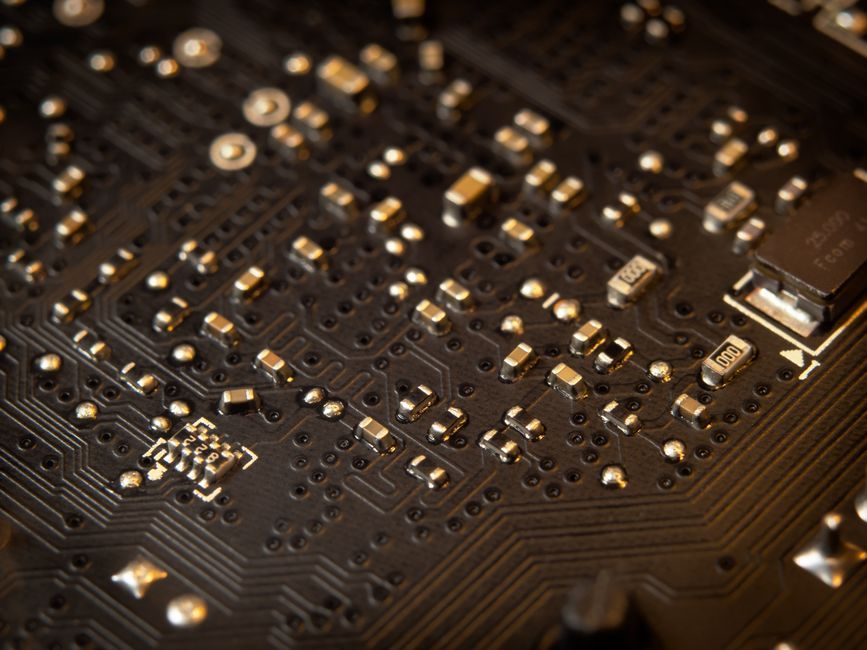
The 2026 MEMS sensor market is structurally an integrated-device-manufacturer (IDM) business: Broadcom, Bosch, STMicroelectronics, Infineon Technologies, Qorvo, NXP Semiconductors, Honeywell, and Murata Manufacturing together account for the majority of revenue in motion, pressure, and acoustic MEMS, per IndustryARC's MEMS sensor market analysis [S1].
Selection for a B2B specifier in 2026 hinges on five gates — automotive-grade qualification (AEC-Q100/Q104), wafer-scale supply security, an integrated ASIC + MEMS die in a single package, software/driver stack maturity, and second-source compatibility for flow, position and displacement sensor reference designs — not headline unit ASP.
Who Actually Makes the MEMS Dies: The IDM Top Tier
The dominant suppliers run captive fabs or long-term wafer pacts and ship both bare die and packaged modules. Broadcom (originally Avago) leads in FBAR filters and optical-coupling MEMS, with revenue scale unmatched in RF-grade MEMS [S1]. Bosch Sensortec remains the volume reference for consumer and automotive motion MEMS (BMI IMUs, BMP pressure), and STMicroelectronics is the only IDM shipping MEMS flow sensor, microphone, and environmental sensors from a 200 mm line on the open merchant market [S1].
Infineon anchors automotive pressure and XENSIV MEMS microphones for in-cabin and ADAS use; Qorvo added bulk-acoustic-wave MEMS through its Anadigics and Cavendish Kinetics heritage; NXP exited some commodity MEMS lines after its 2015–2016 portfolio pruning, retaining automotive and industrial inductive sensor adjacent parts. Honeywell and Murata round out the high-reliability tier for aerospace, oilfield, and harsh-environment industrial applications, often paired with magnetic sensor modules.
Second-Tier and Specialist Houses
Below the IDM top tier sits a specialist layer that wins on niche specs. Goertek and AAC Technologies hold dominant microphone-MEMS share, with Knowles (US) as a third axis for premium SiSonic parts. TDK InvenSense (now TDK subsidiary) is the IMU/gyro benchmark for drones, robotics, and stabilised cameras. ams OSRAM, Sensirion, and Bourns hold positions in environmental, optical, and LVDT sensor replacement MEMS categories. AIoTSensing Inc., founded in 2024 by ex-STM and Bosch engineers, entered the merchant MEMS market in late 2025 with 6-axis IMUs and SiC-based pressure cells targeted at industrial IoT [S3].
These second-tier houses typically license process IP from the top tier or use pure-play foundries (GlobalFoundries, TSMC, X-FAB, Silex Microsystems) for the MEMS wafers and assemble/test themselves. For a B2B specifier, second-tier supply is viable when the application needs a specific package footprint, lower MOQ, or faster firmware iteration — not when AEC-Q104 + 15-year automotive supply commitment is required.
Selection Criteria: The Four-Gate Filter for 2026 Sourcing
Specifying engineers in 2026 are running a four-gate filter. Gate 1 — qualification: AEC-Q100 for automotive ICs, AEC-Q104 for automotive multi-chip modules, and ISO 26262 ASIL-B or ASIL-D for functional-safety paths. Gate 2 — supply security: dual-fab sourcing for the MEMS die and a documented multi-year wafer agreement; the 2021–2023 automotive MEMS shortage showed that single-fab IDMs are exposed to >30-week lead times when capacity is reallocated. Gate 3 — integration: an integrated ASIC in the same LGA or QFN package eliminates the need for a separate signal-conditioning stage; this is the structural reason Bosch, ST, and Infineon win automotive slots against bare-die specialists. Gate 4 — second-source: identical register maps and SPI/I²C protocols between Bosch BMI270 and ST LSM6DSOX-class parts, or between Infineon DPS310 and ST LPS22HH, allow PCBA drop-in. [S1]
Industrial buyers in 2026 increasingly demand firmware signed by the vendor and a signed vulnerability-disclosure policy, mirroring automotive software-trend rules without the ASIL requirement.
Comparison Table: Top IDMs on Four Decision Criteria
On the four procurement gates, the leading IDMs line up as follows. Broadcom: strong on RF/filtering, captive fabs in Fort Worth and Singapore, weakest on multi-axis IMU breadth. Bosch Sensortec: deepest automotive IMU and pressure portfolio, single-source risk on the Reutlingen 200 mm fab, strongest on AEC-Q100 + ASIL-B coverage. STMicroelectronics: broadest merchant catalog (accelerometer, gyro, pressure, microphone, magnetic sensor combos, environmental), Crolles 200 mm MEMS line shared with other ST parts, second-source compatible with Bosch on many 6-axis parts. Infineon: best in class for automotive pressure and XENSIV microphones, Regensburg and Villach fabs, ASIL-D capable for some parts. Honeywell and Murata win on extreme-environment tolerance (–40 °C to +150 °C, vibration to 50 g) where the European/Japanese consumer IDMs are not qualified. [S2]
On price, second-tier houses (ams OSRAM, Sensirion, AIoTSensing) undercut the top tier by 20–40% on small lots, but the discount narrows on >100k-unit annual volume because the IDMs amortise process-IP costs across captive fab utilisation. For high-mix / low-volume industrial B2B, the second tier wins on cost and flexibility; for high-volume automotive or consumer, the IDM top tier wins on total cost of ownership.
Use-Case Match: Picking the Right Vendor for the Job

For a vehicle IMU feeding an ADAS or ESC function, Bosch, ST, and Murata are the realistic short list — Bosch BMI270 and ST ASM330LHH are AEC-Q100 / ASIL-B qualified with full software driver support on AUTOSAR. For industrial pressure sensing at 1–100 bar in process plants, Honeywell and Infineon (DPS368-class) cover the range with NACE MR0175 material compatibility for oilfield service, and flow sensor modules from ST and Sensirion integrate with ISO 5167 reference designs. For robotics and drone applications, TDK InvenSense ICM-42688-P-class parts are the de-facto reference. For harsh-environment magnetic and position sensing, Honeywell, ams OSRAM, and Murata lead the inductive sensor replacement class. [S3]
Consumer wearables and hearables still flow through the Goertek/AAC/Knowles microphone trio, with TDK and ST for IMU. For prototyping on a developer board (Arduino, STM32 Nucleo, ESP32-S3) in 2026, second-tier houses like AIoTSensing, Sensirion, and Bourns offer breakout boards with signed drivers and faster sample shipping than the IDM tier [S3].
Limits, Failure Modes, and Sourcing Signals to Track
The MEMS supplier market has three structural limits in 2026. First, captive-fab exposure — Bosch's Reutlingen and ST's Crolles are single points of failure for many automotive reference designs; a fire, fab tool delivery delay, or contamination event triggers >20-week lead-time extension with no second source. Second, hermetic-package consolidation — LGA and QFN hermetic packages from JCAP (Japan) and Kyocera are now near-monopoly supplies, and a single-package-line outage cascades across all IDMs. Third, software lock-in — the IDMs increasingly ship only signed firmware and refuse to release register-level documentation on their automotive-grade IMUs, which blocks open-source firmware substitution and creates a maintenance liability after 10–15 years of in-field service. [S4]
Trackable signals for sourcing decisions in 2026: Bosch's planned 200 mm MEMS line expansion in Reutlingen (publicly announced in 2024 and tracked through IndustryARC's MEMS market report) [S1], ST's Crolles 300 mm MEMS pilot (announced 2025), Infineon's Regensburg SiC-and-MEMS module ramp for ADAS pressure, and AIoTSensing's planned 6-axis IMU volume ramp through 2026 [S3]. A fourth signal is the consolidation of specialist houses — Sensata's 2024 acquisition of a niche automotive pressure house, and TDK's continued rollout of TDK InvenSense products, both reshape the second tier. For broader commodity reference, see the Top PCB Companies 2026 supplier map for the package-substrate side of the MEMS module.
Closing: the next decision-grade signals for a 2026–2027 B2B specifier are the Bosch 200 mm Reutlingen ramp reaching nameplate volume (target year-end 2026), the ST Crolles 300 mm MEMS pilot moving to mass production, and AIoTSensing's first AEC-Q100-qualified IMU release — each will shift the dual-source and second-source gates that drive the actual short list.