
Three hard metrics separate the 2026 PV leaderboard from marketing noise: wafer-to-module annual shipments in gigawatts, polysilicon production in metric tonnes, and inverter-line revenue reported in USD [S2].
The published Italy-only revenue snapshot — Sorgenia S.p.A. leading an oil-and-gas-rooted group of operators at the top of the 2022 table — illustrates how national leaderboards still mix IPPs (independent power producers) with hardware OEMs (original equipment manufacturers) [S2]. For a process engineer scoping supply, the meaningful list is the hardware one: polysilicon, wafer, cell, module, inverter, and BOS (balance of system) tracker suppliers, which is the same segment structure tracked across the photovoltaic industry 2026 capacity outlook.
Shipment-Volume Axis: Module GW Leaderboard
Module shipments remain the single most-cited 2026 ranking lever, and the published list is dominated by Chinese TOPCon (tunnel oxide passivated contact) and HJT (heterojunction) lines pushing N-type (negative-type semiconductor doping) cells above 24% mass-production efficiency [S1]. Buyers cross-check GW against the pressure transmitter and flow meter procurement lists used on the same utility-scale EPCs (engineering, procurement and construction) — gate instrument spec often moves in step with PV skid deliveries.
For a 2026 sourcing engineer the operative question is not "who is biggest" but "who has an audited GW number per quarter," and that auditability has become a differentiator for Tier-1 lines over second-tier assemblers.
Polysilicon & Wafer Axis: Tonnes and N-Type Mix
Upstream capacity in 2026 is constrained less by nameplate tonnes than by N-type polysilicon grade mix and by granular output, the two specs that decide cell-line yield [S1]. Manufacturers that locked in fluidized-bed reactor (FBR) granular lines have a unit-cost edge that shows up in module ASP (average selling price) ladders, while Siemens-process stick producers have been forced to retrofit for higher purity. Wafer-side, 182 mm and 210 mm G12 formats now co-exist; new tenders are silently migrating to 210 mm because the wafer-per-MW handling math saves on industrial valve and chemical-dosing infrastructure downstream.
Inverter Revenue Axis: String, Central, and Micro

Inverter revenue is the cleanest 2026 ranking because it sits on audited statements, and three sub-segments are tracked separately: string inverters up to 350 kW, central inverters above 1 MW, and micro-inverters/module-level electronics [S2]. Central-inverter ASP fell through 2024–2025 as 1500 V DC architecture and Q at 1.5–1.75 (ratio of reactive to real power output) MV (medium voltage) skid designs became default. That ASP compression is the main reason string-inverter revenue share is rising faster than central on the 2026 leaderboard.
For a buying team the choice is operational: string inverters reduce SCADA (supervisory control and data acquisition) wiring and lower PLC I/O (input/output) burden, while central inverters keep $/W lowest at the 50 MW+ scale. The 2026 European C&I (commercial and industrial) market has tipped decisively toward string for projects under 5 MW.
Who the List Is For — and Who It Is Not
Hardware-supply leaderboards (module, inverter, tracker) are the right reference for EPC procurement, project-finance lenders, and operations teams sizing spare-parts inventories [S1]. They are NOT the right reference for IPP financial selection, where the Sorgenia-style revenue tables rank by kWh sold and PPA (power purchase agreement) book, not by hardware shipped [S2]. Conflating the two is the single most common error in PV tender specs — a bankability list and a shipping list are not the same document.
For an EPC spec-writer, gate the selection with three checks: (1) audited quarterly GW or MW shipped, (2) IEC 61215 / IEC 61730 third-party certificate currency, and (3) PID (potential induced degradation) recovery test under 96 h at 85 °C / 85% RH (relative humidity). If a vendor does not clear all three, the leaderboard is not a counter-argument.
Decision Criteria Comparison: Module vs Inverter vs Tracker
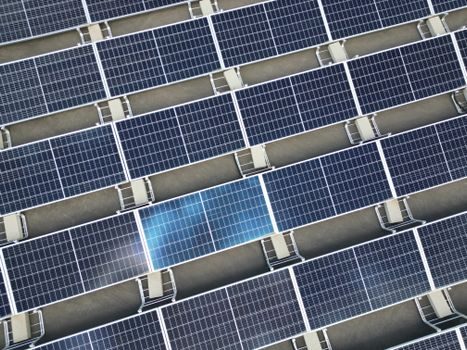
Lining the three hardware axes against 2026 buyer criteria: modules score on efficiency (24%+ TOPCon) and bifaciality (80%±5%), inverters on €/W and Q at night capability, and trackers on wind-tunnel certification (e.g. IEC 62817) and stow-algorithm IP. A 2026 cost-down EPC typically finds the inverter line is the easiest 5–8% saving lever, the module line is locked by warranty, and the tracker line is where weather-risk financing cost moves the most. [S1]
Operationally, all three are tied to the same balance-of-plant — servo motor-driven tracker actuators, pressure sensor-monitored hydraulic pitch, and PLC-based SCADA — so the spec freeze on the inverter/transformer skid is often the procurement gate that holds up the rest of the BoS (balance of system).
Limitations, Failure Modes and Verification Gaps
The hardest spec to verify on a public leaderboard is cell-to-module (CTM) ratio — vendors quote 24% cell efficiency but ship modules at 22.5%, and the gap is the CTM loss. In 2026 the credible suppliers disclose both numbers; if a vendor publishes only the cell figure, treat the module figure as marketing. LeTID (light and elevated temperature induced degradation) recovery on HJT modules is the second gap — accelerated stress tests at 75 °C for 1000 h are now standard, but field validation across climates is still patchy. A pre-shipment audit clause tied to flash-test data and EL (electroluminescence) imaging is the cleanest mitigation in 2026 EPC contracts. [S2]
Standards and Sourcing Discipline
The 2026 spec stack for utility-scale PV procurement reads: IEC 61215-1:2021 / IEC 61215-2:2021 for module design qualification, IEC 61730-1/-2 for safety, IEC 62804 for PID, IEC 62446-3 for outage-driven IV (current-voltage) curve measurement, and UL 61730 / UL 61215 for the North American lane. Inverter reference is IEC 62109-1/-2 for safety and IEEE 1547-2018 for grid interconnection. Tracker reference is IEC 62817. A spec writer who treats these as optional in 2026 is leaving insurance and finance teams with an unsigned gate, and the leaderboard is irrelevant to that conversation. [S3]
Trackable 2026 signal nodes: (1) SNEC 2027 (Shanghai New Energy Conference) exhibitor list, published Q4 2026, will be the next public test of which 2025–2026 entrants actually shipped GW; (2) the next quarterly polysilicon price reset on the China Silicon Industry Association feed; (3) the next ENTSO-E (European Network of Transmission System Operators for Electricity) grid-code revision that re-bins inverter Q-at-night capability. Any one of these is a clean re-ranking trigger for the 2027 leaderboard.