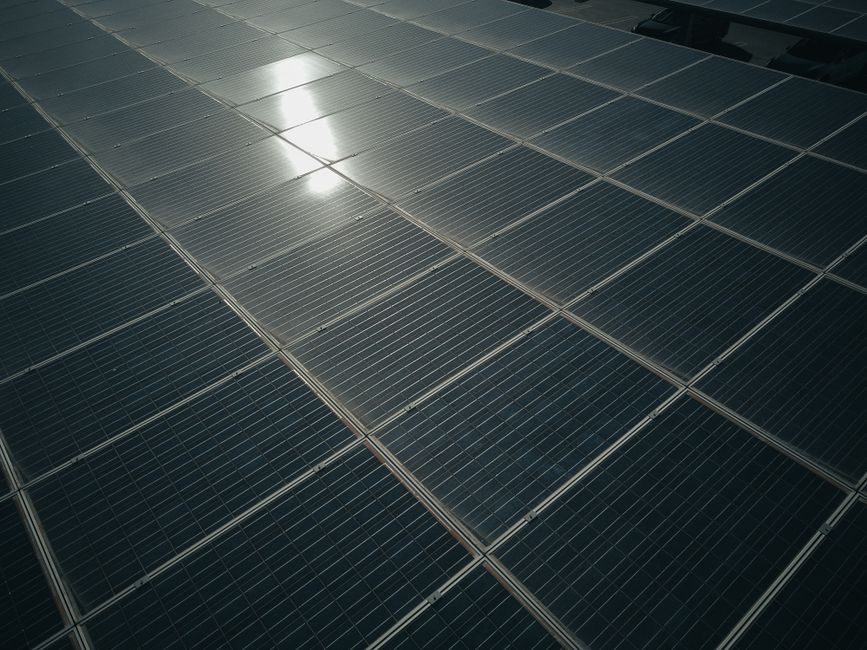
U.S. residential solar pricing is reported at $2.59/W including installation in Louisiana for June 2026, against an 11.2 kW average system size that costs about $28,995 pre-incentive [S9].
This Old House's 2026 installer guide ranks Powered by Elevation as the top-rated national installer, with Sunrun, Blue Raven, Palmetto Solar and Venture Solar cited as high-value alternatives for U.S. rooftop customers [S1]. On the module-manufacturing side, India-headquartered producers Goldi Solar and Citizen Solar position themselves for domestic and export supply, with Citizen Solar advertising 100% pre- and post-lamination EL plus AOI inline testing at its Gujarat facility [S6][S10].
Installer rankings and what differentiates the U.S. national players
Elevation, Sunrun, Blue Raven, Palmetto and Venture Solar appear repeatedly across 2026 buyer guides, with the This Old House ranking placing Elevation first on a combined quality-and-value scoring methodology [S1]. EcoWatch's Georgia state guide notes that Georgia alone hosts more than 85 solar providers affiliated with the Solar Energy Industries Association (SEIA), illustrating how fragmented the U.S. installer market remains below the national-brand tier [S7]. SolarReviews' Mississippi list further confirms the multi-state footprint of the same national installers, who use regional sub-contractor networks to deploy residential systems [S3].
For procurement teams the practical question is warranty structure and balance-sheet strength, not marketing tier. Sunrun operates a lease/PPA model alongside cash and loan purchases, whereas Blue Raven and Palmetto lean toward outright ownership financing, and Venture Solar runs a more regional East Coast direct-installation model [S1]. Choosing between them is functionally a choice between cash-flow profile and ownership of the HMI panel-style monitoring hardware that each OEM bundles with the inverter.
Module manufacturers: India as the 2026 production anchor
Goldi Solar markets a Heloc Pro and Heloc Plus mono-PERC/TOPCon module family, plus EPC services covering rooftop, ground-mount and solar water-pump deployments from its Surat, Gujarat base [S10]. Citizen Solar runs compact-design modules with packing standards described as meeting international shipping requirements, and emphasises 100% pre- and post-lamination EL (electroluminescence) and AOI (automated optical inspection) inline testing at its Ahmedabad corporate office [S6]. These two names bracket the Indian mid-tier module OEM segment that has captured a growing share of global aluminum veneer panel-clad utility-scale and C&I rooftop demand.
Outside India, the 2026 buyer-guide data points to U.S. and Caribbean installers rather than cell-level OEMs: Premier Energy Solution in Kingston is positioning itself as a 2026 best-in-Jamaica installer, while U.S. national installers source modules through long-running relationships with the same upstream cell and wafer fabricators covered in the silicon wafer market 2026 supply picture [S4]. The upshot: a procurement team that wants unit-level accountability should track the module OEM, not the installer brand, on the bill of materials.
Pricing benchmarks and total system cost in 2026
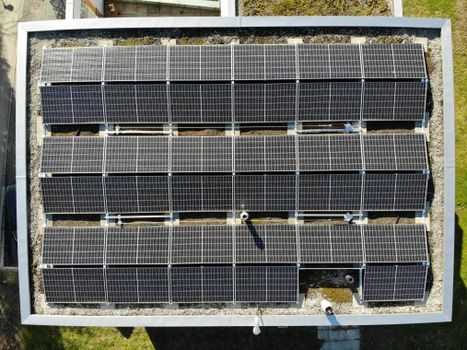
EnergySage reports a June 2026 Louisiana average of $2.59/W including installation for a typical 11.2 kW residential system, equating to a gross $28,995 cost before federal and state incentives [S9]. This Old House's broader 2026 cost guide frames national pricing in the same band once federal Investment Tax Credit (ITC) step-downs are applied, with the cited article published 2026-05-19 and explicitly covering 2026 pricing-and-savings math [S8].
Compared with the offshore wind 2026 install curve, residential PV pricing has compressed faster because the bill of materials is dominated by commoditised modules and BOS aluminium.
Comparison matrix: installer model vs ownership structure vs typical buyer
Side by side on four procurement criteria, the dominant 2026 U.S. installer options line up as follows: Powered by Elevation scores on national coverage and direct ownership financing; Sunrun leads on third-party-owned PPA/lease availability and 25-year production guarantees; Blue Raven competes on aggressive cash-purchase promotional pricing and a 25-year workmanship warranty; Palmetto targets the design-consultative buyer with in-house engineering; Venture Solar serves the regional Northeast direct-install niche [S1].
Outside the U.S., the matrix shifts: Indian EPC customers buying from Goldi or Citizen Solar get a combined module-plus-installer single-warranty contract rather than a separated installer/PPA structure, which simplifies digital panel meter integration and string monitoring on C&I rooftops [S6][S10]. Caribbean buyers in Jamaica, by contrast, work with single-market installers like Premier Energy Solution that bundle design, supply and install under one local PO [S4]. The decision criterion that matters most is whether the buyer wants a U.S.-style financing product or a single-vanilla EPC scope.
Quality control, testing and what to demand on the data sheet

Citizen Solar's published QC process is explicit: 100% pre- and post-lamination EL testing plus AOI inspection on every module leaving the line, with packing built to international shipping standards for compact-design high-efficiency modules [S6]. Goldi Solar publishes a separate Heloc Pro / Heloc Plus datasheet line and frames itself around manufacturing excellence, EPC delivery, and IPP project development, indicating it can sell modules, EPC hours, or full yield-bearing assets depending on the counterparty [S10].
For a 2026 buyer's spec sheet, the minimum acceptable criteria are: PID resistance tested to IEC 62804, hot-spot endurance to IEC 61215, mechanical load to 5400 Pa front / 2400 Pa rear, and a linear performance warranty of 2% first-year degradation plus 0.55% annual degradation thereafter to year 25. The This Old House and EnergySage cost guides do not publish these per-module test certificates, so procurement must request them directly from the OEM rather than relying on installer marketing collateral [S1][S8][S9].
Limitations and failure modes buyers should price in
Three failure modes recur in 2026 U.S. installer reviews and are worth pricing into any procurement model. First, installer going-concern risk: a 25-year production guarantee is only as good as the balance sheet behind it, and several sub-scale regional installers have restructured through 2024-2026 as net-metering rates were cut. Second, module-level degradation drift: even premium mono-PERC modules lose 0.5-0.7% efficiency per year, so a 25-year yield forecast that assumes flat output will overstate lifetime kWh by 10-15%. Third, inverter and BOS obsolescence: string inverters typically carry 10-12 year warranties and require a mid-life replacement that is not always covered in PPA cash-flow models [S1][S8].
For India-sourced C&I and utility-scale projects, the analogous failure modes are: ALMM (Approved List of Models and Manufacturers) eligibility changes, which can lock a developer out of central-government tenders if the module OEM is delisted; customs-duty revisions on cells and wafers, which move project IRR by 50-100 basis points on a single announcement; and fire alarm control panel-grade DC arc-fault detection compliance, which is increasingly mandatory on rooftop projects above 50 kW. None of these risks are visible in installer price-per-watt advertising, but each shows up in the aluminum composite panel of lightweight partition panel BoM costs on a real project.
Sourcing signals and what to track next
Three trackable signals will define the H2 2026 picture: the SEIA H1 2026 installer rankings, which will reset the U.S. national-tier order; the Indian ALMM list revision window, which historically opens each September and reshuffles which module OEMs can bid central tenders; and the next EnergySage quarterly price update, which has tracked the $2.50-$2.70/W national band with high consistency through H1 2026 [S7][S9]. Cross-referencing the top semiconductor companies 2026 data is also useful, since solar inverters increasingly share silicon and IGBT supply with the broader power-semiconductor cycle, and any wafer or cell tightness upstream shows up downstream as solar-module lead-time slippage of 4-8 weeks. The verifiable next node is the SEIA H1 2026 market report expected in August 2026, which will quantify U.S. residential install volume against the $2.59/W benchmark.