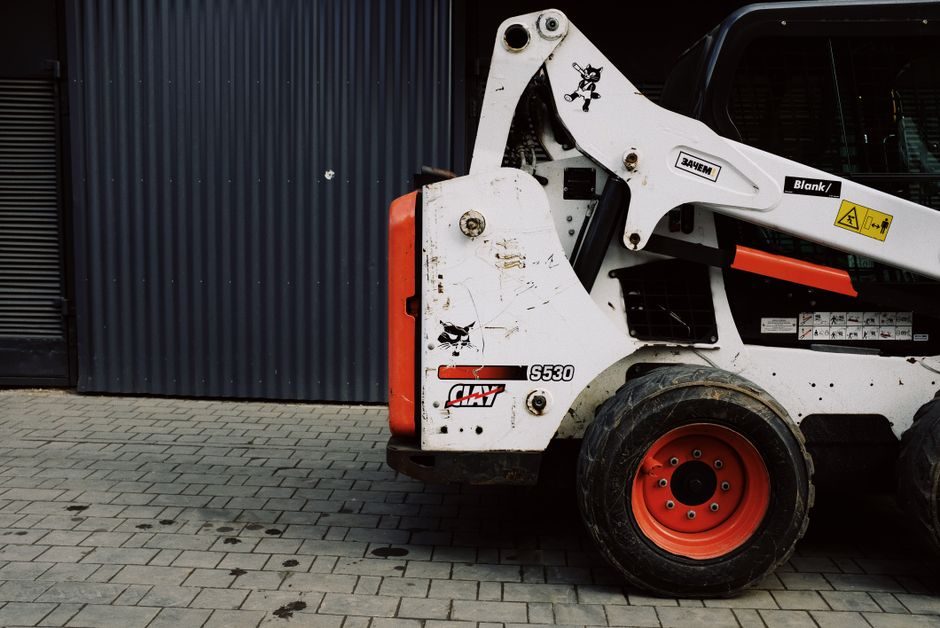
Track loaders fall into two practical families: compact track loaders (CTL) on rubber belts for soft ground, and steel-track conversions that re-purpose CTL chassis for abrasive or rocky sites — a split that dictates undercarriage wear and total operating cost [S1][S2].
The shared undercarriage stack across both families includes bottom track rollers, top carrier rollers, idler wheels, drive sprockets, rubber or steel tracks, hydraulic cylinder-driven track adjusters, and travel motors, with side cutters, bucket teeth, and swing motors sitting on the upper structure [S1]. Fulian's published catalog (2026-07-25) lists track rollers, carrier rollers, idler wheels, sprockets, rubber track, steel track, track pad, track chain, hydraulic cylinders, track adjusters, travel motors, swing motors, bucket teeth, and buckets as a single replacement kit for excavator, bulldozer, and track-loader undercarriages [S1].
CTL vs Steel-Track Conversion: Where Each Type Earns Its Keep
CTLs run rubber tracks with internal polyurethane or steel cords and are the default on finished-grade sites, landscaping, and any terrain where ground pressure below roughly 4 psi matters for turf protection [S2]. The DuroForce steel-track conversion sold through TrackLoaderParts.com turns a stock rubber-track CTL into a "ground biting, stump climbing" machine — a change that gains abrasion and rock resistance at the cost of finished-surface compatibility and ride quality [S2].
Compact track loaders are NOT a fit for crews needing high-speed roading — most CTL hydrostatic drive systems cap travel speed near 7-8 mph, well below a similarly sized skid steer loader or compact wheel loader on pneumatic tires. Conversely, a steel-track conversion is NOT a fit on finished concrete, asphalt, or prepared sub-base where the steel grousers will scar the surface.
Manufacturer Coverage and Undercarriage Spec Gates
TrackLoaderParts.com stocks aftermarket parts for ASV, Caterpillar, Terex, Takeuchi, Bobcat, Case, Gehl, JCB, John Deere, Kubota, Mustang, New Holland, and Yanmar — fourteen OEM platforms on a single parts portal, with rubber tracks, undercarriage components, and the DuroForce steel-track conversion system sold side-by-side [S2]. Fulian's 2026-07-25 lineup (2026-07-25) extends the same envelope and adds Atlas, Caterpillar, Daewoo-Doosan, Hitachi, Hyundai, IHI, Kato, Kobelco, Komatsu, LiuGong, Mitsubishi, Pel-Job, Sany, Sumitomo, Wacker Neuson, and Airman coverage — meaning a single supplier can support CTL undercarriage wear parts across nearly every Asian, European, and North American build [S1].
Key spec gates buyers should lock before ordering undercarriage parts: track pitch (mm), number of shoes, guide lug profile, idler and roller bore diameter, sprocket tooth count, and whether the chassis uses a positive-drive or friction-drive internal sprocket geometry [S1][S2]. Cross-platform interchangeability is low — a Bobcat T-series roller rarely fits a Cat 279C idler, and the DuroForce steel conversion is bolted to a specific host CTL model rather than a generic chassis [S2].
Application Map: CTL, MTL, and Tracked Skid Steer Roles
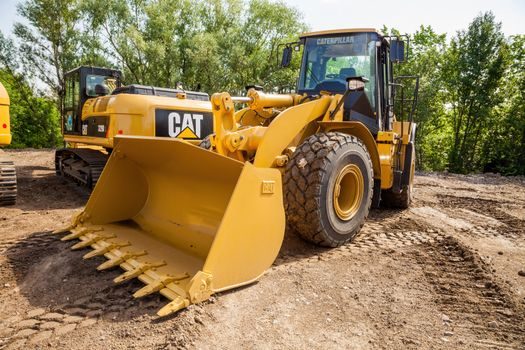
Rubber-track CTLs dominate four operating envelopes: residential and commercial site prep on soft or wet ground, snow and mud work where tire-equipped skid steer loader machines lose traction, finish-grading around curbs and hardscape where low ground pressure protects the surface, and rental fleets that need one chassis to cover soft and hard lots [S2]. Steel-track conversions take over in demolition, forestry, rocky excavation, scrap-yard clean-up, and on sites with rebar, wire, or sharp construction debris that would shred a rubber belt in hours [S2].
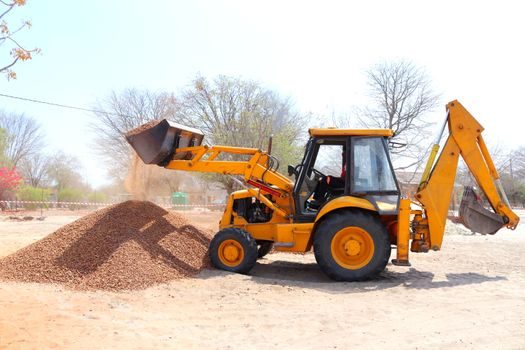
Buyers comparing a CTL against a backhoe loader for utility trenching should weigh three numbers: CTL operating weight in the 8,000-12,000 lb band versus a backhoe loader at 14,000-20,000 lb, CTL bucket breakout force usually above 5,000 lbf, and the backhoe's rear digging depth around 14-18 ft that a CTL simply cannot replicate. For a like-for-like spec comparison of skid-steer and wheel-loader duty cycles, the Skid Steer Loader vs Wheel Loader: Spec-First Selection Map breakdown is a useful adjacent read.
Undercarriage Wear Economics: What Actually Drives Cost
The five wear components that drive that number are bottom rollers (sealed-for-life vs greasable), carrier rollers (smaller, cheaper, but exposed to packing), idler wheels and front idler assemblies, drive sprockets, and the track itself — rubber tracks in the 300-500 mm width band for mid-frame CTLs, with steel conversions using rigid link plates and pins [S1][S2].
Two sourcing decisions shift that cost line most: ordering matched-as opposed to mixed-brand undercarriage kits (matched kits keep roller, idler, and sprocket wear rates in step, avoiding the "replace the whole undercarriage because the cheap sprocket ate the track" failure mode), and choosing a parts supplier that covers both current and discontinued OEM models so a 2010-vintage CTL does not get scrapped over a $400 idler [S1].
Failure Modes and Sourcing Reality in 2026
Three recurring failure modes show up across the track-loader aftermarket: track tension loss from a worn hydraulic adjuster or leaking cylinder seal, sprocket tooth skip caused by running new track on worn sprockets (or vice versa), and idler-wheel bearing failure on greasable hubs where the operator skipped a service interval [S1][S2]. TrackLoaderParts.com (2026-07-24) states it stocks the largest ASV tractor parts inventory in the world and offers same-day shipping on in-stock parts — a service level that materially changes downtime exposure for rental fleets running ASV/RC-series machines [S2].
Fulian (2026-07-25) publishes parallel coverage of new and discontinued undercarriage models, with a dealer network spanning retail customers, regional dealers, European distributors, rental-fleet operators, and construction equipment dealers across Australia, the United States, Europe, the UAE, and Chile — a geographic footprint that mirrors where CTL and steel-track conversion fleets are concentrated [S1]. Buyers specifying 2026-vintage parts should confirm the exact OEM model code, track pitch, and sprocket tooth count on the host machine before ordering, since cross-platform fitment is the dominant source of return freight in the CTL parts channel [S1][S2].
Two trackable signals worth watching: whether more CTL platforms adopt positive-drive sprockets as standard (which extends track life and reduces skipped-tooth failures), and whether steel-track conversion kits expand beyond the DuroForce line into additional host models, since aftermarket steel conversions are still a narrow catalog relative to rubber-track options [S2]. For broader compact-equipment selection context, the Backhoe Loader vs Wheel Loader: Spec-First Selection Map lays out an adjacent comparison.