Compact track loaders span a 2,500-10,000+ lb operating-weight window, with rated operating capacities (ROC, typically 35-50% of tipping load) and track-bar patterns that govern ground pressure, flotation, and turf damage on the same job site [S1][S2].
Selection is driven by four binding constraints: ground condition (soft mud vs finished turf vs hard aggregate), attachment hydraulic flow requirement, lift-path geometry (radial vs vertical), and transport weight on the available trailer — engine horsepower is a derivative spec, not a starting point [S2].
Operating-Weight Classes and Where Each One Breaks
Small-frame CTLs in the 2,500-4,000 lb band (often called mini track loaders) sit on narrow 9-11 in tracks and fit through 36 in gates, making them the default for landscaping, light fence work, and indoor demolition where a skid-steer loader would rut or tear turf [S2].
Mid-frame CTLs in the 4,000-7,000 lb band with 12-16 in tracks carry 1,000-2,200 lb ROC and run high-flow auxiliary hydraulics (26-33 gpm) for planers, trenchers, and mulchers; this is the workhorse class for site prep, underground utility, and rental fleets [S2].
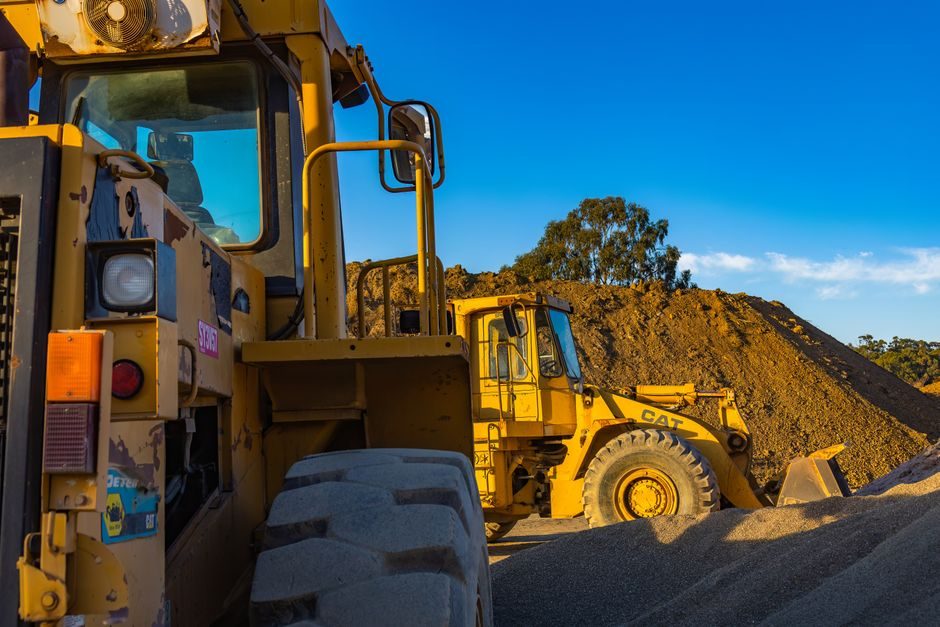
Large-frame CTLs above 7,000 lb with 17-18 in tracks deliver 2,500-4,000+ lb ROC and approach small-wheel loader duty for aggregate stockpiles and feedlot work; the tradeoff is transport — a 10,000 lb machine with attachments needs a Class 4 trailer and often a CDL driver, which kills the economics for many small contractors [S2].
Track Pattern, Width, and Ground Pressure Tradeoff
Multi-bar lug tracks (the most common OEM offering) deliver balanced traction, flotation, and tread life on mixed surfaces and are the right default when 60%+ of work happens on disturbed soil, gravel, or mud [S1].
For finished turf, sports fields, and golf work, smooth or low-profile turf tracks drop ground pressure into the 3.5-4.5 psi range versus 5.5-6.5 psi for standard lug tracks, at the cost of noticeably reduced traction in soft soil and faster wear on abrasive surfaces [S1].
Steel-embedded or heavy-duty bar tracks extend tread life on demolition sites, concrete recycling, and rocky terrain, but they will scar asphalt and finished slabs — operators on mixed surfaces typically keep two track sets and swap by season [S1].
Lift Path: Radial vs Vertical and Why It Matters
Radial-lift machines raise the bucket in an arc and peak at lower lift height but produce higher breakout force at ground level, which is what you want for grading, digging, and pushing — the typical site-prep duty [S2].
Vertical-lift machines (sometimes called extended-lift) keep the load close to the machine as it rises, so a 2,000 lb pallet lands squarely on a truck bed at full height instead of being swung forward and dropped — required for material handling, hay, and any backhoe loader-replacement duty [S2].
Spec sheets quote both ROC at 50% of tipping load and a separate lift-height-to-pin figure (typically 8-10 ft on small frames, 10-12 ft on mid, 12+ ft on large); a radial machine at the same ROC will NOT reach as high, and a buyer who only reads ROC gets a surprise on the first truck-loading job [S2].
Hydraulic Flow, Attachments, and the High-Flow Decision
Standard-flow auxiliary hydraulics (15-20 gpm) run augers, buckets, brooms, and most general attachments; high-flow (26-33 gpm) is the gate for planers, cold planers, large mulchers, and some snow blowers, which stall and overheat on standard flow [S2].
Attachment interface standardization on the universal quick-attach (sometimes called the "Bob-Tach" pattern) means most cross-brand buckets and forks fit, but hydraulic-coupler configurations and electrical pin-outs vary, and high-flow attachments sometimes need a dedicated 14-pin electrical harness — confirm before buying the attachment, not after [S2].
When a Track Loader Is the Wrong Machine
On hard, flat concrete for indoor or warehouse work, a track undercarriage adds cost, vibration, and floor damage with no traction benefit — a skid-steer loader on pneumatic tires is cheaper to buy, cheaper to maintain, and faster on hard surface [S2].
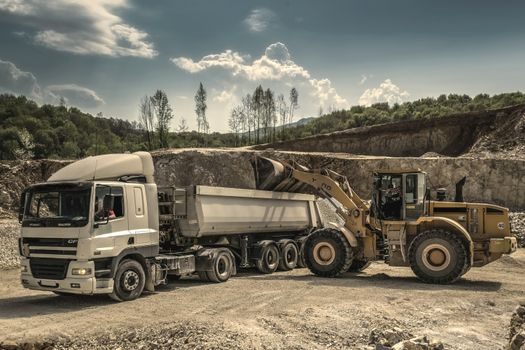
For bulk earthmoving above roughly 4,000 lb ROC, a wheel loader cycles faster, carries more per pass, and has lower hourly owning cost; the CTL advantage disappears the moment the job becomes roading and stockpile-to-truck cycling rather than confined-area work [S2].
On steep, uneven ground with heavy lift loads, narrow track frames can become tippy at full reach; machines in this duty should be compared on static tipping load with the bucket at full height, not on the headline ROC number, and a backhoe loader with a stabilised rear often handles the same dig-and-lift cycle more safely [S2].
Transport, Service, and Total-Cost Signals Worth Checking
Operating weight dictates trailer class: anything above ~8,000 lb typically pushes into a 14,000+ lb GVWR trailer and DOT-regulated towing, which changes the rental-vs-buy math for a small contractor [S2].
Service intervals and ground-level access to filters, drains, and grease points are where similarly-priced machines diverge over 5,000 hours; spec sheets do not show this, so the verifiable signal is dealer location within a service-radius drive and parts-on-shelf availability, both of which can be confirmed with the OEM dealer before purchase.
For a buyer comparing two same-class CTLs at a 5% price spread, the spec-first shortlist logic is: confirm ROC at 50% tipping load, confirm lift height to pin for the dominant attachment, confirm high-flow gpm if planing or mulching, and confirm track type for the dominant ground — engine HP, brand paint, and cab luxuries are tie-breakers after those four match.
Two trackable signals for the next 6 months: OEM updates to electric and hybrid CTL platforms (Bobcat's S7X and T7X concepts shown in OEM lineups point to a near-term lithium-powered small-frame option) and revised undercarriage track-wear ratings as more machines reach 3,000-hour service intervals in rental fleets.
See also our earlier report, Sand Blasting Machine Types: Spec-Driven Classification and Selection Map.