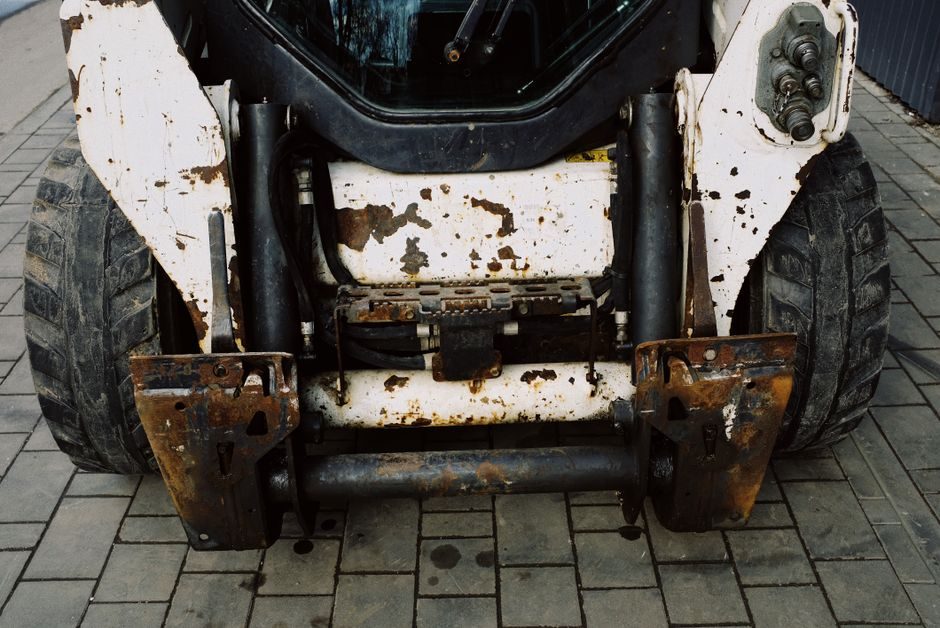
The Bobcat S770 diesel skid steer delivers 92 hp at 4,224.8 kg operating weight with a non-DPF Tier 4 engine, a 4-figure (4-digit) horsepower-to-mass ratio that defines the modern compact class [S1]. On the wheel-loader side, a 5-ton ZL50-class machine lists at US$ 40,000-50,000 per unit FOB China, roughly 5x the entry-level skid steer at US$ 1,801-2,098 for a mini digger variant [S5][S7]. The two platforms overlap in operator population but diverge sharply on kinematics, travel speed, and attachment ecosystem.
Both machine families are now bundled by single OEM lines: Baoomax ships SSL-series skid steers alongside articulated wheel loaders, backhoes, and underground LHDs from one Shandong factory [S3]. Xuzhou HCN Machinery cross-lists mini skid steers, wheeled skid steers, broom sweepers, breakers, and wheel loaders on the same supplier profile [S2]. That convergence means fleet buyers compare the two platforms as substitutable line items, not separate procurement categories.
Operating envelope: weight class, footprint, travel speed
A skid steer in the 750 kg SSL-class runs a roughly 1.2 m × 2.5 m footprint, fits through a 1.5 m gate, and pivots inside its own length by braking one side [S3]. A wheel loader in the 5-ton ZL50G class measures near 7 m long with a 3 m wheelbase and pivots on an articulated joint near 35-40° each way, but needs a 6 m clear radius [S5]. The skid steer's 4,224.8 kg Bobcat S770 sits between those two extremes and competes directly on urban jobsites where both platforms fit [S1].
Travel speed is the largest single gap: skid steers commonly run 11-19 km/h, while wheel loaders exceed 35 km/h on flat ground, which dominates cycle-time math on haul distances above 50 m. A skid steer's lift arms use parallel-linkage or radial-lift geometry, while a wheel loader's Z-bar linkage favors rack-back at height for truck loading, and that geometry is the reason wheel loaders dominate load-on-truck and stockpile work.
Engine, drivetrain, and emissions
The Bobcat S770 uses a 92 hp diesel meeting Tier 4 emissions without a diesel particulate filter, eliminating DPF regeneration downtime and cutting long-term maintenance cost versus DPF-equipped competitors [S1]. SSL-class mini skid steers from the same Chinese OEM family offer optional engines including Kubota, Yanmar, and Kohler (EPA Tier 4) for the 750 kg payload variant, a swap that lets buyers match the engine to regional fuel and emissions rules [S3].
Wheel loaders in the 5-ton class typically pair 162-220 hp Weichai or Cummins engines with ZF powershift transmissions and torque-converter drivelines, suited to sustained high-load hauling rather than stop-start cycle work. The two platforms are therefore tuned for different duty profiles even when their engine families overlap: a wheel loader's drivetrain is built for hours-long full-throttle cycles, a skid steer's hydrostatic drive is built for hundreds of short bursts per shift.
Attachment ecosystem and on-site versatility
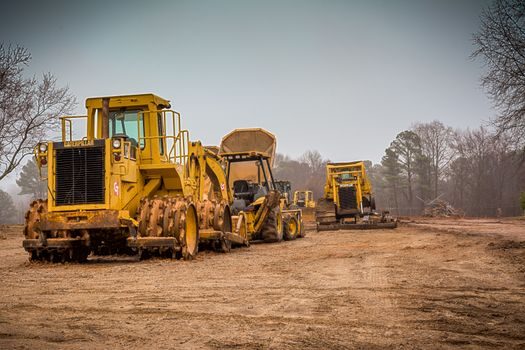
Skid steers take the lead in attachment count: buckets, brooms, augers, breakers, fork grapples, mixers, and dozens more swap on a quick-coupler plate in under a minute [S2][S6]. Shandong Beyond Trading, a 30-year manufacturer in Tai'an, sells its skid steer platform paired with a dedicated attachment catalog, treating the carrier as a hydraulic power unit for any tool [S6]. For landscaping, trenching, demolition, and snow work this versatility is the deciding factor.
Wheel loaders typically carry a small attachment set: bucket, forks, grapple, snow blade, occasionally a sweeper. Their larger bucket volume (1.5-3 m³ on a ZL50) and higher tipping load handle bulk aggregates, fertilizer, grain, and scrap, jobs where a skid steer's 750-1,500 kg rated operating capacity becomes the bottleneck. A buyer asking for one machine to sweep, dig, and grade should default to skid steer; a buyer moving 200 tonnes of gravel per shift defaults to wheel loader.
Cost, sourcing, and lead-time
Entry-level Chinese skid steers list at US$ 1,801-2,098 for a mini-digger variant and US$ 5,530-5,996 for a mid-range cab unit on Made-in-China's index [S7]. The compact track loader variant, which adds rubber tracks for low ground pressure, lists at US$ 8,700-8,860 per piece [S7]. Compact wheel loaders from Goldsupplier list at US$ 6,000-6,500 per unit FOB Qingdao, and the 5-ton ZL50G lists at US$ 40,000-50,000 per set [S5][S8]. The price gap is roughly 2-3x at the compact end and 8-10x at the bulk-material end.
Used Bobcat inventory, including S130, S160, S300, and S650 units, surfaces on Chinese B2B channels at sub-new prices, useful for fleets testing the platform before committing to new units [S2]. Lead time for new Chinese OEM skid steers runs 15-30 days FOB for standard configurations; wheel loaders in the 5-ton class run 30-45 days due to drivetrain assembly [S5][S8]. For a project mobilizing inside four weeks, a skid steer is the lower-risk buy.
Use-case decision matrix
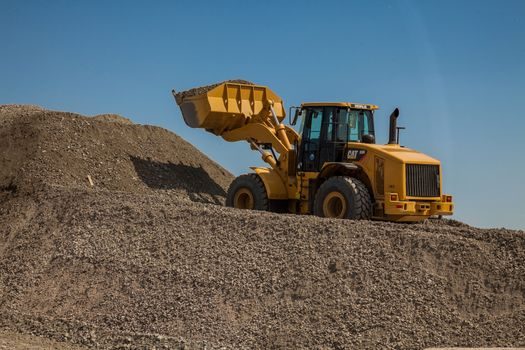
Site footprint under 2,000 m², frequent attachment swaps, and crew of one operator favor the skid steer: pick the SSL750 (750 kg) class for landscaping and the S770-class (4,224.8 kg, 92 hp) for construction-scale earthmoving [S1][S3]. A project with 200+ m haul routes, stockpile-to-truck cycles, or aggregate rehandle favors the wheel loader: pick the 5-ton ZL50G (US$ 40,000-50,000) for quarry and bulk-yard work, the compact wheel loader (US$ 6,000-6,500) for small contractor yards [S5][S8].
Hybrid sites, including municipal fleets doing summer paving and winter snow, increasingly run one of each: the skid steer covers the saw-cut, sweep, and patch cycle, while the wheel loader covers salt loading and plow support. For readers cross-referencing similar equipment spec maps, the Amphibious Excavator Selection: Weight Class, Pontoon Design, and Spec Gates breakdown and the Long Reach Excavator vs Standard Excavator: Spec-First Selection comparison apply the same weight-class and reach-vs-cycle logic to excavator buying. Underlying skid steer loader hydraulics and wheel loader linkage geometry drive every line in the matrix above, while a backhoe loader is the third option when a single rear excavator arm is mandatory.
Limitations and failure modes
Skid steers chew tires on asphalt and concrete because the steering action drags tires across the surface, a cost that operators on paved yards underestimate until the first set wears at 800-1,200 hours. Their open-cab variants also expose the operator to dust and noise that the Bobcat S770's pressurized cab is engineered specifically to suppress [S1]. Wheel loaders in the 5-ton class over-shoot on soft ground and turf, sinking where a compact track loader or skid steer's lower ground pressure would float, which is why quarry and stockpile yards default to rigid-frame wheel loaders on prepared surfaces.
Hydraulic overheating is the shared failure mode: skid steers running 30-second cycles at full auxiliary flow and wheel loaders rehandling wet aggregate both drive oil temperatures above 90 °C without adequate cooler capacity. Bobcat's Smart Cooling system on the S770 is the direct response to that envelope, routing fan speed to oil temperature rather than engine coolant [S1]. Buyers in tropical or high-altitude sites should verify cooler spec, not just engine power.
Standards, sourcing, and verification gates
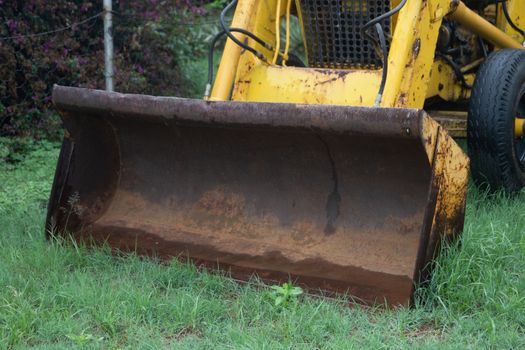
Chinese OEM skid steers and wheel loaders ship with CE marking for European export and EPA Tier 4 final engine options for North America, with Kubota, Yanmar, and Kohler listed as configurable engines on the SSL-class [S3]. Goldsupplier channels now list 20-year verified-supplier status as a baseline filter on wheel-loader listings, a gate that compresses supplier pre-qualification for procurement teams [S4][S8].
Two trackable signals to watch before placing a fleet order: confirm the engine emissions certificate is matched to the destination country's current Tier / Stage rule, and confirm the quick-coupler plate matches ISO 23727 or the regional equivalent, since attachment incompatibility silently strands the machine on day one. For a buyer comparing a 5-ton wheel loader to a 4,224.8 kg skid steer with non-DPF Tier 4 engine, the engine-certificate check alone decides the regulatory cost of ownership [S1][S3][S5].