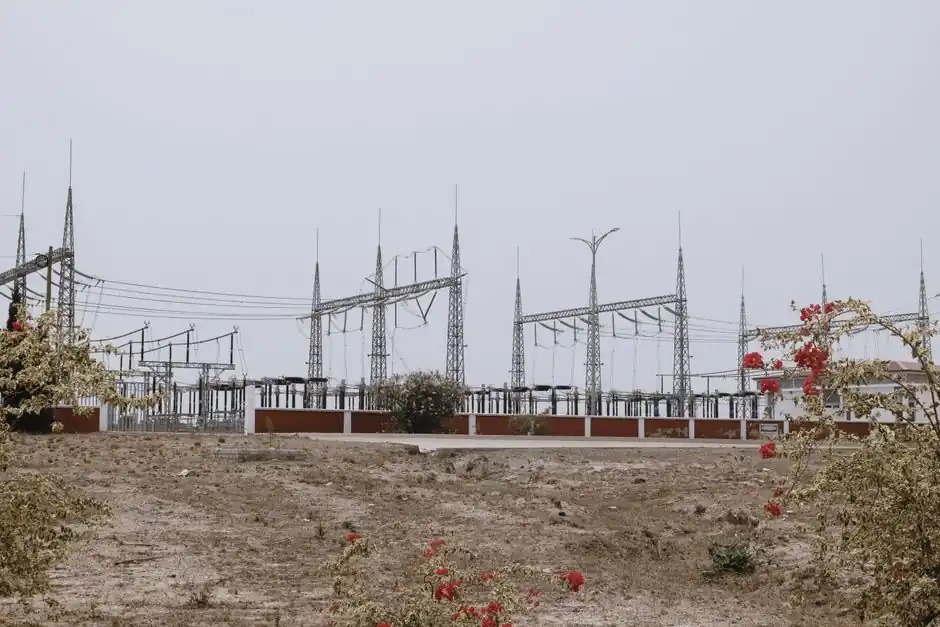
Qualifying a new transformer maker for a utility commonly requires 12–24 months, while qualified North American production can add 16–24 weeks before equipment ships [S4].
The process is longer than a factory audit because utilities must verify design capability, test compliance, quality controls, supply-chain resilience, field performance and commercial terms.
Qualification Timeline and Delivery Clock
A practical utility qualification plan spans approximately 12–24 months, followed by 16–24 weeks for a North American-spec transformer or power system [S4]. The qualification stage and manufacturing stage must be tracked separately.
It does not include the manufacturer’s production queue for a subsequent project.
Field installation is much shorter. A 10–500 kVA distribution transformer can be replaced in 4–8 hours, while a 1–10 MVA unit typically takes 1–3 days for removal, installation and connection [S2]. The qualification effort is therefore driven by procurement and compliance, not by the crane pick.
What the Utility Must Prove
The exact protocol depends on the transformer class and the utility specification.
Documentation should identify the applicable test voltage, frequency, rated kVA or MVA, impedance requirement, vector group, winding connection, cooling method and oil-processing sequence. Large power transformers are custom-engineered around impedance, vector group and footprint requirements, rather than being simple catalog swaps [S2].
A test certificate alone does not establish that the same process will produce every subsequent unit consistently.
These controls matter because large power transformers depend on specialized transport, precise civil alignment, vacuum oil processing and rigorous commissioning testing [S2]. A maker that passes a paper audit but lacks controlled handling or test capability can still fail at the project stage.
Supplier Options Compared by Utility Risk

An incumbent qualified manufacturer offers the lowest qualification burden but may carry a quoted power-transformer lead time of 128 weeks, with generator step-up units averaging 144 weeks [S1].
A new domestic or regional source can reduce exposure to a long production queue, but it transfers the burden to the utility. North American merchant-market transformers commonly require one to four years for delivery in 2026, driven partly by constrained grain-oriented electrical steel supply [S4].
A project-specific engineering partner may offer 16–24 weeks for a North American-spec transformer or power system [S4]. That faster schedule does not erase qualification work, and contractual milestones should state whether the quoted period starts at purchase order, design approval, factory acceptance or shipment.
The practical comparison is straightforward: an approved supplier carries the lowest qualification risk but can carry the longest delivery exposure; a new supplier can improve supply options but requires 12–24 months of validation; an engineering partner may compress production scheduling but must still demonstrate controlled manufacturing and test compliance.
Commercial and Supply-Chain Qualification
Prices for power transformers have risen 77% since 2019 [S1]. Utility sourcing teams should separate escalation clauses from manufacturing-capability approval.
Supply-chain review should trace the source of grain-oriented electrical steel, also called GOES, and copper, the two central transformer materials [S1]. Around 80% of large power transformers used in the United States are imported, so an apparently qualified plant may still depend on exposed upstream inputs [S1].
Capacity review should include the factory’s actual loading, available test bays, engineering staffing, material allocation and escalation path. A maker may pass an audit while lacking capacity for the utility’s required delivery window. Demand for generator step-up transformers has grown 274% since 2019 [S1].
Trial Order, Validation and Common Failure Modes

The final qualification gate should be a controlled trial order followed by shipment inspection, receiving checks, installation, energization and a defined reliability-monitoring period. If the contract defines “qualified” as a signed factory audit rather than a successfully commissioned unit, the utility has not tested the entire delivery chain. [S1]
Typical failure modes are inadequate test-equipment calibration, inconsistent impedance or ratio results, incomplete material traceability, oil-processing deviations, late design changes, damaged transport equipment and manufacturing capacity that exists on paper but not in the scheduled production slot.
Schedule discipline is equally important. Replacing a large power transformer may require 18 months to more than four years when procurement and custom manufacturing are included, versus 3 days to 3 weeks for on-site execution [S2]. Early procurement planning can be coordinated with long-lead electrical equipment procurement, but procurement alone does not qualify an untested factory.
Standards and Acceptance Basis
The qualification package should identify every governing standard in the purchase specification, applicable test method and required witness point. Standards must be tied to the exact transformer type and utility requirement, rather than copied from a generic vendor qualification checklist. [S2]
The utility should also define the edition accepted for procurement, deviations permitted, routine-test scope, witnessed-test scope, factory acceptance criteria and the documents required at each manufacturing milestone. These contractual controls prevent a factory from changing a winding arrangement, impedance target or test sequence without formal engineering review.
Acceptance should include documentation from the engineering release, material inspection, core and winding inspection, completed tests, oil records, nameplate verification, packing inspection and transport-release approval. The utility should also define who pays for disassembly, return travel, rigging, oil handling, retesting and disposal when acceptance is withheld.
A tracker should be maintained for 10 qualification milestones: application, document review, design approval, factory audit, corrective-action closure, witness-test approval, trial-order release, factory acceptance, commissioning and post-installation review. A credible qualification date is the date all 10 gates are closed, not the date a memorandum of understanding is signed.