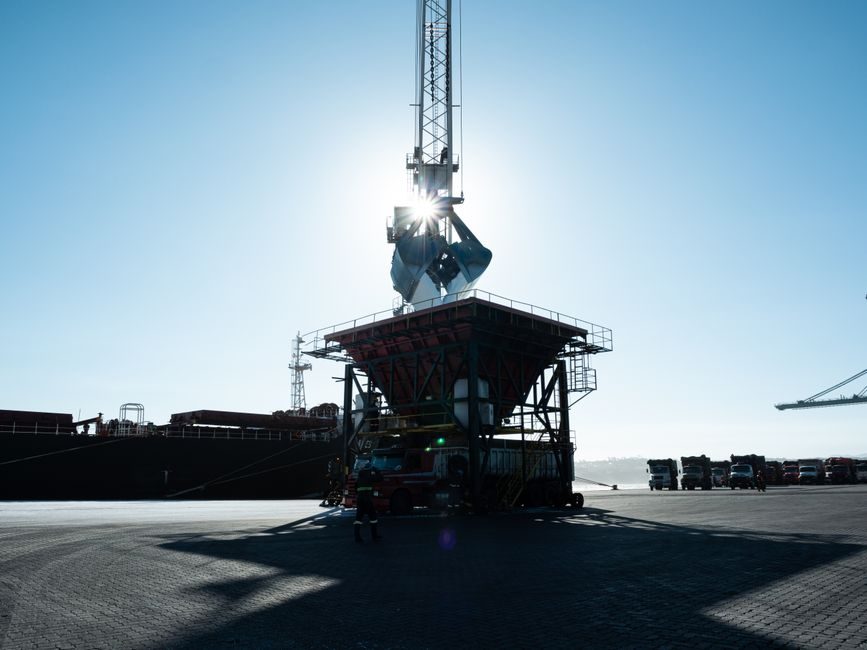
Pick a truck crane by anchoring three numbers: the heaviest single load in tonnes, the required hook height in metres, and the working radius at that height — the crane's rated chart must cover that point with at least a 25% safety margin above the gross load [S2].
Truck cranes remain the default mobile lift on construction, energy and infrastructure sites because they self-deploy at highway speed, eliminating transport permits required for larger crawler or all-terrain units. XJCM, a national high-tech enterprise in China, lists truck cranes, rough terrain cranes and tower cranes as parallel product lines, indicating that buyers should confirm a vendor's truck-crane line is a core category and not a rebadged all-terrain chassis [S2].
Capacity Tiers and Where Each One Fits
Truck-crane capacity bands cluster around 8 t, 12 t, 16 t, 25 t, 35 t, 50 t, 70 t, 80 t and 100 t, with the 25–50 t band carrying the largest volume of urban and infrastructure work [S2]. A 10-ton class unit such as XJCM's RT-series rough terrain crane sits at the light end of the lifting envelope and suits small job sites with frequent repositioning [S2].
For pipeline, precast and steel-erection work above 50 t, buyers step into multi-axle truck-crane territory, where 4-axle and 5-axle chassis are common. Scott-Macon Equipment's recent PDI of a Tadano GT-800XL-2 — an 80-ton class truck crane — illustrates the high-volume end of the market, where pre-delivery inspection cycles run on multi-week lead times [S4]. The crane's load chart, not the brochure maximum, is the binding figure, because rated capacity drops sharply as radius and boom extension increase.
Boom, Jib and Reach Geometry
Main-boom length on production truck cranes runs from roughly 24 m on 16 t units to more than 60 m on 80–100 t units, with bi-fold or single-fold lattice jibs adding another 15–30 m of reach. Buyers should plot the heaviest pick on a radius-versus-height diagram and check that the chart point sits on or below the crane's curve at the planned boom length. [S1]
Two- or three-stage telescopic booms (typical on 25–50 t truck cranes) allow partial extension, which preserves capacity at mid-range radii compared with full extension. Always read the OEM's load chart for the exact boom-telescoping mode that will be used on site rather than the maximum-capacity headline figure.
Chassis, Axles and Highway Mobility

Truck cranes are built on commercial-truck chassis with 2, 3, 4 or more axles, and axle count is the second selection gate after capacity. Two-axle carriers (typically up to 16 t lift class) keep total vehicle weight inside standard 18 t national highway limits, while 3-axle units cover the 25–35 t band and 4-axle chassis carry the 50–80 t band [S2].
Outrigger spread governs lift stability and is a hard constraint on tight job sites. Hydraulic outriggers with horizontal beams of 5.4–6.2 m and vertical jacks delivering 300–500 mm of lift are typical. On a cramped urban site, a 3-axle 35 t truck crane with full outrigger extension will often outperform a larger crane whose outriggers cannot be fully deployed. Buyers comparing truck cranes against rough terrain cranes — such as XJCM's RT series — should note that rough terrain units trade highway speed for higher single-axle ground pressure, which limits road transit but improves pick-and-carry performance on unprepared surfaces [S2].
Operator Certification and Safety Compliance
Crane operation is regulated by national occupational-safety regimes that license operators by capacity class, and buyers must match the unit to the operator's certification ceiling. Working around cranes on an active job site requires exclusion zones, banksmen for blind lifts and daily pre-use inspections of slings, hooks and outrigger pads [S4].
Scott-Macon Equipment's guidance on working safely around cranes emphasises that safety is the highest priority whenever cranes are in action, and that pre-delivery inspection (PDI) — covering hydraulic systems, load-moment indicator (LMI) calibration, brake function and chart verification — is the moment to confirm compliance rather than the moment to discover gaps on site [S4]. Buyers procuring a used unit should require the same PDI scope: a calibrated LMI, an up-to-date load chart in the cab, and a service log of the past 12 months.
Comparison: Truck Crane vs Adjacent Lift Equipment
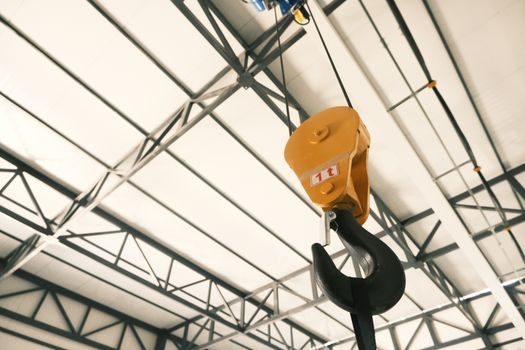
Three decision criteria separate a truck crane from its closest alternatives on most job sites: highway mobility, pick weight and outrigger footprint. A truck crane wins when the unit must self-deploy at 60–80 km/h road speeds, when picks stay inside the 8–100 t band, and when the outrigger spread fits the site plan. A rough terrain crane (e.g. XJCM's 10-ton RT) takes over on unprepared surfaces where 4×4 drive and oscillating axles matter more than road speed [S2]. For heavier picks above 100 t, an all-terrain or crawler crane is the correct category, not a larger truck crane.
For material handling that is not a true vertical lift, buyers sometimes cross-shop a truck-mounted crane, which is a lighter loader-style articulated arm on a truck chassis. Compared with a true truck crane, a truck-mounted crane has a much lower capacity ceiling, a smaller outrigger envelope and is not normally rated for free-standing hook work at the same radius.
Signals to Track Through 2026
Two indicators will tell you whether the truck-crane market is still tight or normalising in 2026. First, watch the pre-delivery inspection lead time on 25–50 t units from major OEMs such as Tadano, XJCM, Liebherr and Sany — Scott-Macon Equipment's multi-week PDI on the GT-800XL-2 in late 2025 points to order-book pressure in the 80 t class [S4]. Second, watch used-truck-crane resale prices in the 16–25 t band, where fleet renewals and infrastructure-program completions move prices fastest.
For component-level specifications, see dump truck, and reach truck.
For related coverage, see Road Roller Suppliers 2026: China Cluster Map, Price Bands and Sourcing Logic.