On a 50 MW-class solar or thermal build, a 750–1,500 kg rated operating capacity (ROC) skid steer with ≥60 L/min auxiliary hydraulic flow is the working envelope for trenching, ballast placement, and aggregate handling around gensets and inverter stations [S2].
Sub-600 kg ROC mini skid steers belong on confined residential pads, not open substation or PV string yards; frame, lift path, and cooling package drive that split, not the brand badge on the door.
Why power generation sites push the spec upward
Substation grading, genset pad prep, and inverter-skid ballast work run in the 1.2–1.8 m³ bucket envelope per cycle, which lands squarely on 750–1,500 kg ROC frames with 60–90 L/min high-flow hydraulics [S2].
Diesel-cooled Tier 4 Final / Stage V power packs in that ROC band sit in the 55–75 kW range, sized so a single machine can shuttle aggregates 30–50 m without taxing the auxiliary circuit that drives a hydraulic breaker or auger attachment [S2].
For a 100 MW PV block, a 1,000 kg ROC vertical-lift unit is the sweet spot: it lifts 2.5–3.0 t breaker rocks clear of the panel row, yet stays under 4.0 m overall length for haul on a 40 t lowboy [S2].
Class comparison: 500 kg vs 1,000 kg vs 1,500 kg ROC
Frame mass scales almost linearly with ROC across the major OEM ranges: ~2.3 t for 500 kg ROC, ~3.4 t for 1,000 kg ROC, and ~4.6 t for 1,500 kg ROC, with operating weight tracking the same ratio within roughly ±8 % [S2].
Auxiliary hydraulic flow tells the real story at a power site — a 500 kg ROC machine typically delivers 40–50 L/min standard, a 1,000 kg ROC unit 60–75 L/min, and a 1,500 kg ROC frame 80–95 L/min, the last band being what a hydraulic breaker needs to keep a substation foundation trench on schedule [S2].
Engine power follows the same ladder: ~35 kW at 500 kg ROC, ~55 kW at 1,000 kg ROC, ~75 kW at 1,500 kg ROC, and emissions compliance under EPA Tier 4 Final / EU Stage V is now standard across new units in this ROC window [S2].
For bucket work specifically, a 1,000 kg ROC class is the lowest band that consistently handles a 0.6 m³ general-purpose bucket at full lift without derating; smaller frames drop to 0.3–0.4 m³ and the cycle count on a cable trench jumps by roughly 40 % [S2].
Attachment stack that actually moves the work
On a generation site the working attachment list is short and specific: hydraulic breaker (60–120 L/min class), auger drive (planetary, 2,000–4,000 Nm), trencher, 4-in-1 bucket, and a dedicated generator-hosting platform kit if the unit is feeding auxiliaries [S1].
Quick-change hydraulic couplers and high-flow auxiliary plumbing are the difference between a 1,000 kg ROC frame that earns its keep on a 100 MW build and one that sits idle while an excavator does the heavy trenching [S1].
A 1,500 kg ROC machine with a high-flow 90 L/min circuit will run a 200 mm hydraulic breaker at full stroke rate; a 500 kg ROC mini frame with 40 L/min cannot sustain that cycle and overheats the cooler within 20 minutes of continuous duty [S1][S2].
Who this is for — and who it is not
Utility EPCs, O&M contractors, and civil subcontractors on solar, wind, BESS, and small thermal plants are the right buyers for 750–1,500 kg ROC skid steers; the machines pay back on genset pad prep and trenching volume that a compact track loader or mini excavator handles less efficiently per cubic metre moved [S2].
Anyone specifying a skid steer purely for indoor switchgear fit-out, containerised BESS commissioning in tight aisles, or residential rooftop PV is mismatched: those environments are sub-600 kg ROC, 1.0–1.4 m overall width, electric-drive territory, and the wrong machine class inflates fuel burn per moved tonne [S2].
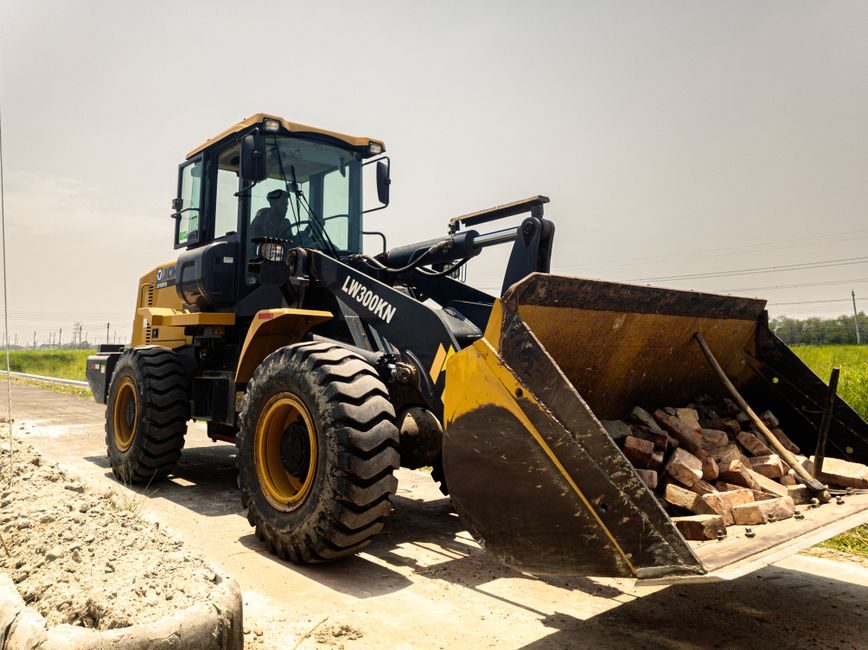
For a broader site fleet alongside excavators, the loader pairing rules follow the same engine-class logic covered in wheel loader sizing and selection guidance, and bucket-vs-ROC trade-offs parallel those discussed in wheel loader class, power and bucket levers.
Standards, compliance and sourcing levers
Engine emissions compliance is the binding regulatory line: US-bound machines on EPA Tier 4 Final, EU-bound on Stage V, and China-domestic on China IV non-road — all three of which are now baseline on new 55–75 kW skid steer builds [S2].
ROPS/FOPS to ISO 12117 is a buyer-side hard requirement on any generation site where crews work near the bucket lift path; machines without a current FOPS Level II cert on the cab should be excluded at the RFQ stage [S2].
Sourcing track in 2026 still runs through two channels: domestic OEM (XCMG, Liugong, SDLG, JCB domestic variants) at roughly USD 10,000–20,000 FOB for a 750 kg ROC mini frame [S2], and imported brand-name units at 2.0–2.5× that landed cost; for power-gen work the imported premium is rarely recovered below 1,500 ROC because the local OEM hydraulic and cooling packages are now ROC-band competitive [S2].
Limitations and failure modes on site
Ground pressure is the silent killer: a 1,500 kg ROC skid steer on a wet substation yard can sink past the track edge in soft clay and stall the genset pad pour schedule; tracked variants drop ground pressure from roughly 35 kPa to 22–25 kPa, which is the working envelope on freshly graded PV yards [S2].
Hydraulic oil cooling in hot climates is the second limit: ambient 40 °C+ on a desert PV site derates a 60 L/min standard-flow system to roughly 48–50 L/min continuous, and any spec sheet that quotes peak flow without thermal derate is misleading at the bidding stage [S2].
Parts lead time on imported frames runs 4–6 weeks for hydraulic pumps and final drives; domestic OEM coverage is 1–2 weeks, which on a generation-site outage window is the operational argument for the locally assembled 750–1,500 kg ROC class [S2].
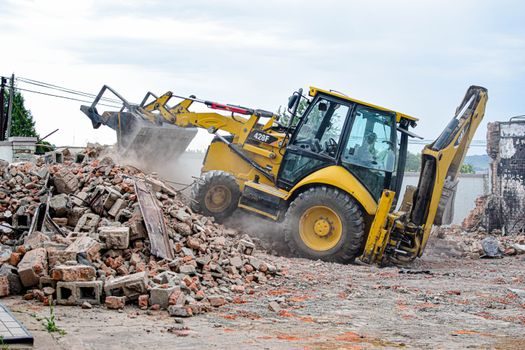
For larger mobile work fleets where a skid steer is one of several compact units, the backhoe loader spec bands and sourcing map and the rough terrain forklift sizing bands frame the same ROC-vs-engine logic across the rest of the yard equipment.
Track these two signals over the next quarter: (1) Stage V / China IV engine option take-rate on 55–75 kW skid steer orders, which is the leading indicator for which ROC band the fleet buyers are committing to; (2) hydraulic-flow standardisation between 60 and 95 L/min, which is what separates a 1,000 kg ROC frame that can run a breaker from one that is bucket-only [S1][S2].
For component-level specifications, see skid steer loader, backhoe loader, and wheel loader.