
Supply Concentration and CRMA Pressure on European Buyers
China's mine output is dominated by wolframite-scheelite blends in Jiangxi, with reserves at 1.8-2.0 million mt W-content, while Vietnam, Russia, Bolivia, and Australia round out the top six producing nations; the Xiamen Tungsten and Chongyi Zhangyuan groups control the majority of Chinese APT smelting capacity above 50,000 mt/yr [S1].
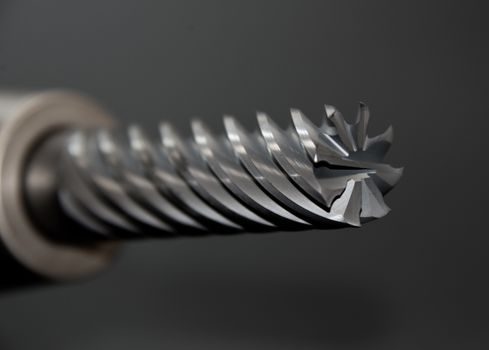
For European industrial buyers, the implication of CRMA listing is that qualifying alternative supply - from Korean Sangdong (Almonty Industries), Portuguese Panasqueira, and Australian Mt Carbine - now carries strategic-premium value beyond pure price; a secondary supply node covering 5-10% of EU annual tungsten demand is the realistic 2030 target. Tungsten carbide cutting tool blanks and industrial valve hard-facing alloys that spec WC-Co 94/6 or WC-Ni 90/10 grades remain the dominant consumption channels at 55-60% of global demand.
Price Stack: APT, Ferrotungsten, and WC Powder Spread
Buyers sourcing through manganese ore suppliers for combined steel-mill packages should note that tungsten and manganese frequently co-travel in HS code 7202.80 (FeW) and 7202.11 (FeMn) shipments, enabling consolidated freight.
Application Split: Carbides, Steels, and Mill Products
[S2]
Substitution, Recycling, and Specification Risk
Secondary tungsten from cemented carbide scrap recycling now supplies 30-35% of global consumption, with zinc reclaim (Anderson process) and electrolytic recovery yielding WC-equivalent powder at 30-50% of primary cost; a closed-loop carbide tool recycling ratio above 70% is achievable in aerospace-grade programs [S1].
Substitution remains technically constrained. In defence applications - kinetic penetrators (W-Ni-Fe 95/3.5/1.5 per MIL-T-21014D Class 1), shaped-charge liners, and fragmentation warheads - there is no qualified substitute at equivalent mass effectiveness, which is why W is on every major Western defence critical-materials list including the U.S. National Defense Stockpile and the EU CRMA.
Sourcing Map: Primary Nodes and Verification Specs

2026-2030 Forecast and Sourcing Decisions
Most credible industry forecasts published in early 2026 place global tungsten demand growth at 3-6% CAGR through 2030, with the upper bound driven by EV cutting tool demand (gear hobbing, hairpin copper wire EDM) and defence restocking; the lower bound reflects substitution pressure and a softening of Chinese industrial production [S1].
For a sourcing decision, the practical frame is: lock 70-80% of volume on 12-month APT contracts with a price collar at USD 320-360/mtu; reserve 10-15% for spot-buying during Q3 quarter-end Chinese destock windows (typically August-September); and qualify at least one ex-China or recycled node to 5-10% of annual volume as CRMA-aligned strategic supply. Trackable 2026-2027 signals include the EU CRMA strategic project first-call publication (expected late 2026), the Almonty Sangdong first concentrate shipment milestone, and the U.S. Defense Production Act Title III award for tungsten processing capacity.
Spec-level background on the components involved: pressure transmitter, and flow meter.