
Refined zinc ingot demand in 2026 is driven primarily by hot-dip galvanizing of structural steel, zinc die casting of hardware components, and brass/bronze alloy production, with downstream signals coming from coating additives and zinc stearate derivative markets [S1][S2].
The two reference points that matter for a 2026 buyer are the coating additives market valued at USD 12.8 billion in 2026 with a 4.6% CAGR through 2036 [S1], and the zinc stearate market forecast to reach USD 1.2 billion by 2025 at 3–5% CAGR [S2], both of which confirm structural rather than cyclical zinc offtake.
Zinc Ingot Grades and Specification Bands
SHG (Special High Grade) zinc at 99.995% purity is the LME-deliverable benchmark grade specified by most industrial galvanizers and die casters, with Zn-1 equivalent in ASTM B6 covering the same purity range [S2].
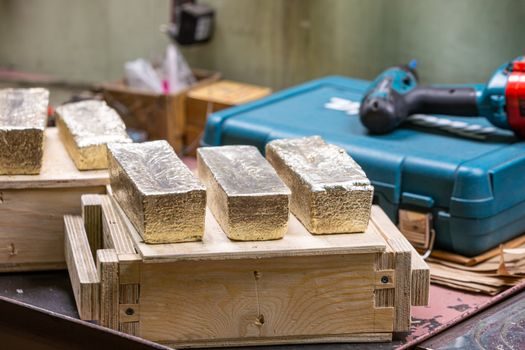
Continuous galvanizing grades (CG) typically run 99.5–99.95% with tighter control on aluminum and lead residuals, while prime western (PW) at 99.5–99.8% is used for general-purpose die casting where cosmetic surface finish is not critical [S2]. Standard ingot weights range from 20 kg to 25 kg pigs, with 1000 kg and 2000 kg jumbos for bulk tankhouse output.
End-Use Demand Breakdown and 2026 Drivers
Coating additives demand in 2026 sits at USD 12.8 billion, growing to USD 19.1 billion by 2036 at 4.6% CAGR, with water-based formulations accounting for approximately 40% of additive consumption [S1].
Zinc stearate downstream consumption is anchored by plastics, rubber, and concrete applications, with construction as the largest end-use by both value and volume, and Asia Pacific as the largest region by both metrics [S2]. Combined with galvanized rebar demand for infrastructure — a trend documented in the Top Steel Rebar Companies 2026 sourcing map — this points to multi-year zinc offtake support from construction-cycle volumes.
Comparison of Primary Zinc Ingot Grades
SHG (LME Grade A) carries 99.995% minimum Zn, with Pb ≤ 0.003% and Cd ≤ 0.003%, used for continuous galvanizing line feed and high-grade alloy production. CG (Continuous Galvanizing) runs 99.5–99.95% with controlled Al (typically 0.25–0.55% addition at bath) and Pb ≤ 0.01%, optimized for strip-coating adhesion.
PW (Prime Western) sits at 99.5% minimum, the economic choice for die-cast hardware where elevated Pb is acceptable inside the alloy melt, and HG (High Grade) at 99.9% falls between SHG and PW for brass mill feed [S2]. For procurement, SHG commands a typical premium of USD 50–100/t over PW, narrowing when galvanizing premiums rise on steel-mill pull.
Pricing Stack and Sourcing Cost Drivers
The zinc pricing stack in 2026 is built from LME cash +3-month spread, regional premium (US Midwest, European CIF, Shanghai warehouse), treatment charges for byproduct sulfuric acid, and freight differential from refinery to consumer [S2].
Energy cost remains the dominant variable cost for electrowinning refineries, with electric arc furnace dust (EAFD) recycling providing a secondary feed source that has grown in share since 2020 [S2]. For buyers running a zinc die casting line, the relevant comparison is SHG ingot cost versus Zamak 3 or Zamak 5 alloy shot, which adds copper and aluminum master alloy costs on top of the underlying zinc price.
Supply Node Geography and Trade Flow

Asia Pacific remains the largest zinc stearate-consuming region by both value and volume, driven by automotive production and construction activity in China and India [S2], and the same regional pull applies to upstream zinc ingot offtake.
Major 2026 supply nodes include Korean (Korea Zinc), Chinese (Zhuzhou Smelter, Yunnan Chihong), European (Boliden Odda, Glencore Nordenham), and Peruvian (Cajamarquilla) refineries, with Australian (MMG Dugald River, South32 Cannington) and North American (Trafigura/BlueWater Zinc) feed serving the galvanizing and die-casting hubs. The same Asian demand gravity is visible in related metals such as the Manganese Ore Suppliers 2026 trade, where Chinese mill demand sets the marginal price.
Selection Criteria for Industrial Zinc Ingot Buyers
Galvanizers feeding a continuous strip line should specify SHG with Cu ≤ 0.002% to avoid wet-damp staining and Pb ≤ 0.003% for thin-coating applications under automotive OEM approvals.
Die casters running high-pressure hot-chamber zinc die casting machines for hardware should select PW or HG for cost control, then accept higher Fe and Pb in the melt as long as mechanical properties meet ASTM B240 specification for alloys. Brass mill buyers prioritize Cu and Sn control in the residual rather than the headline zinc purity, since downstream alloying dilutes any premium-grade premium.
Limitations, Constraints, and Failure Modes

Zinc offtake is exposed to construction-cycle volatility because galvanizing and rebar coating together absorb more than half of refined zinc demand, meaning any sustained downturn in non-residential building starts cuts primary demand [S1][S2].
Substitution risk is structurally low: aluminum and magnesium compete in die-casting but cannot match zinc's creep resistance and finish at equivalent cost, while hot-dip galvanizing has no cost-effective mass-market substitute for atmospheric-corrosion protection of structural steel. Supply-side risk concentrates on Chinese smelter discipline, since any export tax adjustment or domestic stockpile release can swing the LME cash +3-month spread by USD 30–80/t within a quarter.
Standards, Testing, and Quality Verification
ASTM B6 covers refined zinc ingot grades from LME Grade A (SHG) through PW with composition limits, while ISO 752 sets parallel purity and impurity thresholds used by European and Asian refineries [S2].
Lot acceptance testing typically covers ICP-OES or XRF analysis of Pb, Cd, Fe, Cu, Sn, and Al, with sampling per ASTM E88 or ISO 10546, and a Certificate of Analysis 3.1 to EN 10204 supplied with each shipment. Independent inspection (SGS, Bureau Veritas, Cotecna) at the load port is standard for jumbos above 100 t per O-Ring Seal Suppliers 2026-type high-volume industrial procurement contracts.
Track the LME zinc 3-month spread and SHG-to-PW premium on a weekly basis through 2026 Q3, monitor the China Customs zinc concentrate import data, and watch the Korea Zinc and Boliden quarterly production reports for any guidance change on Chinese smelter discipline.
Spec-level background on the components involved: pressure transmitter, and flow meter.