Zinc ingot spot offers on Made-in-China.com cluster in a US$980–2,588 per metric ton FOB band as of 2026-05, with Jiangsu Jingye Iron and Steel Co., Ltd. anchoring the high-volume Diamond-Member listings and a 1-ton minimum order quantity quoted across the bulk of the catalogue [S5]. That pricing window is the practical reference for any galvanizer, die-caster, or brass-mill buyer sizing a 2026 annual contract.
Supply-side, Chinese smelters are working through a "Eliminate Backward Production Capacity" restructuring under the national non-ferrous roadmap, and trade houses such as CBCIE Metal now publish weekly zinc reserves and production-capacity data feeds alongside their inventory trackers [S2]. For procurement teams, the practical question in 2026 is no longer "is there ingot" but "which purity grade, which regional node, and which OEM/ODM wrapper is being bundled with the metal".
Spec Bands Buyers Are Quoting Against in 2026
Zinc ingot is traded against three purity tiers — SHG (Special High Grade, ≥99.995% Zn), HG (High Grade, ≥99.99% Zn), and commercial / die-cast alloy grades (typically 99.5–99.9% Zn) — and the price spread on Made-in-China.com of roughly US$1,600/ton between the low and high end of the catalogue is almost entirely driven by that grade, not by logistics [S5]. Die-casters feeding zinc die casting machine cells overwhelmingly specify SHG; brass mills and galvanizers accept HG, while commodity construction and hardware segments buy on commercial grade.
Physical form is the second differentiator: 25 kg pigs remain the default export format, with 1-ton jumbo blocks and 8–10 kg flat slabs offered by the larger integrated mills. Buyers should also confirm ISO 9001:2015 or equivalent mill certification on the certificate of analysis — Made-in-China.com filters currently list ISO9001:2015, ISO 9001, ISO45001:2018, and OHSAS 18001 as the management certifications most Chinese suppliers advertise on their zinc-ingot factory pages [S1]. OEM/ODM service availability is the third "spec" line, and a meaningful one: Hunan- and Shandong-based suppliers now bundle custom alloy blending and OEM branding as standard catalogue options [S1][S3].
Sourcing Node Map: Where the Volume Actually Originates
Three regional clusters dominate Chinese zinc ingot export supply in 2026: Hunan in central-south China, where integrated non-ferrous smelters with OEM/ODM capacity cluster (the Hunan factory referenced in S1 lists copper, lead, zinc, and aluminium under a single "Non Ferrous Metal" product line); Shandong, where Qingdao-headquartered trading groups such as China Yongfeng Industry Group Co., Ltd. (registered 2014) act as export consolidators handling zinc, aluminium, and copper ingot under a "Manufacturer/Factory, Group Corporation" charter [S3]; and Jiangsu, where large steel-and-zinc producers like Jiangsu Jingye anchor the bulk-volume listings on the trading platforms [S5].
The practical sourcing path in mid-2026 looks like this: pure-play mill contracts go to Hunan or Jiangsu for the best unit price; OEM/ODM requirements (custom alloy branding, retail-ready packaging, or private-label ingot for hardware chains) route through Hunan OEM/ODM-capable factories [S1]; export logistics and consolidated mixed-metal shipments route through Shandong trading groups [S3]. For buyers also sourcing adjacent metals, copper cathode 2026 grade bands price stack sourcing nodes covers the parallel pricing structure on the copper side, which is useful when negotiating bundled-of-non-ferrous contracts.
Compliance Floor: Emissions and Environmental Standards
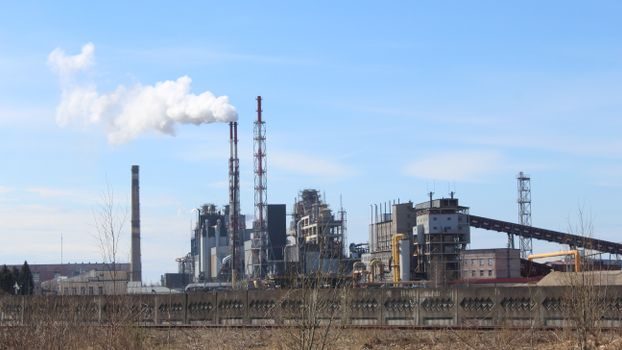
Any Chinese zinc smelter shipping into regulated jurisdictions must demonstrate compliance with the national "Emission Standard of Pollutants for Lead and Zinc Industry" (GB 25466-2010, with subsequent amendments), which sets limits on wastewater and atmospheric emissions from lead and zinc industrial enterprises and governs both operating plants and new-build environmental impact assessments [S6]. Procurement contracts in 2026 increasingly require the mill to attach a recent third-party emissions test report to the shipment documentation; failure to do so is now a common cause of LC (letter of credit) document-discrepancy disputes at destination ports.
For buyers running their own process instrumentation, monitoring the wet-stack and SO₂ scrubber loops on a smelter supplier's site uses the same hardware families as any chemical plant — pressure transmitter and flow meter loops on the scrubber liquor, and industrial valve assemblies on the acid-plant gas train. This is worth flagging in any vendor audit, because a smelter's instrumentation density is a reasonable proxy for how seriously it takes the GB 25466 envelope.
Selection Criteria: How to Read a Zinc Ingot RFQ Response
Four criteria separate a usable offer from a risky one in 2026: (1) stated purity grade with a numerical Zn% minimum on the CoA, not a verbal "SHG" claim; (2) production-capacity data, because mills being pruned under the backward-capacity elimination programme have volatile on-time delivery records [S2]; (3) management certification on the factory level (ISO 9001:2015 is the baseline, ISO 14001 is preferred for emissions-sensitive buyers) [S1]; and (4) explicit OEM/ODM scope if rebranding is required, since not every Hunan or Shandong mill offers it [S1][S3].
Cross-Metal Context: Zinc Versus the Other Non-Ferrous Lines
Zinc is structurally the cheapest of the four major non-ferrous industrial metals, and the price gap matters for substitution analysis. The zinc-ingot band of US$980–2,588/ton sits well below copper cathode (the parallel copper cathode 2026 supply nodes price stack and sourcing map shows the copper floor roughly 3–5× higher) and below aluminium ingot, but above the manganese ore bands covered in the manganese ore supply shortage and risk map 2026 spec bands sourcing nodes and price piece, where the price floor is in ore form rather than refined metal. [S2]
For buyers running multi-metal procurement, the practical move is to consolidate zinc, aluminium ingot, and copper ingot orders through a single Shandong trading group such as China Yongfeng [S3], which can reduce per-shipment documentation overhead and let the buyer spread the LC and inspection cost across a larger basket. The trade-off is a thinner audit trail per metal — single-mission buyers who only need zinc are usually better off contracting direct with a Hunan or Jiangsu mill [S1][S5].
Failure Modes and Constraints to Plan Around
Three constraints hit zinc ingot buyers consistently in 2026. First, lot-level purity drift: commercial-grade ingot occasionally lands at 99.4–99.5% Zn instead of the stated 99.5% minimum, and the LC discrepancy only surfaces at the buyer's assay lab — so a third-party SGS or Alex Stewart inspection at the load port is no longer optional for first-time suppliers. Second, the backward-capacity elimination programme means smaller Chinese smelters are being idled or merged, and the surviving suppliers are running at higher utilisation, so seasonal tightness in Q3 (August–October) is now a recurring pattern [S2]. Third, freight on 25 kg pigs is the dominant landed-cost driver for any shipment under 200 tons — buyers who can take 1-ton jumbo blocks reduce per-ton freight by a meaningful margin, but only integrated Jiangsu and Hunan mills offer that format [S1][S5].
Trackable Signals to Watch Through Q4 2026
Two indicators tell you whether the zinc ingot market is tightening or loosening into late 2026: the weekly CBCIE Metal inventory tracker, which publishes Chinese bonded-warehouse zinc reserves and tracks the elimination of backward smelting capacity on a rolling basis [S2], and the spread between the low and high end of the Made-in-China.com catalogue (currently ~US$1,600/ton), which compresses when supply is loose and widens when SHG capacity gets tight [S5]. Buyers locking in Q4 2026 contracts should pin both indicators now.