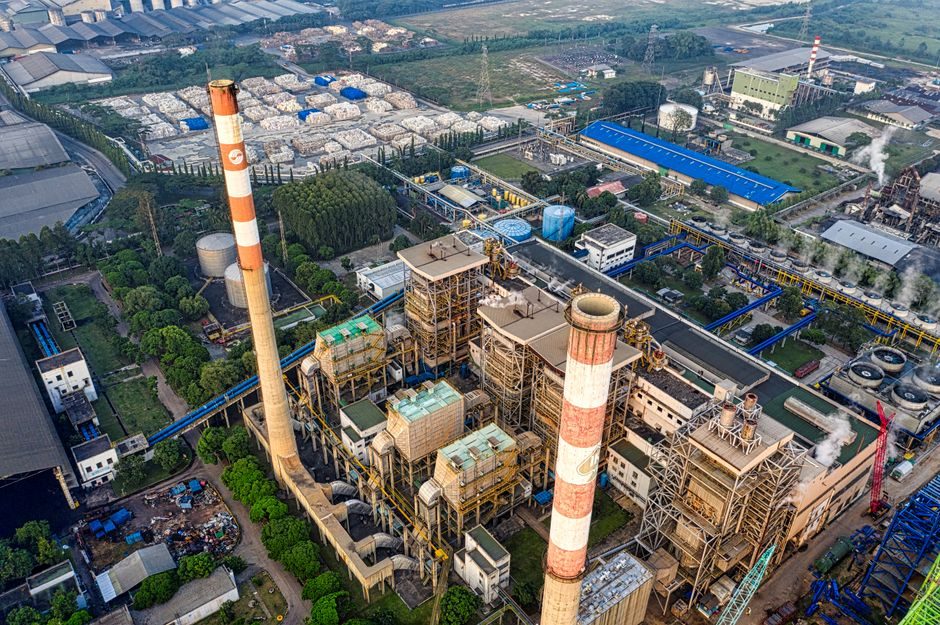
Elmet Technologies runs a fully integrated US mill that ships plate, sheet, foil, rod, and wire in molybdenum and tungsten from Lewiston, ME, with more than 85 years of refractory-metals experience backing the production line [S2]. H.C. Starck Solutions, headquartered in Newton, MA, lists refractory metals, powders, fabricated parts, and additive-manufacturing stock under one roof, with reported revenue near $872 million against roughly 1,600 employees [S3]. Buffalo Tungsten stays smaller and sharper: 54 staff, $11 million revenue, and a powder-only product set covering tungsten powder, tungsten carbide powder, thermal spray powder, crushed tungsten carbide, and ultra-high-purity tungsten powder out of Depew, NY [S3].
Upstream, the field thins. Almonty Industries develops tungsten mining projects across multiple regions to stabilize raw-material flow, while CMOC (China Molybdenum) reports roughly 11,183 employees and $3 billion in revenue from its Henan base [S3][S4]. Mid-tier European capacity shows up in BETEK (Aichhalden, DE, ~285 staff, $55M) where tungsten carbide is bound to cutting tools, foundation drilling bits, and surface-mining picks [S3]. For comparison context on parallel non-ferrous sourcing, see the Copper Cathode Suppliers & Manufacturers 2026 spec map, which uses a similar mill-versus-trader split.
Why Spec Form Beats Spec Grade at Quote Time
Pure tungsten holds the highest melting point of any commercially used metal, listed at 6,192 °F, and the lowest vapor pressure of all metals, which is why it keeps hardness at temperatures that would soften nickel superalloys [S2]. That property envelope is the reason every credible supplier organizes its catalog by form factor rather than by alloy name. Elmet ships plate, sheet, foil, rod, and wire; Buffalo Tungsten ships only powder grades; H.C. Starck splits between powders, parts, and AM stock [S2][S3]. A buyer who needs a finished machined shield or EDM electrode will waste RFQ cycles on a powder-only house, and a thermal-spray shop will get nowhere with a mill-products vendor.
Practical form-fit pairing looks like this: machining and aerospace brackets map to rod/bar/foil mills such as Elmet; thermal spray, infiltration, and diamond-tool binder feed map to powder houses like Buffalo Tungsten; binder-metal sintering for cutting tools maps to carbide specialists such as BETEK [S2][S3]. When the application is kinetic penetrator or counterweight stock, heavy-metal tungsten alloys (W-Ni-Fe, W-Ni-Cu) sit with the mill-products vendors, not the powder-only niche shops.
Regional Capacity and Where Tungsten Actually Originates
Primary tungsten ore comes from scheelite (CaWO4) and wolframite ((Fe,Mn)WO4) deposits, with mining concentrated in China, Russia, Canada, and Bolivia, and additional output from Portugal, Austria, and Peru [S1][S2]. The US runs minimal domestic mining and relies on imports plus recycling, which is why a US-based mill like Elmet or H.C. Starck is a converter, not a miner [S2]. Almonty fills a different slot: it is publicly listed as a developer of tungsten mining projects designed to feed downstream converters with non-Chinese concentrate [S4].
CMOC's $3 billion revenue and 11,183-headcount footprint dwarfs every Western name on the list, a structural fact that surfaces again in the broader Tungsten Supply Chain 2026: Structural Tightness, China Leverage, and Western Rebuild write-up. For an upstream-to-carbide walk-through of where those concentrates land, the Tungsten Value Chain 2026 map links miners, mid-stream converters, and carbide press shops in one chain.
Comparing the Major Western Tungsten Suppliers Side by Side
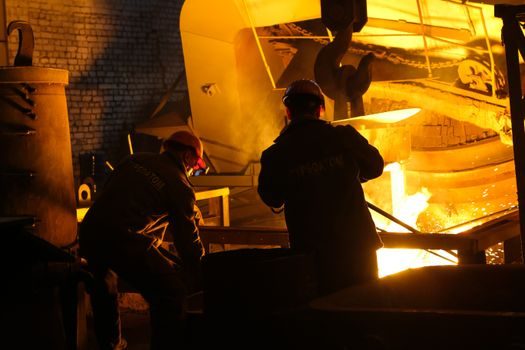
Four decision criteria separate the credible Western suppliers: form factor, integration depth, headcount/revenue scale, and declared specialty. [S3]
Elmet Technologies (Lewiston, ME) operates as a fully integrated refractory-metals mill with 85+ years of Mo/W experience, producing flat and long products plus finished machined and fabricated parts [S2]. H.C. Starck Solutions (Newton, MA) is a refractory-metals and powders converter with AM capability, near 1,600 staff and $872M revenue [S3]. Buffalo Tungsten (Depew, NY) is a powder-only specialist with 54 staff, $11M revenue, focused on tungsten and tungsten carbide powders, thermal spray powder, and ultra-high-purity grades [S3]. BETEK (Aichhalden, DE) sits downstream as a carbide toolmaker with roughly 285 staff and $55M revenue, binding tungsten carbide into foundation drilling, surface mining, and trenching tools [S3]. On form factor, Buffalo Tungsten and H.C. Starck win for powder; Elmet wins for mill products; BETEK wins for finished carbide tooling; on scale, CMOC and H.C. Starck dominate, with Elmet in the mid-tier.
Selection Gates: What a Process Engineer Should Ask a Tungsten Quote
First gate is form: confirm the supplier actually produces the geometry you need, not just the chemistry. A vendor quoting APT (ammonium paratungstate) or blue oxide cannot ship you a 0.5 mm tungsten foil, and a mill will not sell you a -325 mesh thermal spray powder. Second gate is purity: ultra-high-purity tungsten powder is a separate SKU at Buffalo Tungsten, not a generic line item, and buyers in semiconductor or medical imaging applications must verify assay limits on the cert [S3]. Third gate is machining capability: Elmet publishes industry-leading machining, fabrication, and assembly in-house, which removes a sub-tier for parts that need to land closer to print [S2].
Fourth gate is traceability and standard compliance. Aerospace and defense programs typically demand AS9100, ITAR, or DFARS clauses, and the larger integrated houses are more likely to hold them. Fifth gate is logistics: for North American JIT programs, a US-based mill cuts transit time and de-risks the schedule relative to trans-Pacific shipments of mill products. For tooling applications with hard-rock duty, BETEK's tungsten-carbide button bits and surface-mining tools are a closer match than a generic powder house [S3].
Limits, Failure Modes, and Where Tungsten Is the Wrong Choice
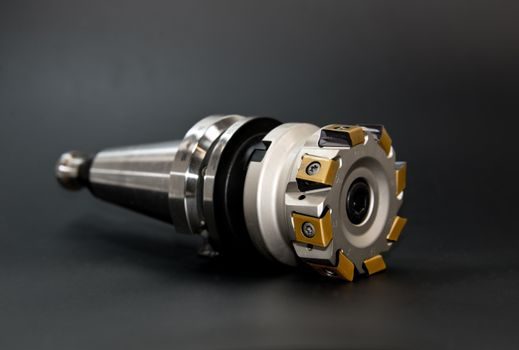
Tungsten is brittle at room temperature in its pure form and becomes workable only above its ductile-to-brittle transition temperature, so designers expecting aluminum-like formability will be disappointed [S2]. Machining requires sharp tooling, low feed rates, and either EDM or grinding for tight tolerances, which is why in-house machining capability at a supplier like Elmet is a real cost lever, not marketing copy [S2]. Pure tungsten is also dense, roughly 19.3 g/cm³, which is a feature for counterweights and a problem for weight-sensitive aerospace brackets where a tungsten alloy or even a Mo/Ti substitute enters the trade study. Corrosion resistance is good but not universal: tungsten dissolves in mixtures of hydrofluoric and nitric acid, and oxidizes above about 600 °C in air, so the application envelope is narrower than stainless.
Forged suppliers such as ATI also touch the tungsten conversation through their powder-metals line, but their revenue is dominated by titanium, nickel superalloys, and specialty stainless, so tungsten is a side product, not a focus, with reported revenue near $4 billion and 8,800 employees [S3]. If your program is heavy on titanium, an ATI-style mill may still be the right call; if it is heavy on pure tungsten or tungsten carbide, stay with a refractory specialist.
Trackable Signals for the Next Buying Cycle
Three nodes are worth watching: Almonty's project pipeline status, since new non-Chinese concentrate capacity changes the converter feedstock balance [S4]; H.C. Starck's additive-manufacturing tungsten stock list, because AM-grade tungsten powder is the fastest-growing SKU in the refractory-metals segment [S3]; and Buffalo Tungsten's ultra-high-purity grade releases, which track semiconductor and medical-imaging demand at the powder end. Pair any of those with the Zinc Ingot Supply Chain 2026 movement notes to read whether non-ferrous tightness is broad-based or tungsten-specific this quarter.
Spec-level background on the components involved: pressure transmitter, flow meter, and industrial valve.