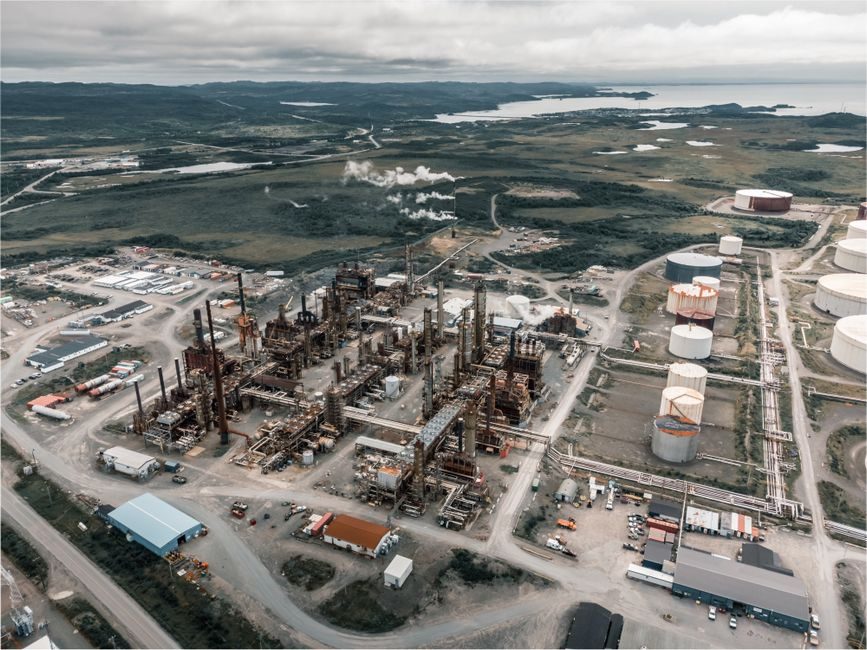
World tungsten mine production reached 83,800 t of tungsten content in 2021, with China accounting for an estimated 85% of that concentrate output, while U.S. estimated consumption of selected tungsten materials was 10,600 t in the same year, with cemented carbide parts alone representing more than 60% of that demand [S1].
The market was estimated at USD 1.96 billion in 2025 and is forecast to reach USD 3.28 billion by 2036 at a 4.8% CAGR, with tungsten carbide holding 42.7% of the 2026 product segment, wolframite ore 39.8% of ore type, and powder tungsten 41.5% of form share [S3]. The 2026 update on supply concentration remains structurally similar to the 2021 USGS baseline: a small number of integrated Chinese producers control concentrate and APT, while Western and Japanese players anchor the high-specification downstream tier [S2][S3].
Upstream: Tungsten Mining, Ore Types, and Reserve Concentration
The upstream tier is the mining and concentration of tungsten-bearing ores, dominated by wolframite and scheelite deposits that feed a small group of integrated producers [S2]. USGS data show world tungsten mine production was 83,800 t of tungsten content in 2021 (vs. 83,100 t revised in 2020), with China representing an estimated 85% of global concentrate output [S1]. The 2026 market view from Fact.MR places Chinese share of mined supply at approximately 80%, confirming that the upstream remains structurally concentrated even as recycling and non-Chinese mine projects advance [S3].
Tungsten is treated as a strategic resource, with the Chinese government issuing annual quota targets to each domestic producer; the same scarcity rationale is what placed tungsten on the U.S. list of 35 critical minerals in 2018 and continues to drive Defense Production Act and EU Critical Raw Materials Act funding for non-Chinese supply [S2][S1]. Wolframite-based deposits are primarily located in China, Russia, and parts of Africa, while scheelite operations are more geographically dispersed, though still overwhelmingly Chinese in aggregate volume [S3]. A metric ton unit of WO₃ contains 7.93 kg of tungsten (WO₃ is 79.3% tungsten by weight), the standard unit used outside the U.S. for price quotation and concentrate accounting [S1].
Midstream: APT, Oxides, Ferrotungsten, and Metal Powder
The midstream tier converts concentrate into ammonium paratungstate (APT), tungsten trioxide (WO₃), sodium tungstate, ferrotungsten, and finally tungsten metal powder, the primary intermediate form used in cemented carbide, alloy, and chemical product manufacturing [S2][S3]. Powder tungsten represents 41.5% of the 2026 form segment, reflecting its position as the universal feedstock that downstream fabricators consume regardless of end application [S3].
Chinese integrated producers (China Minmetals, Xiamen Tungsten) dominate the upstream-to-APT chain, while Western and Japanese firms such as Plansee Group's Ceratizit and the Sumitomo Electric Carbide / Buffalo Tungsten joint venture operate more visibly at the powder and ready-to-press grade tier [S1][S3]. USGS further notes that intermediate products such as alloy powders, cast tungsten carbide powders, matrix powders, ready-to-press grade powders, and thermal spray powders are produced but not separately reported in mine production statistics, which is why concentrate tonnage understates true midstream output [S1]. The market structure is therefore bimodal: Chinese control at the concentrate-APT-powder core, Western and Japanese control at the higher-purity (>99.9%) and application-specific powder grades that downstream carbide and alloy shops require [S3].
Downstream: Cemented Carbide, Alloys, Mill Products, and Chemicals
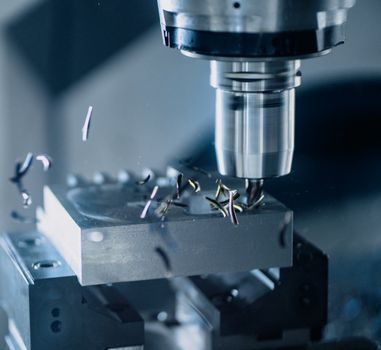
Downstream demand is dominated by cemented carbide parts for cutting and wear-resistant applications, which accounted for more than 60% of U.S. estimated tungsten consumption in 2021, with mill products, alloys, and chemicals splitting the balance [S1]. Tungsten carbide alone holds 42.7% of the 2026 product segment, serving cutting tools, mining and construction wear parts, and oil and gas drilling components [S3].
The four downstream product categories tracked by Fact.MR are tungsten carbide, tungsten mill products, tungsten alloys, and tungsten chemicals, with purity grades segmented at below 99%, 99–99.9%, and above 99.9% [S3]. Tungsten alloys serve aerospace counterweights, medical radiation shielding, defense kinetic-energy penetrators, and high-temperature turbine components, with typical service temperatures supported by tungsten's 3,422 °C melting point, the highest of any metal [S3]. For oil and gas, tungsten components are used in well-logging casing, downhole equipment, pipeline inspection tools, and industrial radiography, where density and radiation-attenuation properties drive specification [S4]. A specifier evaluating cutting tool materials and qualification gates will find cemented carbide grade selection is the single most consequential downstream decision, because it determines both tool life and total machining cost. The same logic applies to top cutting tools companies and their spec maps, where powder purity and grain-size distribution cascade directly from midstream powder producer choice.
Selection Criteria by Tier: Where Specifiers Have Leverage
Upstream leverage is limited because ~80–85% of concentrate originates from Chinese quota-controlled mines; the practical lever is ore type (wolframite vs scheelite), since wolframite held 39.8% of the 2026 ore-type segment and concentrates from different ore bodies carry different impurity profiles that propagate into APT and powder [S3]. Midstream leverage sits at the powder specification: purity grade (99% / 99.9% / >99.9%), particle size distribution, and the choice between primary tungsten production and secondary recycling routes, with secondary tungsten (from cemented carbide scrap, grinding sludge, and spent catalysts) gaining share as raw-material costs and supply-security concerns improve recycling economics [S3]. Downstream leverage is widest at the carbide grade, where cobalt binder content, grain size, and ISO application classification (P/M/K/N/S/H) directly govern tool life in steel, stainless, cast iron, non-ferrous, superalloy, and hardened-steel machining.
A short comparison: scheelite vs wolframite upstream (wolframite higher Fe/Mn impurity burden, scheelite higher Ca/Mo, both refining to APT), primary vs secondary powder (primary higher purity ceiling, secondary lower cost and better supply security), and carbide vs heavy-alloy downstream (carbide for wear, alloy for mass/shielding). Each axis changes the buyer's exposure to Chinese quota volatility, and each is a place where a pressure transmitter or flow meter specifier reading tungsten technical data sheets should expect the same impurity trace-element language that appears on alloy certs.
Use Cases by End Industry and Failure Modes

Cemented carbide cutting tools and wear parts feed automotive, aerospace, oil and gas drilling, and general machining, which is the volume core of the market [S3]. Tungsten mill products feed lighting filaments, electrical contacts, and electronics, where high purity and stable thermal expansion govern service life. Tungsten alloys feed aerospace counterweights, radiation shielding for medical and industrial radiography, kinetic-energy penetrators, and high-temperature furnace and turbine components, leveraging the 3,422 °C melting point and 19.3 g/cm³-class density [S3][S4].
Energy-transition applications are an emerging demand segment: tungsten in friction-stir welding tools for battery enclosures, machining tools for wind turbine components, and plasma-facing components in nuclear fusion [S3]. Failure modes to track are cemented-carbide insert chipping and thermal cracking (driven by cobalt binder content and grain size), powder oxidation during sintering (driven by oxygen pickup in midstream handling), and radiation-shielding density loss from porosity in heavy-alloy billets (driven by cold isostatic pressing parameters). A pressure sensor or industrial valve specifier sourcing tungsten-lined bores or seats will see these failure modes written directly into the OEM quality documents.
Limitations, Constraints, and Trackable Signals
The dominant constraint is Chinese quota and export licensing, which sets the floor for APT and powder pricing globally and which non-Chinese miners and recyclers cannot fully offset in the near term [S3]. Recycled tungsten is growing but constrained by scrap availability, which was itself tight in 2021 because of weaker 2019–2020 end-product demand [S1]. Western supply diversification is being funded by U.S. Defense Production Act and EU Critical Raw Materials Act instruments, but the timeline for meaningful supply rebalancing extends beyond the near term [S3].
Trackable signals to watch through 2026: Chinese annual quota announcements (volume and producer list), Defense Production Act Title III funding awards for non-Chinese tungsten projects, EU CRMA strategic project designations, APT and ferrotungsten price movements on the metric ton unit basis (10 kg WO₃), and U.S. National Defense Stockpile sales or acquisitions. India and China are the named key growth markets in the Fact.MR forecast (5.3% and 5.1% growth contribution respectively), and the absolute dollar opportunity of USD 1.23 billion between 2026 and 2036 is the most concrete number available for sizing downstream tooling and alloy capex [S3]. For process engineers cross-referencing tungsten wear parts against instrument spec sheets, the PLC and servo motor choice on a machine tool will ultimately determine how hard a carbide grade can be pushed before the spindle drive trips, which closes the loop between tungsten upstream and the factory floor.