Choosing a cold milling machine for tunnel work is governed by three hard constraints: a milling width that fits the cross-section without blocking muck handling, a milling depth class that matches the pavement or invert removal target (300 to 350 mm across the three main classes), and a low-profile, front- or rear-load drum carrier that can be repositioned inside a confined heading [S5].
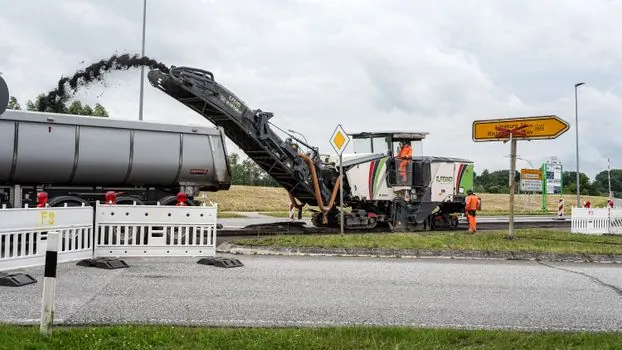
Cold milling is a rotating-drum, cold-planing process: a cylindrical drum fitted with carbide-tipped chisels rotates against machine travel and removes asphalt or concrete layer by layer, with depth and crossfall governed by sonic or ski sensors [S3]. The same technology is documented as the standard approach for routing, track-bed lowering, and tunnel invert lowering, with rock milling variants covering harder substrates [S1]. Selection therefore begins with class, not brand.
Class Breakdown by Milling Width and Depth
Wirtgen's published product matrix divides cold milling machines into three working classes: small milling machines with milling width up to 1,300 mm and milling depth to 300 mm; compact milling machines with milling width up to 1,900 mm and milling depth to 330 mm; and large milling machines with milling width up to 4,400 mm and milling depth to 350 mm [S5]. Tunnel headings almost always sit in the small or compact band because the cross-section is the binding constraint, not productivity.
For perspective on the upper envelope, large cold planers used on highway and airport reclamation mill maximum depths of 13 inches (about 330 mm) at milling widths of 7 feet (about 2,134 mm) and run engines in the 350 to 400 hp range [S4]. A tunnel package rarely needs that envelope; the binding driver is clearance, not throughput.
Drum Type, Chisel Pattern, and Cutting Geometry
Drum diameter, chisel spacing, and chisel grade set the surface texture, particle size, and net power draw [S3]. Coarse milling with widely spaced chisels maximises removal rate; fine milling with close spacing produces the macrotexture required for thin-lay overlays. In tunnel invert work where a smooth, defined substrate is needed before waterproofing membrane or track-bed concrete, fine-pattern drums are typically specified for the final pass.
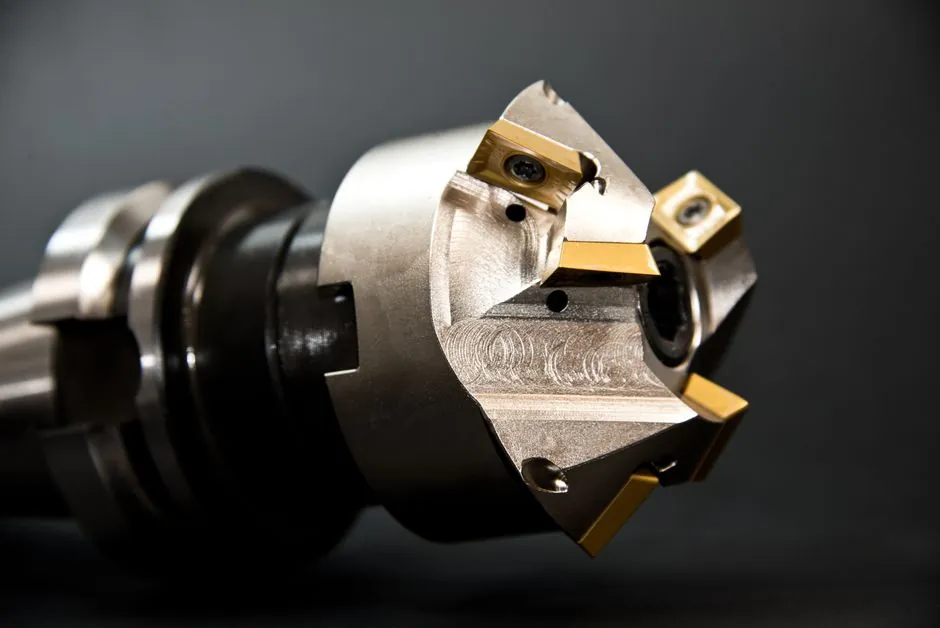
The FCS quick-change drum system, originally released by Wirtgen in 2001, allows the operator to swap drums on a single carrier rather than dedicating a machine to one pattern [S5]. For tunnel contractors this matters: a single compact machine can carry a coarse drum for bulk removal and a fine drum for the finish pass, which is more cost-effective than mobilising two dedicated carriers into a heading.
Engine Power, Drive, and Conveyor Sizing
Power class scales with drum width: skid-steer cold planer attachments average 5-6 inches (127-152 mm) of milling depth and mill 13-47 inches (330-1,194 mm) wide from the host machine's hydraulics, with larger dedicated planers adding their own engine and hydraulic systems for higher material removal rates [S4]. The 350-400 hp large-class figure is the reference point when matching a carrier diesel to a full 2 m drum package [S4].
Discharge geometry is part of the spec, not an afterthought. Milled material is moved by integral augers, with an optional front or side conveyor loading trucks; on a tunnel job, conveyor swing radius and fold-up height must clear the heading profile, and a swing-out or foldable belt is typically required to keep the cutter within 200-300 mm of the wall without fouling the conveyor [S3]. Water-spray dust suppression is standard on modern cold planers and is essentially mandatory in tunnel air because of the confined-ventilation environment.
Automation, Level Control, and 3D Guidance
WIRTGEN LEVEL PRO leveling technology, introduced in 2005, is the OEM's reference grade-and-crossfall control system and remains the most widely specified automatic depth control on cold milling carriers [S5]. The system uses sonic sensors or mechanical reference skis to hold milling depth to within a few millimetres of target, which is what makes a defined tie-in to adjoining concrete possible [S3].
On top of that, 3D-MC and MC-Max milling machine control platforms from suppliers such as Topcon add GNSS- or total-station-based 3D guidance, with dedicated rail and tunneling software modules that share code with adjacent paving workflows [S2]. For tunnel invert and slab-track work this lets the operator cut to a designed 3D model rather than chasing a 2D reference line, which is especially useful on long rail drives where cumulative crossfall drift would otherwise be a problem.
Comparison: Skid-Steer Attachment vs Compact Planer vs Large Planer in Tunnels
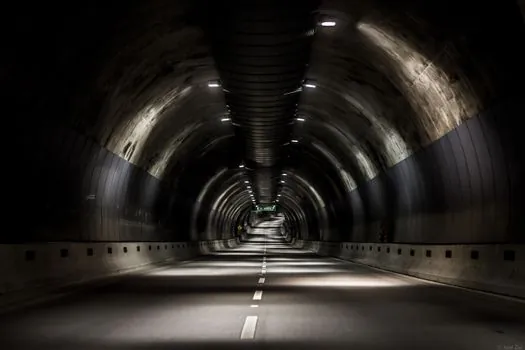
Across four decision criteria, the three cold-milling options line up as follows. Cutting width: skid-steer cold planer attachment 13-47 inches (330-1,194 mm), compact milling machine up to 1,900 mm, large milling machine up to 4,400 mm [S4][S5]. Maximum milling depth: skid-steer attachment up to 9 inches (229 mm) on the strongest models but typically 5-6 inches (127-152 mm), compact machine 330 mm, large machine 350 mm [S4][S5]. Engine class: skid-steer attachment is hydraulically driven from the host, compact and large classes have their own diesel in the 350-400 hp band at the top end [S4]. Suitability for tunnel cross-sections: skid-steer attachment is the only practical option in very tight headings but is slow and produces coarser millings, compact milling machines are the workhorse for most rail and road tunnels, and large milling machines are limited to cut-and-cover, station caverns, and portal works where the cross-section opens out [S4][S5].
Application Mapping: Where Each Class Earns Its Keep
Small milling machines up to 1,300 mm wide and 300 mm deep are the standard pick for tunnel profiling, where the goal is to lower the invert or trim a track bed inside a confined heading [S5]. Compact milling machines up to 1,900 mm wide and 330 mm deep are typically chosen for highway tunnel rehabilitation where the cross-section is wider and the daily removal target in tonnes is higher. Large milling machines, at up to 4,400 mm wide and 350 mm deep, are reserved for portal works, station caverns, and above-ground tunnel approach slabs where the geometry opens up to a near-road cross-section [S5].
Wirtgen cold milling machines are documented in use on critical projects including airports, race tracks, and tunnels, with the cold-milling product family used as the baseline reference for pavement removal, layer separation, and selective RAP recovery [S8]. In selective removal operations, the milled material is recovered separately by mix type, which is the same logic contractors apply when a tunnel invert has a contaminated upper layer that must be segregated from clean lower material [S5].
Limitations, Failure Modes, and Spec Pitfalls

Cold milling is a surface and shallow-substrate process. It removes bound layers to a defined depth; it does not excavate rock or drive a full tunnel face. For full-face hard-rock or mixed-ground advance, a shield machine or roadheader is the correct equipment class, and a cold mill is only used for invert finishing or profile correction behind it. Confusing the two leads to under-specified carriers and stalled headings. [S4]
Other recurring failure modes: choosing a 4,400 mm large mill for a tunnel that physically cannot accept the carrier, leading to repeated repositioning that wipes out any productivity gain; specifying a 350 mm depth class on a compact carrier that only drums to 300 mm, so the operator has to leave the last pass for a second machine; and skipping automatic leveling, which on a 500 m tunnel drive will let crossfall drift enough to fail the smoothness spec for the following slab track or membrane. Reference lines alone, without sonic or 3D-MC feedback, are not adequate for the tolerances a modern rail tunnel invert demands [S2][S5].
Standards, Sourcing, and Selection Signals
There is no single ISO or EN standard that prescribes a cold milling machine's class; selection is driven by the published OEM width-and-depth matrix, by the project's own geometric and tolerance specification, and by local air-quality and noise rules that govern dust suppression and water spray. Material-handling rules for tar-containing or otherwise contaminated asphalt layers do apply, and such layers must be documented and disposed of separately rather than blended into general RAP [S3].
Trackable signals to watch: 3D-MC and 3D-MC Edge packages for milling machines continue to roll out across OEM platforms through 2026, with rail and tunneling software modules shared between milling and adjacent paving workflows [S2]; FCS-style quick-change drum systems remain the differentiator that lets a single compact carrier cover both coarse and fine passes in one heading [S5]. For a complementary look at how milling equipment is paired with the broader tunneling fleet, see the tunneling excavator selection guide and the shield machine selection matrix.
Detailed specification references: cold chamber machine, and cold box core machine.