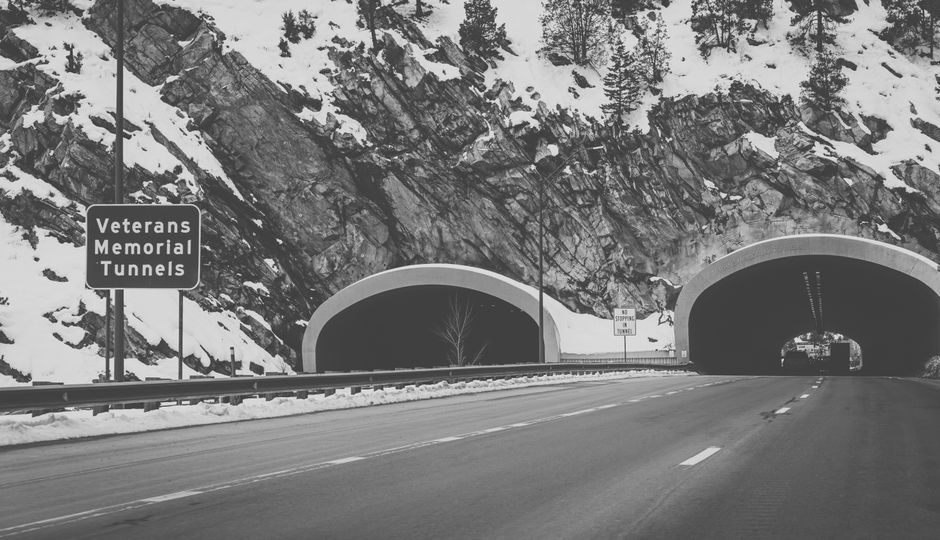
Tunnel invert and backfill work demands compact rollers with operating mass typically 1.2-3.5 t, centrifugal force of 25-35 kN, and dual-frequency vibratory modules (50/67 Hz) so a single machine covers granular sub-base lift and asphalt finish lift on the same bench [S3].
Three constraints dominate the spec sheet before any brand decision: turning radius under 1.8 m for tight invert geometry, overall height under 1.6 m to clear temporary ventilation ducts, and Tier 4 Final / Stage V diesel aftertreatment sized for the 80-120 kW envelope used in this class [S1][S3].
Three Binding Selection Gates for Tunnel Service
Gate 1 is envelope. Tunnel invert profiles typically deliver 2.4-3.0 m clear width between ribs, so a roller with overall width under 1.4 m and height under 1.6 m is the only class that can work without re-handling the muck pile [S1]. The Ningbo Yinzhou Feihu Machinery Factory product line, established 1990, lists ride-on rollers in the FHR-600A/700A diesel water-cooled range as representative of this sub-1.5 t compact class used in confined earthworks [S1].
Gate 2 is vibration. Single-frequency machines lock the operator into one compaction curve; dual-frequency at 50 Hz nominal / 67 Hz nominal with adjustable amplitude (0.4-0.7 mm) lets a single drum cover both stiff sub-base and thin asphalt layer work, which is the typical tunnel finishing sequence from drainage gravel up to wearing course [S3].
Gate 3 is power package. Tier 4 Final emissions on the 80-120 kW class adds an aftertreatment box of roughly 300-400 L, which is the single most common reason standard highway rollers cannot be retrofitted into tunnel duty; a tunnel-spec machine must have the aftertreatment packaging designed in from the factory [S3].
Machine Classes Lined Up Against Tunnel Tasks
Three roller classes compete for tunnel work, and the right call is a function of invert width and lift thickness rather than job-site brand preference:
Class A — walk-behind vibratory plate tamper, 80-200 kg. Indicated where the invert width falls below 1.6 m or the lift is limited to 100-150 mm. These single-plate machines deliver 10-25 kN centrifugal force and 80-100 Hz frequency, which suits pipe-bedding and shoulder zones where the ride-on frame cannot physically enter [S1].
Class B — articulated tandem ride-on roller, 1.2-3.5 t. The workhorse class for the main invert run. Centrifugal force per drum sits at 25-35 kN, drum width 0.9-1.3 m, and turning radius under 1.8 m. SINOMACH Heavy Industry (founded January 2011, parent SINOMACH Group, Fortune 500) sells into this class for highway and municipal builds, and the platform parameters are directly transferable to tunnel invert [S3].
Class C — pneumatic tyred roller, 8-16 t. Reserved for surface sealing passes on the final wearing course. Too large for most invert work; the 8 t operating mass is the practical minimum where a pneumatic machine will physically clear the invert geometry. Specified only when the tunnel design uses a thick asphalt overlay (greater than 80 mm compacted) [S3].
Drum, Amplitude and Frequency — The Working Window
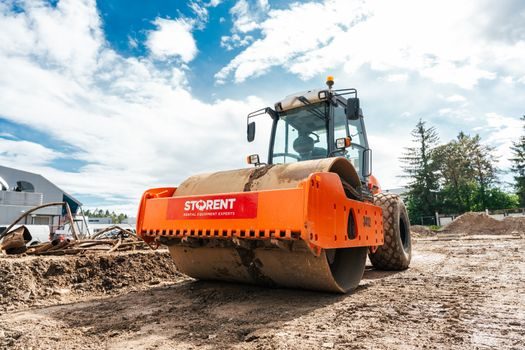
For 0/31.5 mm graded crushed-stone sub-base at 200-300 mm loose lift, the practical compaction window is 50-55 Hz nominal frequency with 0.5-0.7 mm amplitude; this gives 200-400 kPa contact stress on the 0.9-1.2 m wide drum. For the 0/14 mm asphalt finish lift at 40-60 mm thickness, the same drum runs 65-70 Hz nominal at 0.3-0.4 mm amplitude, which reduces aggregate fracture and surface scuffing [S3].
Most tunnel-spec rollers specify dual-amplitude / dual-frequency vibratory circuits as a standard item rather than an option, because a single-frequency machine on a tunnel bench becomes a productivity bottleneck — operators either over-compact the sub-base or under-compact the asphalt [S1][S3]. Amplitude is the more important of the two on gravels; frequency dominates on bound layers.
Drive, Drivetrain and Service Footprint
Hydrostatic drive on both drum and rear axle is now the baseline for the 1.2-3.5 t tunnel class; mechanical transmission has effectively disappeared from new builds because reversing inside a confined invert without a clutch pedal is the dominant productivity loss on small machines [S3].
Service footprint matters. A tunnel crew typically cannot tow a 4 t roller out for warranty work, so the spec should require on-site service access for hydraulic pumps, drum bearings, and the vibratory motor without drum removal. Drum bearings in this class are sealed-for-life in some OEM offerings, which trades bearing-replacement cost for end-of-life drum replacement at roughly 8,000-10,000 operating hours [S1].
For drivetrain components such as vibration-pump bearings and articulation joints, the roller bearing load class is the binding spec, not the bearing model number — buyers should ask for the calculated L10 life at the rated centrifugal force and a documented regreasing interval.
Emissions, Ventilation and Tunnel Air Quality
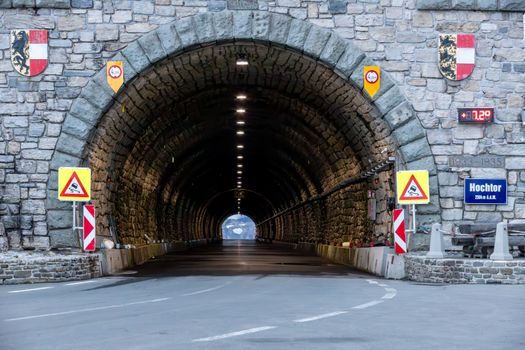
Diesel aftertreatment in a tunnel is not only a regulatory question but a ventilation-load question. Tier 4 Final / Stage V diesel oxidation catalyst plus diesel particulate filter adds roughly 8-12% to fuel consumption and roughly 0.3-0.5 m to overall machine length, both of which must be priced into the tunnel-spec package at procurement [S3].
For projects in jurisdictions with strict tunnel-air quality limits (NOx under 50 ppm 8-hour average in some European metro specs), electric and hybrid-electric rollers are entering the tunnel-compaction market from 2025-2026, typically at 1.5-2.5 t operating mass with 30-50 kWh battery packs and 30-40 kN centrifugal force. These machines are not yet mainstream but are specified in a growing share of new metro tender documents, particularly where the contractor is also procuring battery-electric dump trucks for the same muck cycle [S3].
What Tunnel Spec Excludes and Why
Standard single-drum soil rollers of 12-26 t operating mass, which dominate quarry and dam work, are too large and too tall for tunnel invert geometry; the single-drum quarry spec map is the right reference for above-ground applications but does not transfer to tunnel duty. The narrower 1.2-3.5 t tandem articulated class is the tunnel entry point [S1][S3].
Standard highway tandem rollers with 1.7-1.9 m height, common in the 4-12 t class, fail the height gate.
Procurement Spec Checklist Before Releasing an RFQ
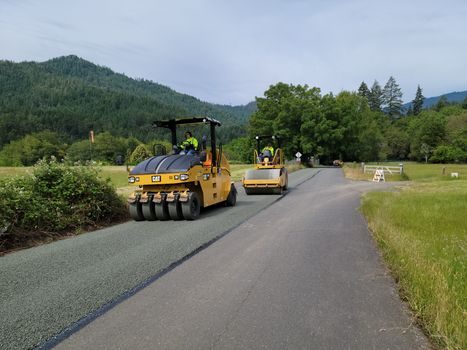
Three data points must appear on every tunnel roller tender: overall height under 1.6 m, turning radius under 1.8 m, dual-frequency vibratory circuit at 50/67 Hz nominal. Without these on the spec sheet, vendors will quote standard highway machines that fail the geometry test [S1][S3].
Three further data points: Tier 4 Final or Stage V diesel certification with aftertreatment packaging inside the 1.6 m height envelope, on-site service access for hydraulic and vibratory components, and hydrostatic drive on both drum and rear axle.
For auxiliary drivetrain components in the vibratory circuit, the tapered-roller-bearing load class on the eccentric shaft is the more critical spec than the overall bearing model, because the calculated L10 life at 50/67 Hz cyclic loading is what determines the 8,000-10,000 hour service interval quoted by most tunnel-class OEMs [S1].
Trackable signal: SINOMACH and other Tier-1 Chinese OEMs (Jiangsu Junma Road Roller Co., Ltd. is one example of the broader supplier base located at No. 288 Jijiang West Road, Jingjiang, Jiangsu) have been expanding battery-electric and hybrid compact roller offerings through 2025-2026; metro tenders in EU and Southeast Asia are likely to begin requiring electric-only invert compaction from 2027 onward. Project planners specifying diesel machines in 2026-08 should plan for an electric retrofit or replacement at the 5-7 year horizon [S3][S4].
Spec-level background on the components involved: road roller.