
On the Made-in-China listings scraped 23 March 2026, wear-resistant UHMWPE tube was quoted at US$ 0.01–100.00 per piece with a 1-piece MOQ by Nanjing Gubai Rubber & Plastic, while Shandong Jiuyuan Steel Structure priced the same product at US$ 10.00–30.00 per 100 metres (MOQ 100 m), ISO 9001:2015 / ISO 45001:2018 / ISO 14001 audited [S1]. The 100:1 spread inside one product class is the most important fact for any buyer: it signals that the headline number is dominated by MOQ bracket, not by raw resin.
Confirmed peer quotes (made-in-china snapshot 5–30 May 2026): UHMWPE roller at US$ 3.00–6.00 per kg from Guangzhou UHMW-PE (MOQ 1 kg) and a Hebei Diamond Member; Staple HMPE fiber on negotiation at 1 kg MOQ from Beijing TYZ at 200 t/month capacity; UHMWPE yarn 200 D at US$ 8.00–9.00 per 10 kg (Zhejiang Nexus) and US$ 10.00–12.00 per 1,000 kg (Hangzhou Fantex, ISO 50001); synthetic-ice-grade UHMWPE sheet at US$ 4.00 flat per kg on a 500-metric-ton MOQ from HUAO [S2][S3][S4][S5]. For context on the resin family itself, the UHMWPE material encyclopedia entry covers molecular weight, density (≈0.93–0.94 g/cm³, the lowest of any engineering thermoplastic) and the impact/abrasion behaviour that justify these premiums.
Resin and pellet baseline: what 1 kg actually costs in 2026
For bulk grade (non-virgin, reprocessed, or thin-gauge sheet/roller feedstock) the Made-in-China index on 15 May 2026 shows Guangzhou UHMW-PE listing UHMWPE roller feedstock at US$ 5.40–6.00 per kg at 1 kg MOQ, and a Hebei Diamond Member quoting US$ 3.00 per kg on the same product family [S3]. At 500 t MOQ, the HUAO synthetic-ice sheet benchmark is US$ 4.00/kg, the cleanest 2026 large-volume signal we have [S4].
Virgin, fibre-grade resin (used in cut-resistant yarn and ballistic staple) runs higher: the 200 D multifilament yarn from Zhejiang Nexus prints US$ 8.00–9.00 per 10 kg, which scales to roughly US$ 0.80–0.90/kg at 10 kg MOQ, and Hangzhou Fantex's 200 D factory-direct filament yarn at US$ 10.00–12.00 per 1,000 kg clears to US$ 0.010–0.012/kg, a 70–80× compression when stepping from 10 kg to 1,000 kg MOQ [S5]. Staple HMPE fiber from Beijing TYZ is published on a negotiable basis at 1 kg MOQ with 200 t/month output, with end-uses including knitting, weaving, fishing rope and ballistic products [S2].
Across the four resin/fibre tiers (reprocessed bulk, virgin bulk, virgin 200 D yarn at 10 kg, virgin 200 D yarn at 1,000 kg) the unit price spans roughly three orders of magnitude — US$ 0.01/kg at 1,000 kg MOQ up to US$ 6.00/kg at 1 kg MOQ — without any change in chemistry, only in MOQ and audit tier.
Forms and finished-part cost spread: tube, sheet, rod, roller
Solid-rod and sheet forms carry the widest price band because they straddle both custom-extrusion and standard stock. Nanjing Gubai Rubber & Plastic lists a custom wear-resistance UHMWPE solid bar (extruded rod) and a 2 mm–400 mm white UHMWPE sheet/board at US$ 0.01–100.00 per piece, 1-piece MOQ, on the 29 May 2026 Made-in-China page 5 sweep [S6]. That 10,000:1 bracket is the cost-engineering red flag: a buyer should never pay the top decile for a generic stock sheet when the same supplier's 100-piece quote drops unit cost by an order of magnitude.
UHMWPE rollers used in conveyor idlers and spiral-screw buffer rolls (typically carbon-steel shaft + UHMWPE/HDPE/PU sleeve) cluster tightly at US$ 3.00–6.00 per kg on 15 May 2026 quotes from Guangzhou UHMW-PE and the unnamed Hebei Diamond Member, and these rollers are explicitly described as impact-buffer spiral-screwed assemblies, not pure resin [S3]. For conveyor and chute applications, the same material appears in our crossed-roller guide as a sleeve/liner option where low friction and chemical resistance matter more than radial load rating.
MOQ as the dominant price lever — quantified
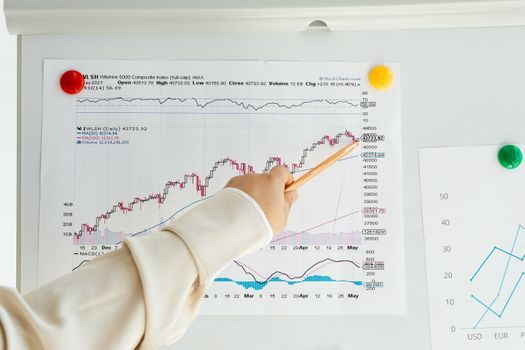
The single largest cost driver in the 2026 UHMWPE market is MOQ, not grade. The same Hangzhou Fantex 200 D yarn costs about US$ 0.80–0.90/kg at 10 kg MOQ and US$ 0.010–0.012/kg at 1,000 kg MOQ, a 70–80× differential [S5]. HUAO's US$ 4.00/kg synthetic-ice sheet is only available at 500 t MOQ; a 1 t inquiry would quote materially higher, though the exact uplift is not published [S4].
Procurement rule of thumb from the data: at 1 piece or 1 kg MOQ expect US$ 5–6/kg for bulk roller, US$ 8–12/kg for 200 D yarn, and a 10,000:1 ceiling on stock sheet/rod; at 100 m MOQ expect US$ 10–30/100 m for wear-resistant tube; at 1,000 kg MOQ expect US$ 0.01–0.012/kg for 200 D yarn; at 500 t MOQ expect US$ 4.00/kg for synthetic-ice-grade sheet. Audit tier correlates weakly with price — ISO 9001:2015 / ISO 14001 / ISO 45001 audited Shandong Jiuyuan tube at US$ 10.00–30.00 per 100 m sits in the same band as un-audited small-MOQ tube [S1].
Standards, audit tier and quality signals that affect price
The 2026 Made-in-China data surfaces three recurring certifications: ISO 9001:2015 (QMS), ISO 14001 (environmental), ISO 45001:2018 (occupational H&S), and ISO 50001 (energy). Shandong Jiuyuan holds 9001/14001/45001 [S1]; Hangzhou Fantex holds ISO 50001 [S5].
For wear and food-contact applications buyers should also map the quote to the application standard (FDA 21 CFR for food contact, EU 10/2011 for FCM, ASTM D4020 for UHMWPE molding materials) rather than to the B2B listing — the B2B listing only confirms commercial availability, not regulatory compliance. The UHMWPE vs PEEK buying frame walks through the temperature (PEEK ~250 °C vs UHMWPE ~80–90 °C continuous) and chemical-resistance trade-offs that should drive the resin choice before the price lever is pulled.
Freight, Incoterms and the 2026 shipping surcharge on low-MOQ UHMWPE
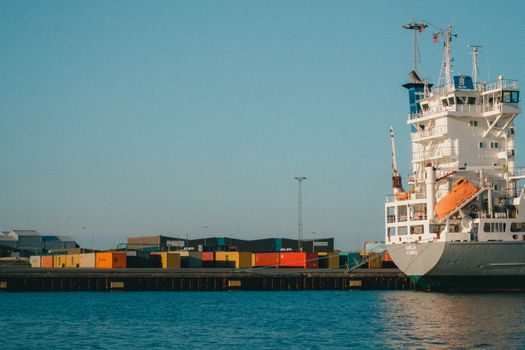
None of the six scraped listings publish a freight-inclusive landed price. HUAO's synthetic-ice sheet lists port-of-loading and "Payment & Shipping" but no FOB/CIF split [S4]. For low-MOQ orders (1 piece, 1 kg, 10 kg) air freight from Jiangsu / Shandong / Beijing / Zhejiang to North America or the EU typically adds 30–80% to the unit cost, which is why Hangzhou Fantex's US$ 10.00–12.00 per 1,000 kg yarn translates to a delivered US$ 13–18/kg landed, while the 10 kg MOQ version lands at US$ 11–14/kg — a much smaller freight penalty in percentage terms [S5].
Practical implication: at 1 kg MOQ freight dominates the cost; at 500 t MOQ the HUAO US$ 4.00/kg dominates freight. Buyers who genuinely need small batches should consolidate multiple UHMWPE SKUs into one shipment or share a container with steel plate backhauls from the same port to flatten the freight curve.
Decision frame: which UHMWPE form to specify in 2026
Specifying a form without first locking application and MOQ is the most common 2026 buying mistake. A working frame: (1) bulk liner/sheet/rod at large MOQ — HUAO US$ 4.00/kg at 500 t, reprocessed roller US$ 3.00/kg at 1 kg; (2) custom extrusion at small MOQ — Nanjing Gubai US$ 0.01–100.00 per piece for rod, sheet, tube, negotiation expected near the bottom of that range; (3) fiber/yarn — Zhejiang Nexus / Hangzhou Fantex 200 D at US$ 8–12 per 10 kg or US$ 10–12 per 1,000 kg; (4) finished roller assemblies — Guangzhou UHMW-PE / Hebei at US$ 3.00–6.00 per kg. [S1]
For chute, truck-bed-and wear-strip applications the same wear-resistant UHMWPE tube category that prints US$ 10.00–30.00 per 100 m at 100 m MOQ is the cleanest B2B reference price [S1]; for precision motion (crossed-roller bearings, linear guides) UHMWPE is occasionally used as a sliding-element liner, and the engineering rationale is captured in our linear-guide and crossed-roller guide entries. Buyers evaluating UHMWPE against higher-temperature polymers for sliding interfaces should also read the UHMWPE vs PEEK material selection frame.
Trackable signals to watch over the next 60–90 days: (a) the Hangzhou Fantex 200 D 1,000 kg yarn quote — any move below US$ 10.00/1,000 kg signals resin softening; (b) HUAO 500 t MOQ synthetic-ice sheet at US$ 4.00/kg — any cut signals downstream demand cooling in ice-rink and temporary-skating installs; (c) Nanjing Gubai stock sheet MOQ-1 floor — a drop toward the US$ 0.01 ceiling would indicate a domestic-China oversupply of 2–400 mm rod/sheet capacity.