
An ultrasonic level meter in 2026 is still the lowest-cost non-contact continuous level instrument on the market, with quoted OEM measuring ranges of liquids up to 25 m and bulk solids up to 10 m on the same transducer family [S6].
The buyer's job is to match four parameters — range, process connection, output protocol, and Ex/ingress protection — to the real tank or silo, then derate aggressively for foam, vapour, dust, and turbulence. Failures in the field almost always trace back to assumptions that the published 25 m range would work in a 6 m tank with agitator foam, not to the meter itself.
Measurement Principle and What It Actually Sees
Ultrasonic level meters emit a pulsed acoustic wave from a membrane transducer, time the echo from the liquid or solid surface, and divide by the speed of sound to give distance; the instrument subtracts that distance from a programmed tank height to output level [S1]. Because the signal travels through air (or the gas/vapour above the product), the meter is genuinely non-contact and immune to most dielectric, viscosity and conductivity variables that defeat radar level meters and capacitance probes.
What the meter cannot see through is the same medium it depends on: heavy foam, dense vapour, agitated turbulence, or dust clouds. In LNG service, ammonia service, and cement clinker silos the acoustic wave is absorbed or scattered long before it reaches the real surface, and the meter either reads the foam top, locks onto a false echo from the agitator shaft, or loses the echo entirely.
2026 Specification Envelope Across Manufacturers
Cross-referencing the current DirectIndustry manufacturer index and OEM datasheets, the 2026 ultrasonic envelope is narrow but consistent: liquids 0.25 – 25 m, solids up to 10 m, accuracy typically ±0.2 – 0.5 % of measured distance (worse near the transducer's "blind zone"), process connections G 1½ or G2 BSP, 1 ½" or 2" NPT male, output 4-20 mA + HART in 90 % of new units, with PROFIBUS PA, Foundation Fieldbus, IO-Link and Modbus RTU as options on the same platforms [S1][S6].
Ex-certified variants such as the CX-ULM-T small-blind-zone series carry the same electrical interface (typically 24 V DC two-wire loop) but add an Ex d / Ex ia housing and cable gland rated for the zone, with the datasheet calling out the explosion-proof class explicitly so the buyer can map it to the automatic level control loop and the site hazardous-area drawing [S2]. Pricing per unit is dominated by the housing material (aluminium vs stainless), the Ex rating, and the display/HMI module.
Selection Criteria That Actually Decide the Order
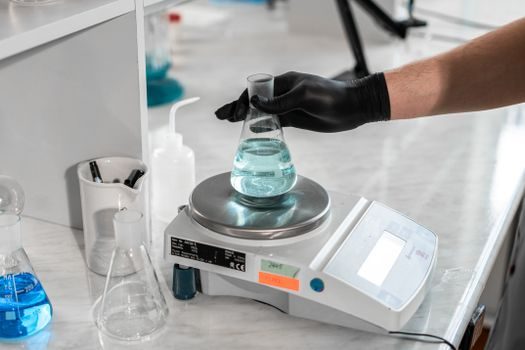
Range first, not price. Many buyers reach for the cheapest 0-6 m unit and then discover the published "6 m range" is measured from the transducer face with ideal reflectivity; in a real tank with a stand-off pipe, foam suppression, and a 0.3 – 0.8 m blind zone, the usable range shrinks to 4 m or less. [S1]
Output second. In 2026, 4-20 mA + HART is the safe default because it overlays a digital signal on the same two wires that an existing DCS analog input can read, while HART carries diagnostics, echo curves, and remote configuration.
Third: process connection. Most 2026 ultrasonic models offer G 1½, G2, 1 ½" NPT, or 2" NPT male as standard [S6]. Anything outside that list is a special order and should be flagged on the RFQ so the quotation is real. A flange mount is available on the larger solids-duty units and on most Ex d housings, but it adds lead time and cost.
Fourth: Ex / ingress. For Zone 1 / Zone 21 applications (paint shops, chemical day-tanks, solvent storage) specify the Ex d / Ex ia marking to match the area classification, plus IP66/IP67 minimum for outdoor or wash-down service. The sound level meter family sometimes shows up in cross-references; it is an acoustic measurement instrument for noise, not level, and must not be confused with the level device.
Options Comparison: Ultrasonic vs Radar vs TDR vs Guided
When two or more non-contact technologies fit, the decision usually comes down to four criteria: price, performance in foam/vapour, performance on low-dielectric solids, and mechanical simplicity. The table below lines the four common continuous level technologies up against those criteria using the 2026 OEM data above and the equivalent radar and TDR envelopes. [S2]
Ultrasonic is the lowest-cost option and is mechanically the simplest (no process wetted parts), but it loses to radar level meters in foam, vapour, and turbulence, and it cannot see through a low-dielectric powder the way a FMCW radar can. TDR level meters — guided-wave radar with a probe — handle low-dielectric liquids and emulsions better than ultrasonic, at roughly twice the unit cost. Capacitance / RF-admittance probes and float switches are still common point-level backups, but for continuous measurement in 2026 the buyer is choosing among ultrasonic, non-contact radar, and TDR.
Real Use Cases and Where Ultrasonic Is the Wrong Tool
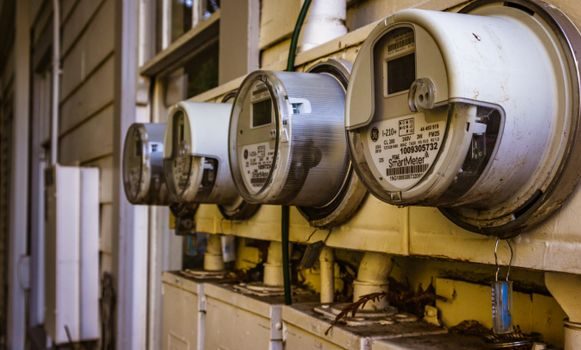
Open-channel flow measurement (sewer flumes, stormwater weirs, influent channels) is the textbook ultrasonic application: large air gap, no foam, no vapour, and a 4-20 mA + HART output that drops straight into a flow computer with the right flume/weir equation. Bulk-solids silos for grain, plastic pellets, and cement are the second strong fit, with the bulk-solids transducer variant capping at 10 m range on the same platform as the 25 m liquid unit [S6].
Where ultrasonic is the wrong tool: agitated reactors with vortex and gas entrainment, any tank with heavy chemical foam (e.g. amine scrubbers, fermentation vessels, some boiler drums), cryogenic LNG tanks where the vapour space absorbs acoustic energy, and bulk solids with very low dielectric and very low density (where the acoustic impedance is almost the same as the air gap). In all of these, the meter will read the foam top, the agitator, or nothing — and the only fix is to switch technology rather than to retune.
Limitations, Failure Modes, and Field Derating
The most common 2026 field failure is the "false bottom" reading: a heavy deposit, an internal ladder, a heating coil, or the agitator shaft sits inside the acoustic beam and the meter locks onto it instead of the product surface. The published 0.25 – 0.5 % accuracy is measured against a calm, flat, reflective target at 20 °C; a 30 °C swing in air temperature changes the speed of sound by roughly 1.8 % and shifts the reading by the same amount unless a temperature-compensated transducer is specified. [S3]
Foam suppression, steam venting, and turbulence baffles all help, but they add mechanical cost and need maintenance. For a real procurement decision, ask the OEM for an echo curve from a tank geometrically similar to yours, and check whether the unit supports remote echo curve diagnostics over HART — that one feature usually pays for the price premium between budget and mid-range ultrasonic meters on a process that already has HART infrastructure [S1].
Standards, Certification, and Sourcing
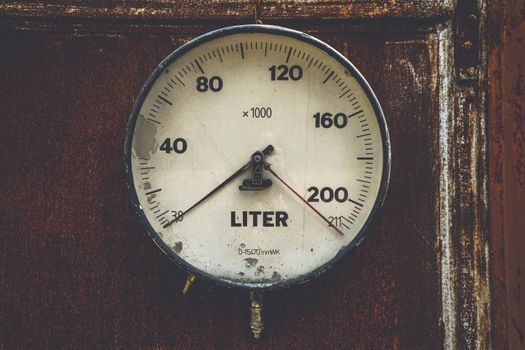
The relevant electrical / hazardous-area framework is unchanged for 2026: ATEX 2014/34/EU for the European Union, IECEx for international projects, and the IEC 60079-x series for the Ex protection concepts (Ex d flameproof, Ex ia intrinsic safety, Ex tb dust). For potable-water and food-grade use, check the wetted-material declaration (FDA, EC 1935/2004) separately — the acoustic membrane is the only "wetted" surface on a true non-contact unit, and most OEM datasheets declare it explicitly. For installation in a hazardous area the project hazardous-area classification document, not the instrument datasheet, decides which Ex marking is required [S2].
On sourcing: the 2026 supplier base is broad. DirectIndustry lists multiple industrial ultrasonic-level manufacturers on a single index page [S1], and Chinese OEM pages (e.g. CX-ULM-T, MH-A10A4Ex) typically quote factory-direct pricing with CE and ISO 9001:2008 certification noted on the datasheet [S2][S4][S5]. For a comparable selection workflow on adjacent instruments, the differential pressure transmitter buying guide 2026 and the orifice plate flowmeter 2026 buying guide apply the same range / output / certification logic and are useful references when the same RFQ bundles level with flow and pressure. For sizing the analog loop and verifying the 4-20 mA side of an ultrasonic hookup, the clamp meter page covers the field-test instrument most technicians reach for first.
Two trackable signals to watch after a 2026 award: confirm the OEM-supplied echo curve on the same transducer model and tank diameter before signing the FAT, and verify the temperature-compensation method (built-in sensor vs separate RTD) matches the worst-case ambient swing at the site. Both items appear in the same datasheet and are the fastest way to cut the failure rate on ultrasonic level meters down to a number the maintenance team can live with.