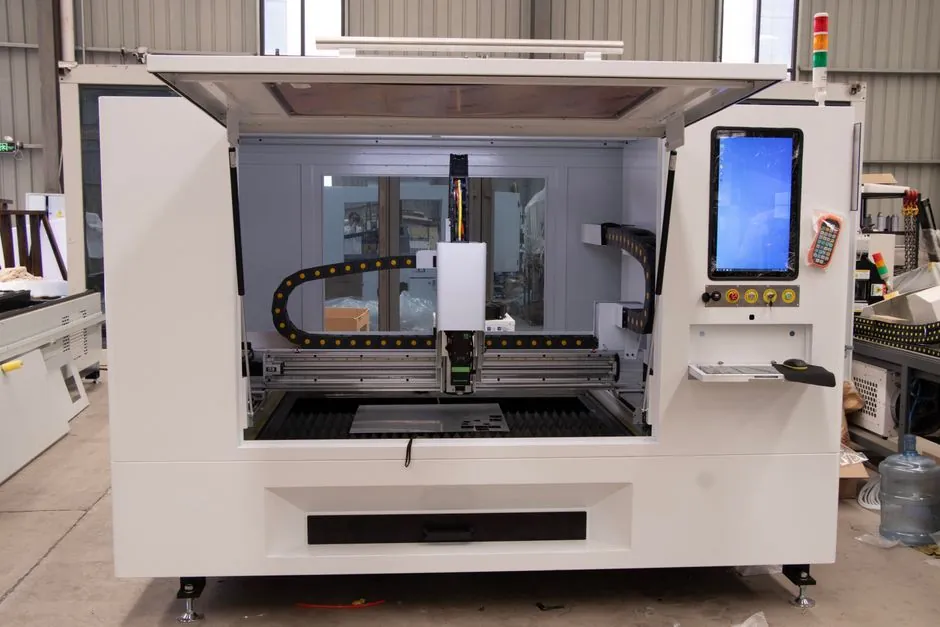
Electronics housings are almost always plastic, and the V-Process vacuum molding line is a binder-free sand casting process that holds dry silica sand with 50–100 kPa vacuum between two plastic films, originally developed in Japan in the early 1970s [S1]. The line is built for molten metal, not for the ABS or PC sheet that makes up 90%+ of an electronics enclosure.
The honest answer for a process engineer specifying a V-Process line for an electronics housing: most jobs do not belong on it. The few that do (die-cast heat sinks, RF shielding enclosures, metal back plates) are exceptions. Plastic shells go to a V-Process Vacuum Molding Line for the metal parts only, with a separate molding line running the polymer parts in parallel.
Why V-Process and Electronics Housings Usually Disconnect
V-Process casting holds dry unbonded silica sand in a rigid shape by pulling roughly 50–100 kPa of vacuum beneath a 0.05–0.2 mm thermoplastic film draped over a metal pattern, and the resulting mold produces as-cast surface finishes of Ra 6.3–12.5 µm with dimensional tolerances of ±0.2–0.5 mm per 25 mm [S1]. Those numbers are excellent for a sand casting, but they describe a process whose output is a metal casting, not a sheet of plastic.
Electronics housings are dominated by injection-molded or thermoformed ABS and PC. General-purpose ABS sits at 33–52 MPa tensile strength, 200–400 J/m notched Izod, 88–100°C heat deflection at 1.82 MPa, density 1.04–1.07 g/cm³, and a default UL 94 HB flame rating; general-purpose PC raises tensile strength to 55–75 MPa, impact to 600–900 J/m, HDT to 120–135°C, density to about 1.20 g/cm³, and lands at UL 94 V-2 as standard with FR grades reaching V-0 [S5]. Those are polymer properties, set on a polymer line, not on a sand-casting flask.
Process Envelope: What a V-Process Line Will and Will Not Do
The V-Process works on a clean physical principle: dry sand becomes rigid when atmospheric pressure compresses it across a vacuum differential, and the flask only stays rigid while vacuum is maintained (typical –50 to –100 kPa). When the metal solidifies and vacuum is released, the mold collapses and the unbonded sand is reclaimed with almost 100% recyclability [S1]. There is no chemical binder, no smoke, no clay, no water in the system.
That envelope is wrong for three reasons when the goal is an electronics housing: 1) it cannot produce a thin-walled plastic shell (the line pours molten metal, typically iron, aluminum, or copper alloy, into a sand cavity); 2) its surface finish Ra 6.3–12.5 µm is far too rough for a consumer-visible enclosure; 3) its tolerance band of ±0.2–0.5 mm per 25 mm is roughly 5–10× looser than the ±0.05–0.10 mm typical of an injection-molded ABS or PC housing. The same data that sells V-Process for hardware castings disqualifies it for polymer housings, and our guide on V-Process Vacuum Molding Line Selection for Hardware Castings walks through the metal-casting case in detail.
Where V-Process Belongs in an Electronics-Housing Build
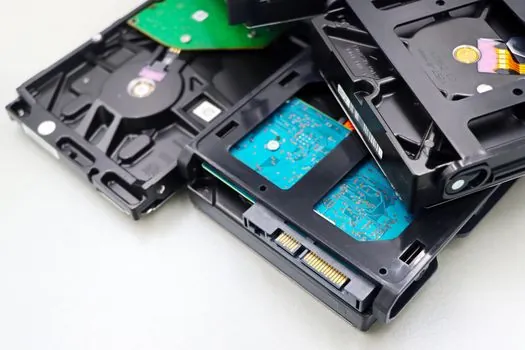
The legitimate use case is the metal sub-components inside or behind the plastic shell. Aluminum and zinc die-cast heat sinks, RF enclosures, EMI shielding cans, and cast metal back plates are all candidates, and on a V-Process line the parts come out with the clean surface, low defect rate, and excellent sand recyclability that the process is specified for [S1]. For an electronics OEM, the typical V-Process order is small-batch or prototype metal inserts that need to ship in 2–4 weeks without the lead time of a permanent mold.
The line spec for those jobs is the standard V-Process envelope: 50–100 kPa holding vacuum, 0.05–0.2 mm film thickness, ±0.2–0.5 mm/25 mm tolerance, Ra 6.3–12.5 µm as-cast finish, plus a flask big enough to envelope the largest insert (common flask sizes for electronics-grade inserts run 600×500 mm to 1200×1000 mm, sized to the part, not to a housing). V-Process is one of several automatic molding line configurations; for metal inserts in electronics it earns its place, for plastic housings it does not.
The Polymer Side: Thermoforming vs Injection Molding for the Housing Shell
If the deliverable is a plastic enclosure, the question is thermoforming or injection molding, not V-Process. Thermoforming is the most widely used sheet-to-part process, running a clamped thermoplastic sheet heated by zoned infrared heaters until pliable, then drawn onto a single-sided tool by approximately 1 bar of atmospheric pressure once vacuum evacuates the space between sheet and mold [S3]. Thin gauge covers about 0.1–2 mm and thick gauge 2–12 mm, which covers most electronics enclosures.
For ABS sheet the practical forming window sits at 150–170°C surface temperature, with 165–170°C preferred for draw ratios above 1.5:1, and 2:1 with a plug assist while keeping wall-thickness variation under 30% [S2]. ABS absorbs 0.2–0.3% moisture at room humidity, so the sheet must be dried before heating or the surface blisters; that is a different process constraint than V-Process vacuum integrity, and it is handled upstream of the process control system rather than at the flask. A typical ABS-vs-PC housing in 100 g, simple geometry runs $0.85–1.45 per part at 10,000 pieces in ABS versus $1.15–2.00 in PC, with PC adding 30–60% to total part cost driven more by processing, tooling, and yield than by resin [S5].
Decision Matrix: V-Process, Thermoforming, or Injection Molding
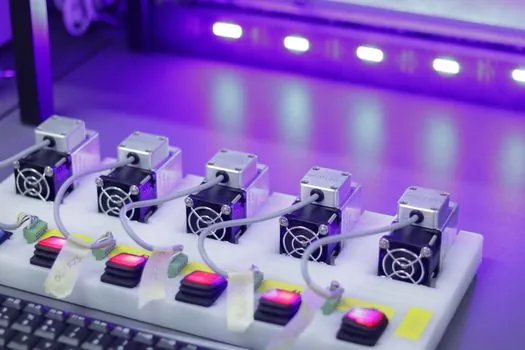
Material and tolerance decide the line. A V-Process line is the right pick when the part is metal (Al, Zn, Cu alloy, Fe), wall thickness is 3–30 mm, and the surface requirement is Ra 6.3–12.5 µm; thermoforming wins when the part is a single-wall plastic sheet (ABS, HIPS, PC, PMMA, PETG, PVC) in 0.1–12 mm gauge with one cosmetic face; injection molding takes over when the part needs two-sided detail, tight ±0.05–0.10 mm tolerance, and 10,000+ piece volumes. [S2]
The matrix lines up against four criteria: 1) Material compatibility: V-Process handles metal only, thermoforming handles amorphous and semi-crystalline sheet, injection molding handles the full polymer range. 2) Surface finish: V-Process 6.3–12.5 µm as-cast, thermoforming reproduces tool texture (gloss on ABS/PC, waxy on HDPE/PP), injection molding reaches SPI-A3 or finer. 3) Tolerance: V-Process ±0.2–0.5 mm/25 mm, thermoforming ±0.15–0.5 mm typical, injection molding ±0.05–0.15 mm. 4) Per-part cost at 10,000 pieces: V-Process metal inserts are quoted by geometry and alloy (no public range), thermoformed ABS 100 g shells run $0.85–1.45, injection-molded ABS 100 g shells run $0.43–0.72 [S5]. For the related metal-component case, the V-Process line selection for agriculture machinery guide covers the same V-Process envelope against heavier sand-cast parts.
Specifying the V-Process Line When the Job is Metal
When a V-Process line is justified, the spec list is short and concrete. Holding vacuum 50–100 kPa with a stable ±5 kPa regulation; film thickness 0.05–0.2 mm; pattern-heating element sized to soften film uniformly; vibration table sized to flask footprint; sand reclamation sized for 100% recycle; flask range that brackets the largest insert; vacuum pump with leak rate below 2 kPa/min on a sealed flask; and a v-belt or gear drive sized for the flask-handling cycle, which on electronics-insert lines typically runs 8–15 minutes per flask. [S1]
Acceptance tests to put in the purchase order: Ra measurement on a reference casting at 6.3–12.5 µm, dimensional check at ±0.2–0.5 mm per 25 mm, vacuum hold test (no leak beyond spec over 10 min on a sealed empty flask), and a one-shift sand-recycle loop to confirm the dry-sand system reuses without binder build-up [S1]. Process calibration of the vacuum regulator and the film-heater zones is the single most predictive lever on as-cast surface quality, and a poor calibration shows up immediately as Ra drift above 12.5 µm on the first castings.
Failure Modes and Common Specification Traps
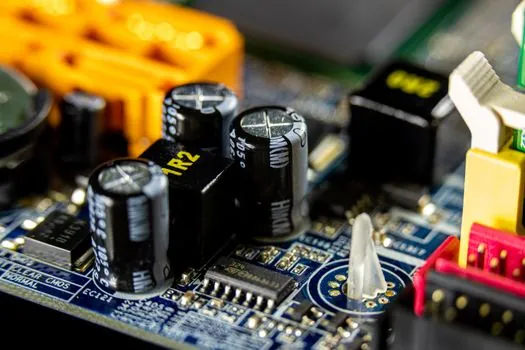
Three traps show up on real V-Process lines for electronics work. First, film thickness below 0.05 mm ruptures under the 50–100 kPa differential; second, vacuum pump undersizing causes drift above –50 kPa, which softens the mold and produces sand erosion on the casting surface; third, sand contamination from prior runs (oils, fines above 0.5% by mass) breaks the inter-granular friction that the whole process depends on and shows up as mold collapse during pour [S1].
On the polymer side, the parallel traps are different: ABS moisture above 0.2–0.3% blisters the sheet at 150–170°C; PC above its 120–135°C HDT will creep under insert fasteners; HDPE and PP shrink 1.5–5.0% anisotropically and warp if the mold is not balanced [S2]. Specifying both lines in the same build means tracking two separate process windows, two material supply chains, and two PPAP/ISIR packages, and the risk of mixing them up is the reason most electronics OEMs run the metal inserts on a separate V-Process line at a tier-2 supplier rather than in-house.
Trackable signals for the next planning cycle: UL 94 V-0 grade availability for ABS and PC sheet (currently the easiest way to hit enclosure flame ratings without a secondary coating); the OEM datasheet for the chosen ABS or PC grade (heat deflection, Izod, FR rating at the actual wall thickness), and a confirmed flask-size and tolerance band from the V-Process supplier against the largest metal insert in the BOM.