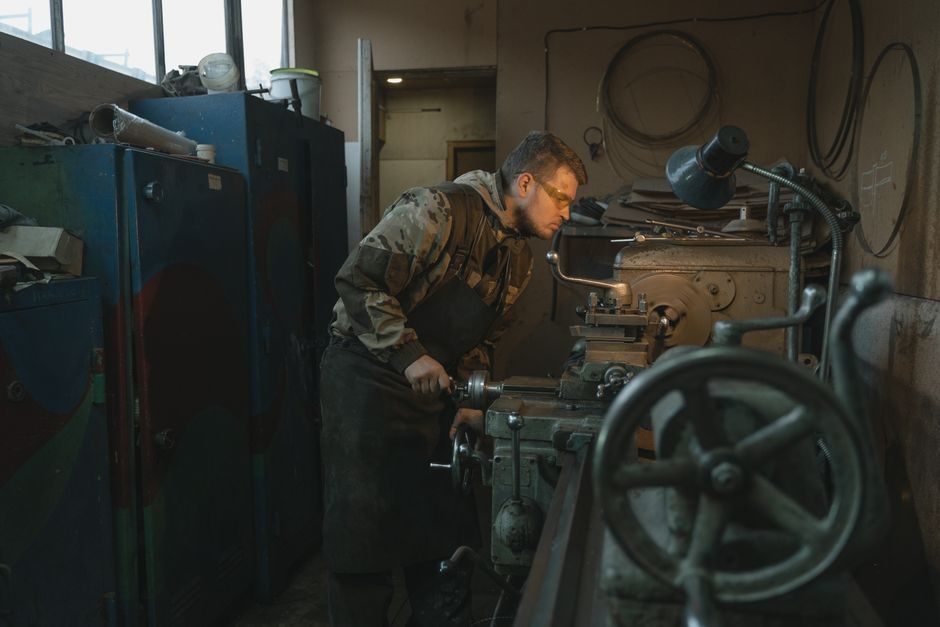
A vacuum die casting machine is a cold-chamber or hot-chamber vacuum die casting machine fitted with a sealed die, vacuum pump, and valve sequencing that evacuates cavity air to roughly 50–100 mbar absolute before and during metal injection, reducing dissolved gas and shrinkage porosity in structural Al/Mg castings.
Buying scope in mid-2026 covers standard cold-chamber units (180–9000 kN clamping force) at US$80,000–800,000 per OEM/ODM tier [S5], plus bespoke high-vacuum systems for thin-wall structural and safety components; process lineage traces to Japanese origins from roughly 2000 onward [S6].
Vacuum Levels, Pump Sizing and Cavity Pressure Targets
Production vacuum die casting systems commonly target a cavity absolute pressure window of 50–100 mbar, with high-tier systems reaching below 10 mbar on small, well-sealed dies [S6]. The vacuum pump must be sized to evacuate the die cavity volume (typically 1–30 L for structural castings) in 1–3 seconds, often using a rotary vane or dry claw pump rated 15–200 m³/h depending on die size.
A typical cycle adds 2–5 seconds for evacuation and 0.5–1 second for vacuum decay checking before injection.
Vacuum holding time after injection is a critical parameter; industry practice is to hold vacuum for 0.5–1.5 seconds post-fill, then break vacuum via a controlled leak valve to avoid die deformation under high differential pressure [S6]. For reference, Chinese OEM jewelry-scale vacuum pressure casting rigs use -760 mmHg (~0 mbar absolute) at 15 L/sec pump speed for fine-detail work [S4], a useful lower-limit anchor when comparing to industrial structural casting equipment.
Locking Force, Shot Weight and Platen Size Bands
Chinese OEM/ODM vacuum die casting machines cluster into three locking-force bands: small (180–800 kN, shot weight 0.5–3 kg Al), mid (800–2500 kN, 2–8 kg), and large (2500–9000 kN, 6–25 kg) [S5]. Platen sizes scale roughly linearly with locking force, from 600×600 mm on small units to 1400×1400 mm or larger on 9000 kN machines.
Tie-bar spacing, platen parallelism tolerance (typically ≤0.05 mm/m), and shot positioning repeatability (±0.1 mm) become hard constraints above 4000 kN. For comparison with non-vacuum aluminum die casting machine sourcing, vacuum-equipped units add 8–15% to FOB price for the same locking force because of the pump, valve block, sealed platen, and PLC sequencing.
Buyers specifying for thin-wall structural EV battery trays, telecom housings, or steering knuckles should target the 2500–6000 kN band; jewelry, dental, and small hardware applications suit smaller units repurposed from pressure-casting platforms with maximum melt temperature of 1450°C and PID temperature control [S4].
Vacuum System Architecture: Single-Stage vs Two-Stage vs Closed-Loop
Entry-level OEM/ODM Chinese vacuum systems use single-stage rotary vane pumps sized 15–60 m³/h, with a sand or sintered filter on the suction line and a manual ball valve for vacuum break. These hold cycle times in the 2–4 second evacuation range and are common on units priced at the lower end of the US$80,000–800,000 band [S5].
Mid-tier and high-tier machines adopt a two-stage architecture: a primary rotary vane or dry claw pump backed by a booster (Roots or dry screw), reaching 5–20 mbar ultimate vacuum. Closed-loop variants add a vacuum transducer in the die cavity with PLC feedback to gate injection only when setpoint is reached, a 2023-onward upgrade now standard on most Chinese OEM offerings above 1600 kN [S1].
Vacuum valve sequencing is a frequent service pain point; specify fast-acting vacuum valves (≤20 ms open/close) and check that the supplier provides vacuum-tight platen seal kits rated for ≥10⁵ cycles. General-purpose vacuum clamps and fittings from industrial accessory makers (e.g. -760 mmHg working, T/W Western Union payment terms) are stocked on cross-vertical platforms but are not substitutes for die-side sealed plumbing [S2].
Process Windows: Mg vs Al vs Zn, and Die Temperature Control
Magnesium structural castings, typically run on magnesium die casting machine platforms, benefit disproportionately from vacuum because Mg melt readily oxidizes and entrained air drives MgO inclusions; vacuum below 50 mbar absolute is common for Mg seat frames and steering wheel cores. Aluminum structural castings see porosity drops in T6-treated housings and crash-relevant knuckles, where radiographic acceptance criteria drive the vacuum specification. [S1]
Zinc hardware on zinc die casting machine platforms rarely justifies full vacuum because the casting temperature is low (~420°C) and gas solubility is small; a partial vacuum of 200–400 mbar is sometimes used only for decorative parts. The die temperature control envelope must hold ±5°C on the cavity face; if the die is water-cooled with bores closer than 8 mm to the cavity, thermal gradients can crack the die under vacuum-induced differential pressure.
Pre-heating the die to 150–250°C and pre-filling the shot sleeve with argon purge for Mg is a standard practice that combines with vacuum to reduce inclusion content. The Japanese-origin process referenced in foundry literature [S6] prescribes a vacuum-sealed sleeve, a controlled leak path, and a delay timer — all parameters most 2026-vintage Chinese OEM PLCs expose as standard HMI fields.
Comparison: Vacuum vs Squeeze vs Gravity Die Casting for Structural Parts
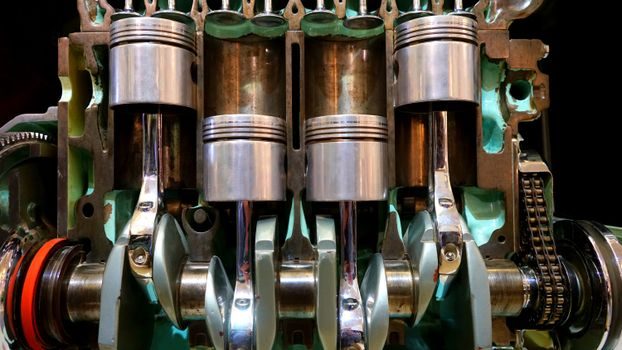
For buyers choosing between vacuum die casting machine, squeeze casting, and gravity die casting machine, the decision matrix is mechanical-property vs throughput vs cost. Vacuum die casting hits tensile strength within 5–10% of squeeze-cast values at cycle times of 60–120 seconds, versus 180–300 seconds for squeeze; gravity sits at the lowest mechanical performance and lowest capex. [S2]
Cost-wise, a 1600 kN vacuum die casting cell in 2026 FOB China lists at roughly US$220,000–350,000, a comparable squeeze press at US$400,000–600,000, and a gravity die casting machine station at US$30,000–80,000 for a tilt or rotary table of similar footprint. Vacuum sits between squeeze and gravity on porosity and on price.
For structural EV and aerospace-adjacent parts where radiographic or CT acceptance is required, vacuum is the cost-effective default. Squeeze is reserved for high-load, safety-critical parts (subframes, suspension arms) where porosity must be below 1% by volume; gravity is reserved for non-critical, larger, lower-volume parts (motor housings, pump bodies).
Standards, Acceptance and Quality Verification
Buyers should verify that the OEM machine meets IEC 60204-1 safety of machinery electrical equipment, ISO 12100 risk assessment, and that the vacuum system has CE/UKCA documentation including a Declaration of Conformity for the Machinery Directive 2006/42/EC. Vacuum die casting process acceptance typically references ASTM E505 radiographic reference radiographs for aluminum and magnesium castings, with porosity levels 1–2 by reference standard being the typical buyer requirement for structural parts [S6].
Pre-shipment inspection should include a vacuum decay test: pump the die to 50 mbar absolute, isolate the pump, and verify pressure rise is below 5 mbar over 30 seconds; failure rates above 10 mbar/30 s indicate platen seal or O-ring issues. Also verify shot weight repeatability within ±1.5% over 50 consecutive cycles, and that vacuum-to-injection delay is logged and reproducible [S5].
For a balanced sourcing picture across adjacent industrial capital equipment, see the CNC machine supplier map 2026: factory clusters, price bands and sourcing levers for similar tier-1 Chinese OEM landscape data, and the Tool and Die Steel Buying Guide 2026: Grade Selection, Hardness Targets and Mill Pricing for the die-material side of the same capex conversation.
Track these signals next: (1) Chinese OEM PLC platform consolidation — whether 2026 machines converge on a common controller for vacuum sequencing; (2) dry-pump adoption rate as chloride-emission regulation tightens in foundries; (3) average vacuum-cycle energy draw, which currently adds 0.5–1.5 kWh per shot on 2500 kN-class units and is becoming a procurement line item [S1][S5].