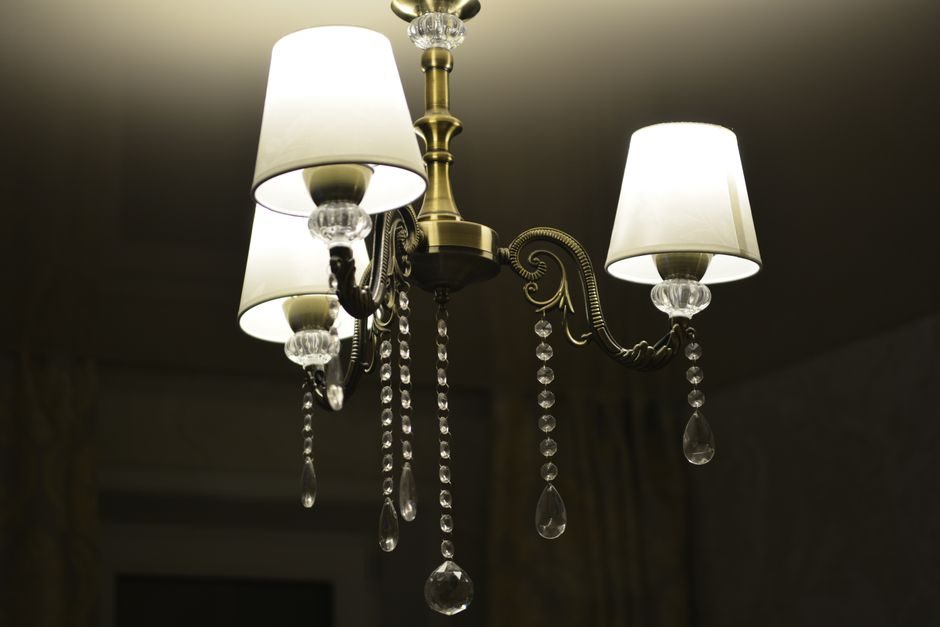
Aluminum and zinc lighting-fixture castings — heat sinks, reflector housings, lamp shades, and LED driver enclosures — are increasingly specified on vacuum die casting machines running at chamber pressures of 5-50 mbar to suppress gas porosity in thin-wall sections below 3 mm [S1].
Typical clamping tonnage for this product family falls in the 200-1600 ton band, with shot weights between 0.5 kg and 12 kg of aluminum or zinc, and dry-cycle times under 12 seconds once the die is heated and vacuum is established.
Why Vacuum Matters for LED and Reflector Castings
Air entrapment in conventional high-pressure die casting produces internal porosity above 2% by volume, which causes thermal-resistance spikes in LED heat-sink fins and visual defects in polished reflector bowls.
Pulling chamber vacuum below 50 mbar before injection reduces dissolved-gas content and lets the alloy fill thin webs (1.5-2.5 mm) and tall fins (>80 mm) used in modern downlight and streetlight heat sinks, while also keeping surface Ra under 3.2 µm so that decorative PVD or vacuum-metallized top coats [S1] adhere without rework.
Clamping Force and Shot Weight Mapping
A 400-800 ton vacuum die casting machine typically handles 1-6 kg aluminum shot for mid-size ceiling and track-light housings, while 800-1600 ton presses cover 6-12 kg shot weights for streetlight and high-bay fixtures [S3].
Smaller 200-400 ton units fit under 3 kg shot and are common for MR16 and GU10 form factors, where the cast part also doubles as the heat-spreader for a 5-15 W LED module.
Alloy Choice: Aluminum vs Zinc for Lighting Bodies

Aluminum die casting machines dominate above 1 kg shot weight because A380, A383, and ADC12 deliver thermal conductivity near 90-110 W/m·K — a hard requirement for heat-sink performance — and operate at melt temperatures of 640-720 °C inside a hot-chamber-adjacent cold-chamber configuration. [S1]
For thin-wall decorative trims, bezels, and indoor pendant shades under 0.5 kg, zinc die casting machines running Zamak 3 or Zamak 5 win on as-cast surface finish (Ra 0.8-1.6 µm achievable), lower melt temperature (~420 °C), and die life above 200,000 shots, but the same geometry in aluminum would need vacuum assist to fill cleanly [S5].
Vacuum System, Die Lubrication, and Cycle Time
A production vacuum die cell for lighting parts pairs the press with a two-stage rotary-vane or dry-pump set sized for 50-200 m³/h, plus a vacuum-sealed shot sleeve and vented die that hold 5-30 mbar through the slow-shot phase. [S3]
Water-based die lubricants with low silicone content are specified to keep post-casting surfaces clean for downstream vacuum metalizing of reflector bowls, where evaporative aluminum coating thickness of 80-120 nm is typical and contamination shows up as pinholes or haze [S1].
Comparison: Vacuum vs Conventional HPDC for Lighting

Conventional hot-chamber or cold-chamber HPDC without vacuum still produces most low-end commodity lamp parts, but porosity above 2% in sections over 2 mm wall blocks heat-sink certification on most premium LED programs. Vacuum-assisted cells cut internal porosity to under 0.5% and raise pressure-tightness — important for outdoor IP65/IP66 fixtures — at the cost of 5-15% longer cycle and added pumping infrastructure. [S1]
For indoor decorative parts where cosmetic finish matters more than thermal performance, gravity die casting machine lines on aluminum or zinc remain a lower-cost alternative, but they cannot match thin-wall fill below 2 mm or cycle times under 20 seconds.
Selection Criteria Checklist for Lighting Buyers
Match shot weight to part mass at 1.2-1.4× fill ratio; verify vacuum leak rate stays below 5 mbar/min at operating temperature; confirm die-cooling bores support 80-120 °C differential between water-in and water-out for stable cycle time; check platen size and tie-bar clearance accommodate a multi-cavity die (typically 2-8 cavities for lighting). [S3]
For road and street lighting, magnesium die casting machine options reappear for weight-critical poles and brackets, but most fixture bodies stay on Al or Zn because of corrosion and galvanic concerns at the LED mounting interface.
Integration with Downstream Coating Lines

Vacuum die castings destined for reflective or decorative finishes ship directly to a PVD / vacuum metalizing line, where the three-step process — base coat, aluminum evaporation in a vacuum chamber, top coat — deposits a uniform aluminum layer on the rotating fixture and converts a dull cast surface into a mirror-grade reflector in a single pass [S1].
Buyers should also confirm that the die-cast substrate has been vacuum-impregnated if any micro-shrinkage porosity is suspected, since metallizing does not seal through-porosity and post-coating rejects will spike.
Common Failure Modes and Buyer Pitfalls
Three problems dominate field returns: (1) cold-shut lines on tall heat-sink fins when shot velocity drops below 2.5 m/s in vacuum; (2) die soldering on A380 above 1.5×10⁵ shots without proper release-agent control; (3) blistering of the top-coat over the metallized layer when substrate outgassing is not eliminated before coating [S1][S3].
Cycle-time discipline is the other silent killer: a vacuum die cell that drifts from 10 s to 14 s per shot erodes the cost argument against conventional HPDC, so buyers should benchmark cycle under simulated production loads, not under single-cavity demo conditions.
Sourcing, Standards, and Next Nodes
Specifying teams should request a vacuum-leak test report (chamber pressure vs. time, ASTM-style protocol acceptable), a porosity sample section per material lot, and a metallization adhesion test result on production castings, not lab coupons.
Track these signals over the next 6-12 months: tier-1 lighting OEMs migrating heat-sink programs from cold-chamber HPDC to vacuum-assisted cells above 800 tons; release of new ADC-type alloys with higher thermal conductivity for compact downlights; tighter cycle-time guarantees on Chinese-built vacuum die platforms. For more on thin-wall automotive castings, see the related Vacuum Die Casting Machine Selection for Automotive Parts: 2026 Spec Map, and for fluid-handling castings the adjacent Vacuum Die Casting Machine Specs for Pump and Valve Bodies piece.