
Vacuum die casting machines specified for pump housings, valve bodies, and impellers typically hold die-cavity work vacuum in the 60-300 mbar range, with ultimate chamber vacuum below 5 mbar achieved by rotary vane plus Roots pump stacks [S3].
For fluid-handling components that must pass hydraulic leakage and radiographic tests, the vacuum-assisted cold-chamber process displaces entrained air from the melt, reducing gas porosity at thick-to-thin transitions where pump and valve castings commonly fail pressure-decay inspection.
Work Vacuum vs Ultimate Vacuum: Two Different Numbers
Spec sheets list both ultimate vacuum (the lowest pressure the system can reach with no leak, analogous to the "limit vacuum" cited in [S3]) and work vacuum (the pressure actually held during injection, normally 60-300 mbar). Process engineers should require both numbers; a 5 mbar ultimate vacuum paired with a leaky sealing flange can still let the cavity climb to atmospheric during fill.
For pump and valve bodies in brass, bronze, and aluminum-silicon alloys, work vacuum above 200 mbar leaves enough entrained gas to produce micro-shrinkage porosity at the flange bolt-circle region, which is where most pressure-decay test failures initiate.
Vacuum Pump Stack Sizing and Oil Specification
A standard pump stack pairs a rotary vane roughing pump with a Roots blower and, for high-cavitation parts, an oil diffusion or dry screw stage — the same architecture described for vacuum coating chambers in [S1]. Rotary vane oil must meet viscosity grade ISO-VG32 at 0-10 °C ambient and ISO-VG100 at 10-40 °C per the SH0528-92 standard referenced in [S2], and exhaust filters must be replaced when discharge gauge pressure exceeds 0.6 bar (gauge) [S2].
For a 800-2500 kN cold-chamber vacuum machine, two 70 m³/h rotary vane pumps plus a 300 m³/h Roots blower is a common starting configuration; cycle time to working vacuum (≤200 mbar) is normally 6-10 seconds for a 1.5 × 1.6 m chamber similar in size to the SUS304 tank geometry listed in [S1].
Alloy and Wall-Section Considerations for Pump/Valve Castings
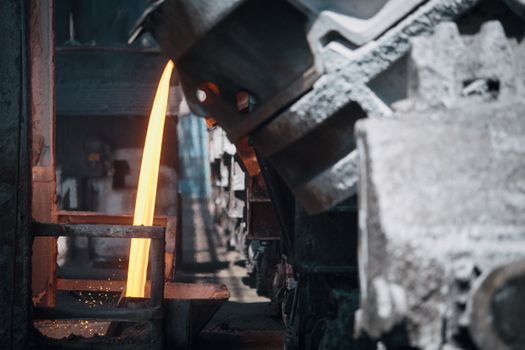
Pump and valve bodies range from thin-wall aluminum impellers (3-6 mm) to thick brass valve bonnets (15-30 mm). Vacuum die casting delivers the most defect reduction on thick sections, where conventional die casting traps gas; thin-wall parts gain less and may not justify the added cycle time. The vacuum-die-casting-machine category overview at vacuum die casting machine maps how clamp force and shot sleeve diameter scale with these part geometries. [S1]
For brass and bronze, melt temperature of 950-1020 °C combined with a slow first-stage shot (0.1-0.3 m/s) and fast intensification (3-5 m/s) is typical; vacuum prevents the gas-pocket formation that causes leak paths at the bonnet-to-body interface on ball-valve castings.
Selection Criteria: Tonnage, Platen, and Vacuum Integration
Beyond vacuum level, three mechanical specs dominate the buying decision: clamp force (kN), tie-bar spacing, and shot sleeve diameter. A practical comparison for pump/valve work: [S1]
Clamp force 800-1600 kN: small valve bodies, pump covers, fittings; platen ≈ 900 × 900 mm; shot sleeve Ø 60-80 mm.
Clamp force 2500-4000 kN: medium pump housings, 4-way valve bodies; platen ≈ 1250 × 1250 mm; shot sleeve Ø 100-130 mm.
Clamp force 5000-9000 kN: large industrial pump casings, multi-cavity valve stacks; platen ≈ 1600 × 1800 mm; shot sleeve Ø 140-180 mm.
Comparing these tiers on the four criteria that matter for foundries — part envelope, alloy flexibility, vacuum integrity, and per-shot cost — the 2500-4000 kN band covers roughly two-thirds of fluid-handling parts without forcing a footprint jump. Foundries mixing pump and valve work with structural parts often standardize on a die casting machine platform that accepts a retrofit vacuum kit rather than buying a dedicated unit.
Leak Rate, Sealing, and Maintenance Intervals
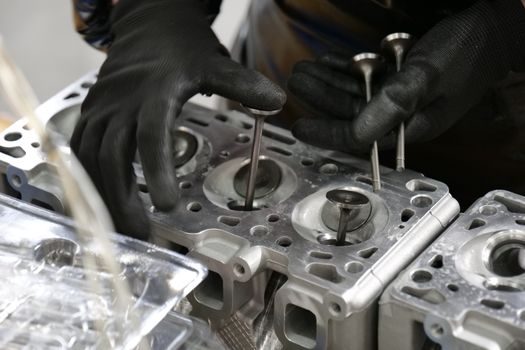
Vacuum integrity is governed by leak rate, normally specified in mbar·L/s. A competent vacuum die casting cell holds < 5 mbar·L/s after 30 minutes of pump-down; anything above 20 mbar·L/s means the dynamic and static seals on the plunger, die parting line, and vacuum gate valve are degraded. Static seal materials suitable for the parting line and vacuum manifold include Viton, PTFE, and aluminum or oxygen-free copper gaskets as catalogued in [S3].
Weekly oil inspection and filter checks (1/2 to 3/4 sight-glass level, weekly contamination check) follow the same maintenance discipline spelled out for rotary vane pumps in packaging service [S2], and the cleaning sequence (drain, flush with 32# mechanical oil, run 5-10 min, drain, refill) applies directly to the die-casting vacuum pump stack.
Who Vacuum Die Casting Is For — and Who It Is Not
Vacuum-assisted cold-chamber die casting pays back on pump and valve components subject to internal pressure testing at 10-40 bar, radiographic inspection, or machining of pressure-sealing faces. It is the wrong tool for purely cosmetic parts, large thin-wall structural panels (where high-vacuum aluminum die casting machine cells can be over-specified), and for foundries running predominantly zinc or magnesium thin-wall parts where porosity is already low. [S2]
For foundries that need a baseline comparison of cold-chamber versus gravity die casting machine for non-pressure components, the vacuum route only earns its premium when the part is tested, machined on sealing faces, or certified to a pressure-containing standard.
Foundries scaling from agricultural-machinery work into fluid handling can reuse much of the same vacuum infrastructure — the selection logic for clamp force, alloy handling, and leak-rate testing tracks closely with the criteria in this related vacuum die casting machine selection for agricultural machinery reference, with pump/valve work adding tighter radiographic-acceptance thresholds on top.
Trackable Signals for the Next Buying Cycle
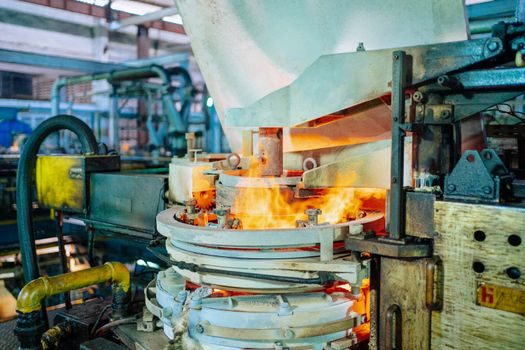
Two concrete signals to watch: published leak-rate acceptance values on vacuum-assisted cold-chamber OEM datasheets (currently most quote ≤ 5 mbar·L/s for premium cells), and revisions to ISO 9001 foundry audit checklists that increasingly require documented vacuum-level records for pressure-containing castings. [S3]