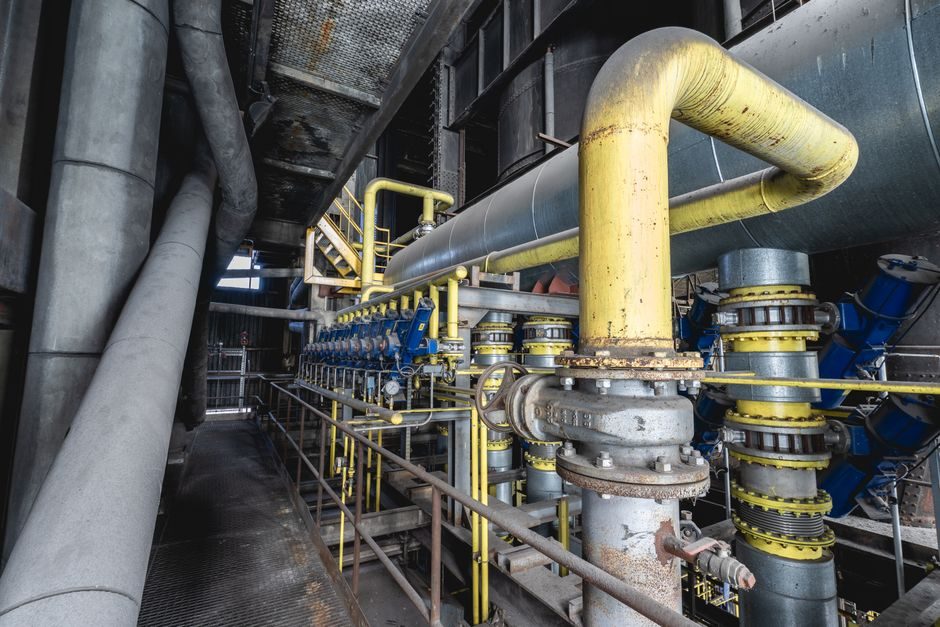
Vacuum die casting machines for energy equipment are selected against four binding constraints: chamber vacuum ≤ 50 mbar absolute, gas-free density above 2.65 g/cm³ on AlSi9Cu3, repeatable clamping force from 800 kN to 9000 kN, and alloy compatibility with Fe-rich or Cu-bearing melts used in busbar and switchgear housings [S1][S2].
This is a process-engineering reference, not a vendor roundup: the focus is the spec envelope — vacuum level, leak rate, shot profile, and die evacuation geometry — that determines whether a given vacuum die casting machine will produce dielectric-grade castings rather than food-grade or decorative parts.
Where Vacuum Die Casting Earns Its Place in Energy Equipment
Gas porosity below 0.5% volume fraction is the threshold generally demanded for aluminum enclosures used in medium-voltage switchgear and dry-type transformer housings, where trapped air otherwise becomes a partial discharge site under 10 kV+ service [S1]. The same logic drives adoption for die casting machine cells that feed cast busbar supports and inverter housings — every mm² of internal void is a dielectric liability.
The vacuum envelope changes the machine architecture, not just the cycle: a sealed shot sleeve, a die evacuation valve, and a vacuum chamber rated to a defined leak rate (typically ≤ 5 mbar·L/s at the OEM-stated blank-off pressure) are mandatory. Standard gravity die casting machine cells, including many aluminum die casting machine lines, cannot be retrofitted with a vacuum lid and still meet the OEM leak-rate warranty on the vacuum chamber.
The Four Spec Gates That Decide Make or Buy
Gate 1 — vacuum level. The chamber must reach a working absolute pressure of 5–50 mbar for aluminum and magnesium energy-grade alloys. Anything above 100 mbar absolute will not collapse the entrained air bubbles inside the 200–500 ms injection window typical of thin-wall enclosures. Gate 2 — leak rate. A vacuum chamber that loses more than 5 mbar·L/s after reaching blank-off pressure will not hold spec through a full evacuation cycle of 2–6 s [S2].
Gate 3 — clamping force per projected area. Energy enclosures in the 200 mm × 200 mm to 600 mm × 800 mm envelope usually require 2000–6000 kN on a cold-chamber vacuum die casting machine. Gate 4 — alloy lockout. A machine dedicated to AlSi9Cu3 (Fe ≤ 0.8%, Cu 2–4%) for switchgear cannot be safely used for Mg-alloy EV inverter housings without a full Fe-control cleanup, because iron pickup in magnesium melt is a known die-sticking failure mode [S2].
Comparing Vacuum Die Casting Against the Alternatives
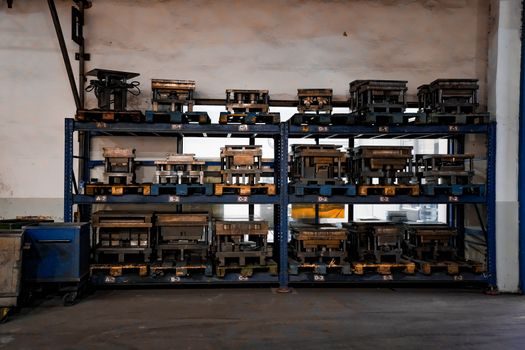
Where vacuum die casting earns its capex premium is on the dielectric-and-mechanical axis; where it loses is on cycle time and tool wear. The decision matrix: [S1]
Criteria — porosity, tensile strength, cycle time, capex per kN clamping force, die life. Vacuum die casting hits porosity ≤ 0.5% and tensile strength 280–340 MPa on AlSi9Cu3, but runs 15–25% slower than atmospheric cold-chamber and demands 2–3× higher die maintenance due to the higher intensification pressure (typically 70–110 MPa) needed to push the melt through the evacuated cavity before the metal freezes [S2]. Standard cold-chamber die casting machine cells run 20–40% faster but cannot meet the porosity floor for HV enclosures. Gravity die casting machine lines — for reference — accept no intensification pressure at all, so they cannot produce the thin-wall (≤ 3 mm) sections common in modern switchgear frames.
For Zn-alloy energy fittings below 200 g shot weight, zinc die casting machine cells stay competitive because Zn's lower melt viscosity already collapses most entrained gas without chamber vacuum; the rule of thumb is that vacuum hardware only pays back above ~1.5 mm wall thickness in Zn. For magnesium inverter housings, the magnesium die casting machine variants with hot-chamber architecture and SF₆-free cover gas are the relevant comparison, not the aluminum die casting machine cold-chamber lines [S2].
Process Specs Worth Pinning to the RFQ
Three numbers belong in the purchase spec, not the marketing brochure. First, the chamber evacuation curve: the OEM should publish a measured time-to-50 mbar of ≤ 4 s on a chamber volume of 0.5–1.5 m³, with the vacuum pump model and nominal displacement (typically 100–300 m³/h) stated alongside [S2]. Second, the vacuum valve seat material — hard-chrome-plated steel or tungsten carbide — because the valve cycles 200,000–500,000 times between service intervals in normal two-shift operation.
Third, the leak-rate acceptance test protocol: hold at 20 mbar absolute for 60 s, then record the pressure rise. Anything above 5 mbar·L/s is a factory acceptance test failure, regardless of how the catalog lists the machine class. Vendors that publish this curve in their datasheet are usually the vendors whose field service data also holds up; vendors that publish only a "vacuum to 50 mbar" line item without the leak rate are usually the ones whose warranty excludes porosity claims [S2].
Process and Facility Constraints Engineers Underestimate
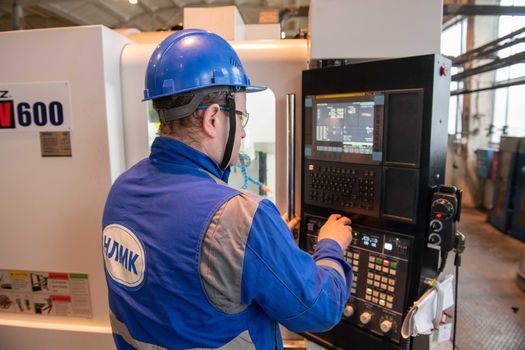
Two non-obvious constraints routinely kill vacuum cell uptime. (1) The vacuum pump exhaust must be routed outside or to a filtered vent, because aluminum and magnesium vapor condense inside the pump oil and degrade the ultimate pressure within weeks — a fresh pump hitting 5 mbar can degrade to 80 mbar within 90 days if the exhaust path is not managed [S2]. (2) The die spray robot must be upgraded to a non-silicone, water-based release agent rated for vacuum service, because conventional silicone sprays outgas and contaminate the chamber, raising leak-rate test results and fouling the vacuum valve seat.
A third constraint is operator skill: vacuum cycle fault diagnosis (failed evacuation, slow pump-down, valve seat leakage) is not the same skill set as atmospheric die casting fault diagnosis, and a plant that commissions a vacuum die casting machine without budgeting 2–4 weeks of OEM-led operator training will spend the first six months diagnosing what is, in most cases, a leak-rate or spray-application issue rather than a metallurgical one. Process engineers who already run VFD-Duty Motor Selection: 7 Spec Gates for 2026 for their cell auxiliaries usually have the electrical discipline to handle the vacuum interlocks; those who do not will see nuisance trips on every chamber door cycle.
Selection Checklist: Five Items Before Signing the PO
(1) Confirm the OEM publishes a leak-rate curve at 20 mbar / 60 s, not just a stated ultimate pressure. (2) Confirm the vacuum pump is a dry-screw or rotary vane model with a stated displacement of 100–300 m³/h and a stated particulate filter on the inlet — this is what protects ultimate pressure over time, per the pump-degradation failure mode noted above [S2]. (3) Confirm the clamping force matches the projected area at ≤ 60 MPa specific pressure, since energy enclosures are usually 200–600 mm projected length with a parting line that does not tolerate higher intensification pressure without flash.
(4) Confirm the alloy lockout: the same machine will almost never be expected to run both Mg and AlSi alloys; mixing them within one cell is a known metallurgical cross-contamination risk. (5) Confirm the control system supports a logged, timestamped vacuum event for every shot — most quality systems for HV castings now require a per-shot vacuum curve in the traceability record, analogous to the way Modular UPS Selection Guide: Spec Gates for 2026 Sourcing expects per-event battery logs for grid-side power equipment.
Verifiable Next Signals to Track
Two signals are worth watching. First, the published leak-rate test protocols in OEM datasheets — vendors that move from a stated "≤ 50 mbar" to a stated "≤ 20 mbar at 5 mbar·L/s" are the ones repositioning toward the HV enclosure market. Second, the alloy lockout language in the warranty: vendors that explicitly exclude Mg-after-Al or Cu-after-Mg melt changeovers in the same chamber are telling you their vacuum system is not built for the cross-alloy flexibility some buyers ask for, and that constraint should be priced in at the RFQ stage, not discovered at the first preventative maintenance visit. [S1]